Ditapis dengan
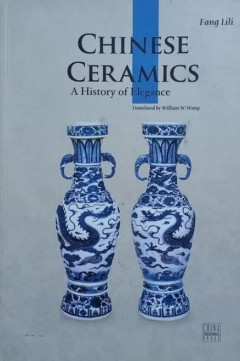
Chinese ceramics: A History of elegance
This book presents a comprehensive overview of the development of ceramics in China, from the prehistoric period (primitive pottery) to classical porcelain, complete with color illustrations. The book not only discusses manufacturing techniques, types of ceramics, and the development of styles and decorations (such as celadon, blue-and-white ware, wucai, fencai, and others), but also examines t…
- Edisi
- 2
- ISBN/ISSN
- 978-7-5085-1673-8
- Deskripsi Fisik
- 156 pages : illustrations ; 23 cm
- Judul Seri
- -
- No. Panggil
- 738.0951 FAN c
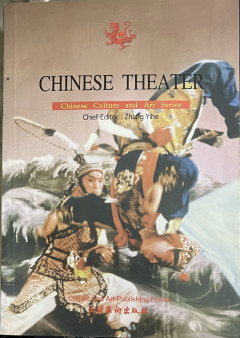
Chinese theater: Chinese culture and art series
hinese Theater is a volume in the Chinese Culture and Art Series that introduces the historical development and artistic features of Chinese theatre. The book discusses major theatrical forms, performance traditions, and aesthetic principles, including classical opera and modern stage practices. It highlights the cultural and social significance of theatre in Chinese society and presents Chines…
- Edisi
- -
- ISBN/ISSN
- -
- Deskripsi Fisik
- 184 pages : illustrations ; 20 cm
- Judul Seri
- -
- No. Panggil
- 792.50951 YIH c

The Collected works of ancient Chinese philosophy: Guan Zi Says
This book presents selected philosophical and political ideas from Guan Zi, an important text in ancient Chinese thought associated with Legalist and statecraft traditions. Through translated classical passages, the work discusses governance, economic regulation, social order, and the role of law in maintaining state stability. It provides insight into early Chinese political philosophy and its…
- Edisi
- Pertama
- ISBN/ISSN
- 978-7-5138-0511-7
- Deskripsi Fisik
- 123 pages : illustrations ; 23 cm
- Judul Seri
- -
- No. Panggil
- 181.11 NZI c
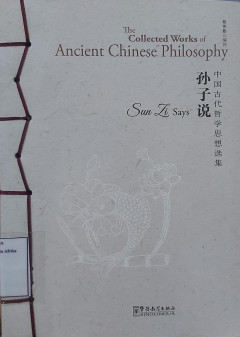
The Collected works of ancient Chinese philosophy: Sun Zi Says
This book presents selected philosophical and strategic teachings of Sun Zi, the ancient Chinese military thinker best known for The Art of War. Through translated classical texts, it explores ideas on strategy, leadership, conflict management, and the principles of victory without direct confrontation. The work offers readers insight into Sun Zi’s philosophical approach to warfare and its en…
- Edisi
- Pertama
- ISBN/ISSN
- 978-7-5138-0511-7
- Deskripsi Fisik
- 123 pages : illustrations ; 23 cm
- Judul Seri
- -
- No. Panggil
- 181.11 NZI c

The Collected works of ancient Chinese philosophy: Mencius Says
This book presents selected philosophical teachings of Mencius, one of the most important Confucian thinkers in ancient China. Through translated classical texts, it discusses key ideas such as the innate goodness of human nature, moral self-cultivation, benevolent governance, and social responsibility. The work offers readers an accessible introduction to Mencius’ contributions to Confucian …
- Edisi
- Pertama
- ISBN/ISSN
- 978-7-5138-0511-7
- Deskripsi Fisik
- 123 pages : illustrations ; 23 cm
- Judul Seri
- -
- No. Panggil
- 181.11 MEN c

The Collected works of ancient Chinese philosophy: Conlucius Says
This book presents selected teachings of Confucius, the founder of Confucianism and one of the most influential philosophers in Chinese history. Through translated classical texts, it explores central concepts such as morality, benevolence (ren), ritual propriety (li), social harmony, and ethical governance. The work provides readers with an accessible introduction to Confucian philosophy and i…
- Edisi
- Pertama
- ISBN/ISSN
- 978-7-5138-0511-7
- Deskripsi Fisik
- 123 pages : illustrations ; 23 cm
- Judul Seri
- -
- No. Panggil
- 181.11 CON c
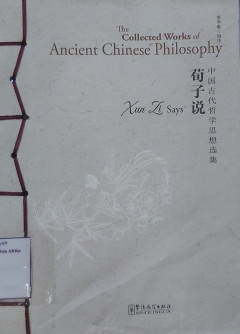
The Collected works of ancient Chinese philosophy: Xun Zi Says
This book presents selected philosophical writings of Xun Zi, a major Confucian thinker in ancient China. Through translated classical texts, it discusses key ideas such as human nature, moral cultivation, ritual, education, and social order. The work offers readers an accessible introduction to Xun Zi’s rational and pragmatic approach to Confucian philosophy and its influence on Chinese inte…
- Edisi
- Pertama
- ISBN/ISSN
- 978-7-5138-0511-7
- Deskripsi Fisik
- 123 pages : illustrations ; 23 cm
- Judul Seri
- -
- No. Panggil
- 181.11 NZI c
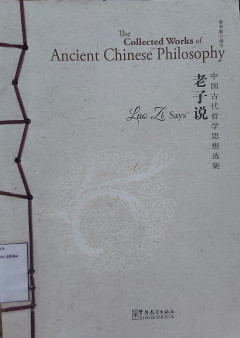
The Collected works of ancient Chinese philosophy: Laq Zi Says
This book presents selected philosophical teachings of Lao Zi, one of the foundational figures of Daoism and ancient Chinese philosophy. Through translated classical texts, it explores key concepts such as the Dao, naturalness (ziran), non-action (wuwei), harmony, and simplicity. The work provides modern readers with an accessible understanding of Lao Zi’s philosophical ideas and their lastin…
- Edisi
- Pertama
- ISBN/ISSN
- 978-7-5138-0511-7
- Deskripsi Fisik
- 123 pages : illustrations ; 23 cm
- Judul Seri
- -
- No. Panggil
- 181.11 OZI c

The Collected works of ancient Chinese philosophy: Zhuang Zi Says
This book presents selected philosophical ideas of Zhuang Zi, one of the most influential thinkers in ancient Chinese philosophy and a central figure in Taoism. Through translated and interpreted classical texts, the book explores themes such as nature, freedom, spontaneity, relativity, and the relationship between humanity and the Dao. It aims to provide modern readers with accessible insights…
- Edisi
- Pertama
- ISBN/ISSN
- 978-7-5138-0511-7
- Deskripsi Fisik
- 123 pages : illustrations ; 23 cm
- Judul Seri
- -
- No. Panggil
- 181.11 GZI c
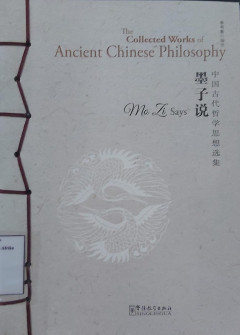
The Collected works of ancient Chinese philosophy: Me Zi Says
Mo Zi Says is a volume in The Collected Works of Ancient Chinese Philosophy series that introduces the core ideas of Mozi, an influential philosopher of ancient China and the founder of Mohism. The book presents selected philosophical thoughts emphasizing universal love, social equality, opposition to aggression, and pragmatic governance. Through English translations and interpretations of clas…
- Edisi
- Pertama
- ISBN/ISSN
- 978-7-5138-0511-7
- Deskripsi Fisik
- 123 pages : illustrations ; 23 cm
- Judul Seri
- -
- No. Panggil
- 181.11 EZI c
 Karya Umum
  Filsafat
  Agama
Agama  Ilmu-ilmu Sosial
  Bahasa
  Ilmu-ilmu Murni
  Ilmu-ilmu Terapan
  Kesenian, Hiburan, dan Olahraga
  Kesusastraan
  Geografi dan Sejarah