Ditapis dengan
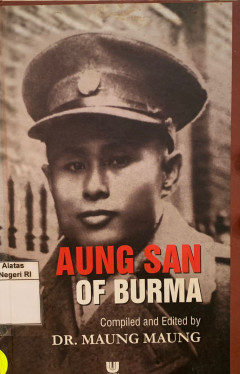
Aung San of Burma
Tribute to Aung San (1945-47) in the form of documents selected and edited by Dr. Maung Maung from Aung San's own speechs and writings, together with the memories and appreciative essays by Burmese and Western cotemporaries of Aung San, with a who's who.
- Edisi
- Ed. 3
- ISBN/ISSN
- 978-99971-851-5-0
- Deskripsi Fisik
- 204 pages : illustration ; 21 cm
- Judul Seri
- -
- No. Panggil
- 923. 2591 Mau a

Myanmar's external trade: An overview in the Southeast Asian context
The grim state of the Myanmar economy in the second half of the 1980s forced the previous government of the Burma Socialist Programme Party to liberalize its external and internal trade. Since the military coup following political chaos in the later part of 1988, Japan, the European Community and the United States have suspended new economic aid to Myanmar. This has led to the present military …
- Edisi
- -
- ISBN/ISSN
- 981-3016-13-2
- Deskripsi Fisik
- viii, 116 pages : illustrations (black and white) ; 23 cm
- Judul Seri
- -
- No. Panggil
- 382 Tha m
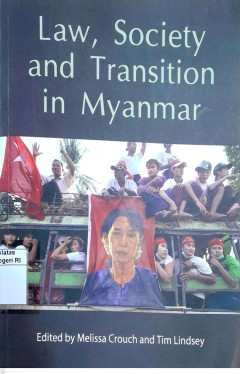
Law, society and transition in Myanmar
This edited volume to addresses the dynamics of the legal system of Myanmar/Burma in the context of the dramatic but incomplete transition to democracy that formally began in 2011. It includes contributions from leading scholars in the field on a range of key legal issues now facing Myanmar, such as judicial independence, constitutional law, human rights and institutional reform. It features ch…
- Edisi
- -
- ISBN/ISSN
- 9781849465977
- Deskripsi Fisik
- xvi, 422 pages ; 25 cm
- Judul Seri
- -
- No. Panggil
- 348.591 Cro l

Myanmar: Beyond politics to societal imperatives
After reviewing the historical forces and human agencies which have shaped contemporary Myanmar, this book addresses healthcare and public policy provision, with suggestions as to what potential roles the international community might have in assisting Myanmar's future socioeconomic development.
- Edisi
- First Published
- ISBN/ISSN
- 9812303006
- Deskripsi Fisik
- xvi, 192 pages : illustrations, index ; 23 cm
- Judul Seri
- -
- No. Panggil
- 320.9591 Hla h

Doing Business in Myanmar 2015: A guide for investors answering their almost …
- Edisi
- -
- ISBN/ISSN
- 9780000005000
- Deskripsi Fisik
- 73 pages ; 23 cm
- Judul Seri
- -
- No. Panggil
- 650.07 Bri d
- Edisi
- -
- ISBN/ISSN
- 9780000005000
- Deskripsi Fisik
- 73 pages ; 23 cm
- Judul Seri
- -
- No. Panggil
- 650.07 Bri d

Perfect hostage: A life of Aung San Suu Kyi
A biography of Daw Aung San Suu Kyi, one of the world’s most renowned freedom fighters and advocates of non-violence, and the figurehead for Burma’s struggle for democracy. Recipient of the Nobel Peace Prize, she has dedicated her life to the liberation of her country.
- Edisi
- First Edition
- ISBN/ISSN
- 9780099491156
- Deskripsi Fisik
- xxix, 450 pages : illustration, glossary, index ; 22 cm
- Judul Seri
- -
- No. Panggil
- 959.1053092 Win p

Burma: Insurgency and the politics of ethnicity
Burma remains a land in deep crisis. The popular uprising of 1988 swept away 26 years of military rule under General Ne Win in name only. The National League for Democracy of Aung San Suu Kyi won a landslide victory in the 1990 election. But, as this book relates, the military remained in control and the future of Burma looks more problematic than ever. With unparalleled command of largely inac…
- Edisi
- First Edition
- ISBN/ISSN
- 0862328691
- Deskripsi Fisik
- xviii, 492 pages : index, notes ; 25 cm
- Judul Seri
- -
- No. Panggil
- 959.105 Smi b
 Karya Umum
  Filsafat
  Agama
Agama  Ilmu-ilmu Sosial
  Bahasa
  Ilmu-ilmu Murni
  Ilmu-ilmu Terapan
  Kesenian, Hiburan, dan Olahraga
  Kesusastraan
  Geografi dan Sejarah