Ditapis dengan

The Road to terror: Stalin and the self-destruction of the Bolsheviks, 1932 
The Road to Terror presents a comprehensive documentary record of Stalin’s Great Purges, revealing how the Bolshevik leadership descended into political paranoia and internal destruction between 1932 and 1939. Drawn from previously inaccessible Soviet archives, the book exposes the mechanisms of repression, the psychological climate of fear, and the bureaucratic processes that facilitated mas…
- Edisi
- -
- ISBN/ISSN
- 978-0-300-10407-3
- Deskripsi Fisik
- xv, 287 pages ; 23,5 cm
- Judul Seri
- -
- No. Panggil
- 947.0842 GET r
Russia’s crimean war
Russia’s Crimean War by historian John Shelton Curtiss provides a comprehensive analysis of the origins, development, and consequences of the Crimean War from the Russian perspective. Drawing extensively on Russian archival sources, Curtiss examines the political decisions of Tsar Nicholas I, diplomatic failures, military operations, and the broader European context that shaped the conflict. …
- Edisi
- -
- ISBN/ISSN
- 0-8223-0374-4
- Deskripsi Fisik
- xi, 597 pages : illustrations ; 24 cm
- Judul Seri
- -
- No. Panggil
- 947.07 CUR r
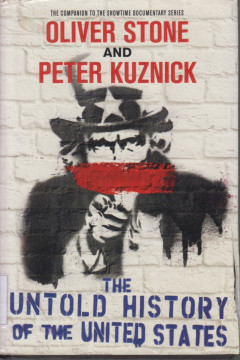
The Untold history of the United States
This book offers a revisionist account of United States history as presented by filmmaker Oliver Stone and historian Peter Kuznick. Serving as a companion to the acclaimed documentary series, it reexamines key political, military, and ideological developments of the 20th and early 21st centuries. The authors challenge conventional narratives by highlighting overlooked events, suppressed documen…
- Edisi
- -
- ISBN/ISSN
- 978-1-4516-1351-3
- Deskripsi Fisik
- xxxiii, 750 pages : illustrations ; 24 cm
- Judul Seri
- -
- No. Panggil
- 973.91 STO u
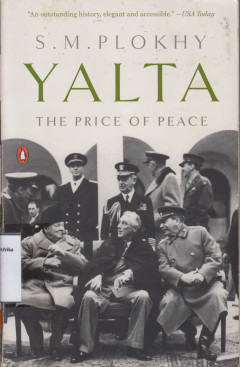
Yalta: The Price of peace
“Yalta: The Price of Peace” by historian Serhii Plokhy provides a comprehensive examination of the 1945 Yalta Conference, where Roosevelt, Churchill, and Stalin negotiated the political shape of the postwar world. Drawing from newly available archival materials, Plokhy reveals the strategic calculations, personal dynamics, and geopolitical pressures that shaped the decisions leading to the …
- Edisi
- -
- ISBN/ISSN
- ISBN 978-0-670-02141-3
- Deskripsi Fisik
- xxviii, 451 pages ; 21,5 cm
- Judul Seri
- -
- No. Panggil
- 940.5314 PLO y
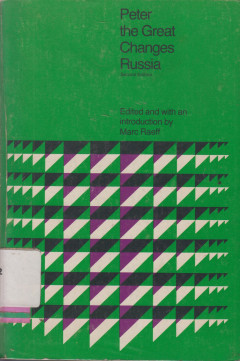
Peter the great changes Russia
This book offers a concise yet insightful exploration of the sweeping reforms introduced by Peter the Great and their profound impact on Russian society, government, and culture. Through selected documents and scholarly commentary, editor Marc Raeff highlights the transformation of Russia from a traditional tsarist state into an emerging European power. The volume provides historical context, a…
- Edisi
- -
- ISBN/ISSN
- 0-669-82701-0
- Deskripsi Fisik
- xxiv, 199 pages ; 20,5 cm
- Judul Seri
- -
- No. Panggil
- 947.05 RAE p
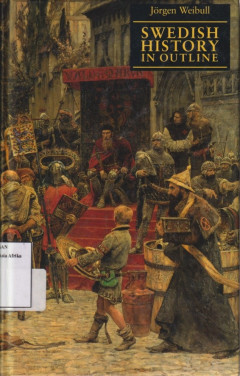
Swedish history in outline
This book provides a concise overview of Swedish history from its earliest periods to modern times. Written by historian Jörgen Weibull, it presents major political, social, and cultural developments that shaped Sweden’s national identity. The text highlights key historical events, influential figures, and the evolution of Swedish society within the broader Scandinavian and European contexts…
- Edisi
- -
- ISBN/ISSN
- 91-520-0294-2
- Deskripsi Fisik
- 145 pages : illustration ; 22,5 cm
- Judul Seri
- -
- No. Panggil
- 948.5 WEI s
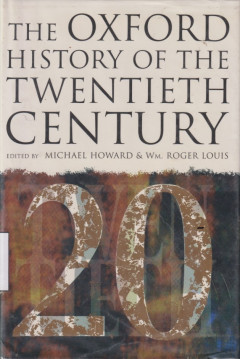
The Oxford history of the twentieth century
This book presents a comprehensive overview of 20th-century world history through contributions from leading international historians. Edited by Michael Howard and William Roger Louis, this work examines the political, economic, social, cultural, and technological developments that shaped the modern world. Major themes such as the world wars, colonialism and decolonization, global economic chan…
- Edisi
- -
- ISBN/ISSN
- 0–19–820428–0
- Deskripsi Fisik
- xxii, 458 pages : illustration ; 24 cm
- Judul Seri
- -
- No. Panggil
- 909.82 HOW o

Massachusetts, colony to commonwealth: Documents on the formation of Its cons…
This documentary collection presents key political, legal, and constitutional writings that trace the transformation of Massachusetts from a British colony to an independent commonwealth during the American Revolution. Edited by Robert J. Taylor, the volume compiles debates, legislative records, drafts, pamphlets, and other primary sources that illuminate the process leading to the creation of …
- Edisi
- -
- ISBN/ISSN
- 0-393-09396-4
- Deskripsi Fisik
- xi, 166 pages : illustrations ; 23,5 cm
- Judul Seri
- -
- No. Panggil
- 342.74402 TAY m
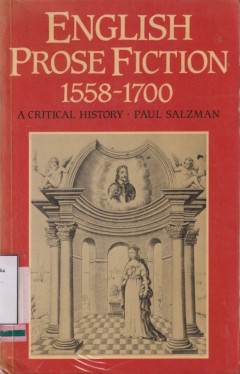
English prose fiction 1558–1700; A Critical history
This book is a critical study of the development of English prose fiction from the Elizabethan period (1558) to the early eighteenth century. Paul Salzman traces the earliest forms of narrative prose, including romances, adventure stories, morality plays, and proto-novellas that preceded the modern novel. Through literary historical analysis and critical reading, the book explains the cultural,…
- Edisi
- -
- ISBN/ISSN
- 0–19–812873–8
- Deskripsi Fisik
- xii, 391 pages ; 21,5 cm
- Judul Seri
- -
- No. Panggil
- 823.309 SAL e

Weapons and equipment of the Victorian soldier
This book provides a comprehensive overview of the weaponry, equipment, and protection used by British soldiers during the Victorian era. Donald Featherstone explains the development of firearms, field equipment, military uniforms, tactics, and the impact of technological change on British troops throughout the 19th century. Illustrated by John Mollo, this book is an essential reference for mil…
- Edisi
- -
- ISBN/ISSN
- 0-7137-0847-6
- Deskripsi Fisik
- 130 pages : illustration ; 25,5 cm
- Judul Seri
- -
- No. Panggil
- 355.80941 FEA w
 Karya Umum
  Filsafat
  Agama
Agama  Ilmu-ilmu Sosial
  Bahasa
  Ilmu-ilmu Murni
  Ilmu-ilmu Terapan
  Kesenian, Hiburan, dan Olahraga
  Kesusastraan
  Geografi dan Sejarah