Ditapis dengan
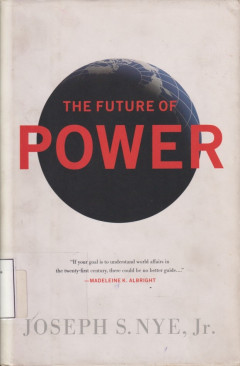
The Future of power
This book examines the changing dynamics of power in the era of globalization and information technology. Joseph S. Nye Jr., the figure who introduced the concept of "soft power," describes how traditional forms of power are shifting due to economic power, information flows, and global networks. Nye believes that the future of international relations will no longer be determined solely by milit…
- Edisi
- -
- ISBN/ISSN
- 978-1-58648-891-8
- Deskripsi Fisik
- xviii, 300 pages : illustration ; 24 cm
- Judul Seri
- -
- No. Panggil
- 303.33 NYE f
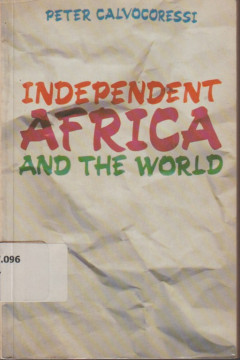
Independent Africa and the world
Peter Calvocoressi's "Independent Africa and the World" examines the political dynamics, international relations, and economic challenges of African countries after gaining independence in the 1960s. The book outlines how independent African states interacted with major world powers, the issue of economic dependency, internal political developments, and Africa's position in the modern internati…
- Edisi
- -
- ISBN/ISSN
- 0-582-29654-4
- Deskripsi Fisik
- 151 pages : illustration ; 20 cm
- Judul Seri
- -
- No. Panggil
- 327.096 CAL i
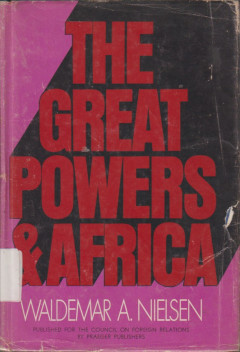
The Great powers and Africa
The book "The Great Powers and Africa" examines the involvement of major powers—such as the United States, the Soviet Union, the United Kingdom, France, and China—in the political, economic, and strategic dynamics of the African continent in the post-independence era. Waldemar A. Nielsen illustrates how global geopolitical interests shaped the development of African states, including …
- Edisi
- -
- ISBN/ISSN
- -
- Deskripsi Fisik
- xiii, 431 pages ; 22 cm
- Judul Seri
- -
- No. Panggil
- 327.6 NIE g
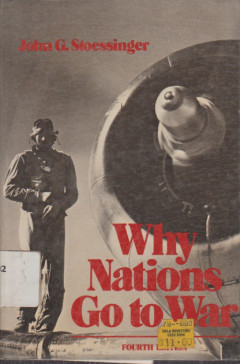
Why nations go to war
John G. Stoessinger's Why Nations Go to War is a classic analysis of the factors that drive states to war. Using a case study approach, this fourth edition examines major conflicts of the 20th century and highlights the role of political leaders, misperceptions, miscalculations, and international dynamics as crucial factors underlying the outbreak of war. Stoessinger emphasizes that the decisio…
- Edisi
- -
- ISBN/ISSN
- 0-312-87856-7
- Deskripsi Fisik
- xiii, 221 pages ; 21 cm
- Judul Seri
- -
- No. Panggil
- 355.02 STO w

Political realism and international morality: Ethics in the nuclear age
This book is a collection of papers presented at the Tenth Plenary Conference of the American Section of the International Association for Philosophy of Law and Social Philosophy, held in 1984 at the University of Notre Dame. It provides an in-depth discussion of the relationship between political realism and international morality, particularly in the context of the nuclear age. The contributo…
- Edisi
- -
- ISBN/ISSN
- 0-8133-0456-3
- Deskripsi Fisik
- x, 271 pages ; 23 cm
- Judul Seri
- -
- No. Panggil
- 172.4 KIP p
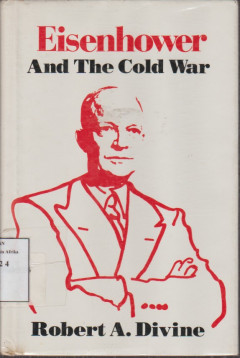
Eisenhower and the cold war
Robert A. Divine's Eisenhower and the Cold War explores President Dwight D. Eisenhower's foreign policy during the Cold War (1953–1961). Divine demonstrates that Eisenhower, despite his cautious approach, played a crucial role in shaping the United States' global strategy through his policies of containing communism, strengthening international alliances, and using nuclear power as a deterren…
- Edisi
- -
- ISBN/ISSN
- 0-19-502823-6
- Deskripsi Fisik
- ix, 181 pages ; 22 cm
- Judul Seri
- -
- No. Panggil
- 327.73 DIV e
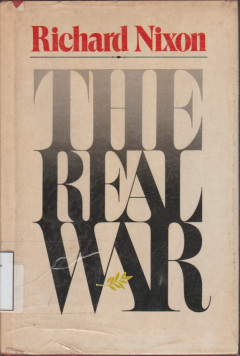
The Real war
The Real War is a global political and strategic analysis written by former US President Richard Nixon. In it, Nixon outlines his views on the geopolitical threats facing the United States during the Cold War, particularly the ideological and military rivalry with the Soviet Union. He emphasizes the need for a firm foreign policy, strengthened national defense, and realistic diplomacy to mainta…
- Edisi
- -
- ISBN/ISSN
- 0-446-51201-X
- Deskripsi Fisik
- 341 pages : illustration ; 23,5 cm
- Judul Seri
- -
- No. Panggil
- 327.73 NIX r
India, Indonesia and the new cold war
India, Indonesia, and the New Cold War, edited by K. Subrahmanyam, examines the dynamics of Asian politics and security during the early days of the “New Cold War” in the 1980s. It examines the strategic positions of India and Indonesia in the global arena, particularly in relation to foreign policy, regional security, and the relationship between the two countries in the face of tensions b…
- Edisi
- -
- ISBN/ISSN
- -
- Deskripsi Fisik
- 192 pages ; 25 cm
- Judul Seri
- -
- No. Panggil
- 327.17 SUB i
The United States and the Palestinians
This book analyzes the relationship between the United States and the Palestinian people in the context of Middle Eastern politics. Mohammed K. Shadid examines changes in American foreign policy over time, the influence of political lobbies, and the dynamics of US relations with Arab states and Israel. Using historical data, diplomatic policy, and political analysis, the book reveals how the Pa…
- Edisi
- -
- ISBN/ISSN
- 0-312-83315-6
- Deskripsi Fisik
- 252 pages : illustration ; 22 cm
- Judul Seri
- -
- No. Panggil
- 327.730 SHA u

Dukungan Indonesia untuk Palestina
Buku ini disusun oleh Direktorat Timur Tengah Kementerian Luar Negeri Republik Indonesia sebagai dokumentasi komprehensif mengenai berbagai bentuk dukungan Indonesia terhadap perjuangan rakyat Palestina. Isinya mencakup kerangka kebijakan luar negeri Indonesia, dukungan politik di forum internasional, bantuan kemanusiaan melalui berbagai lembaga pemerintah dan non-pemerintah, serta peran masyar…
- Edisi
- -
- ISBN/ISSN
- -
- Deskripsi Fisik
- xiv, 130 pages : illustration ; 21 cm
- Judul Seri
- -
- No. Panggil
- 327.598 LES d
 Karya Umum
  Filsafat
  Agama
Agama  Ilmu-ilmu Sosial
  Bahasa
  Ilmu-ilmu Murni
  Ilmu-ilmu Terapan
  Kesenian, Hiburan, dan Olahraga
  Kesusastraan
  Geografi dan Sejarah