Ditapis dengan

From Bandung to Colombo: Conferences of the non-aligned countries, 1955–75
This book provides a comprehensive overview of the Non-Aligned Movement from the 1955 Bandung Conference to the 1975 Colombo Conference. Edited by A. W. Singham and Tran Van Dinh, the volume presents key documents, speeches, resolutions, and commentary on the political and diplomatic evolution of the non-aligned countries during the Cold War. It examines the struggle for independence, global so…
- Edisi
- -
- ISBN/ISSN
- 0-89388-220-8
- Deskripsi Fisik
- v, 223 pages : illustrations ; 28 cm
- Judul Seri
- -
- No. Panggil
- 327.172 SIN f
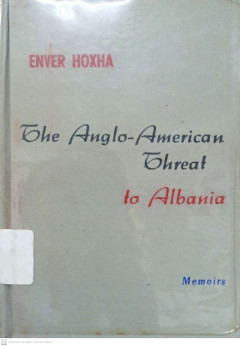
The Anglo-American threat to Albania : Memoirs of the national liberation war
The Anglo-American Threat to Albania by Enver Hoxha, First Secretary of the Central Committee of the Party of Labour of Albania, reflects events he lived through, his personal impressions, and gives conclusions, which provide lessons for all periods, drawn from the hostile activity carried out openly or behind the scenes by the Anglo Bourgeois attempts to put Albania under its imperialistic swa…
- Edisi
- -
- ISBN/ISSN
- -
- Deskripsi Fisik
- 446 pages, 20 x 14 cm
- Judul Seri
- -
- No. Panggil
- 973 HOX t

Southeast Asia in international politics, 1941-1956
This book provides a comprehensive analysis of Southeast Asia’s position in international politics from 1941 to 1956, a period marked by World War II, Japanese occupation, postwar reconstruction, and the emergence of nationalist movements throughout the region. Evelyn Colbert examines how global power rivalries—particularly between the United States, the United Kingdom, and emerging Asian s…
- Edisi
- -
- ISBN/ISSN
- 0-8014-0971-3
- Deskripsi Fisik
- 372 pages ; 23,5 cm
- Judul Seri
- -
- No. Panggil
- 327.0959 COL s

Southeast Asia in international politics, 1941-1956
This book explains about international relations of Southeast Asia during the critical period from World War II to the years immediatelly following the first Indochina settlement. Set against a global background, it explores the policies not only of the countries of the region (including Australia and New Zealand), but also of outside countries with interest in Southeast Asia-the European power…
- Edisi
- -
- ISBN/ISSN
- 0-8014-0971-3
- Deskripsi Fisik
- 372 pages : index ; 24 cm
- Judul Seri
- -
- No. Panggil
- 327.0959 COL s
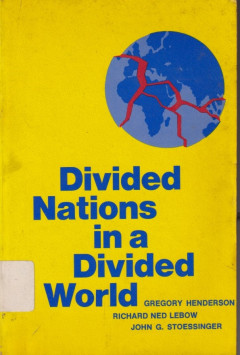
Divided nations in a divided world
Divided Nations in a Divided World explores the political dynamics and international implications of nations that are internally split, such as Korea, Germany, and Vietnam. The authors analyze how historical conflicts, ideological divisions, and global power rivalries shape the status and foreign policies of divided states. The book provides a comprehensive examination of the challenges these n…
- Edisi
- -
- ISBN/ISSN
- 0-679-30056-2
- Deskripsi Fisik
- viii, 470 pages : illustration ; 22,5 cm
- Judul Seri
- -
- No. Panggil
- 327.1 HEN d
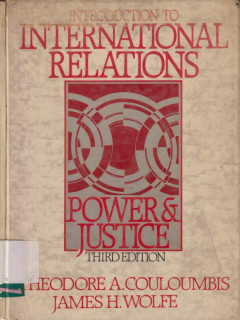
Introduction to international relations: Power and justice
Introduction to International Relations: Power and Justice provides a comprehensive overview of major theories, concepts, and issues in international relations. Couloumbis and Wolfe explore how power, justice, national interests, and global institutions shape interactions among states. This third edition examines classical and contemporary perspectives, including realism, idealism, conflict res…
- Edisi
- Edisi Ketiga
- ISBN/ISSN
- 0-13-485327-X
- Deskripsi Fisik
- xv, 426 pages ; 24 cm
- Judul Seri
- -
- No. Panggil
- 327 COU i
International relations
International Relations by M. Margaret Ball and Hugh B. Killough provides a foundational overview of the major concepts, actors, and dynamics shaping relations among states. Published under the auspices of the London Institute of World Affairs, this work examines the historical evolution of international systems, the role of diplomacy, conflict and cooperation among nations, and the influence o…
- Edisi
- -
- ISBN/ISSN
- -
- Deskripsi Fisik
- viii, 667 pages : illustration ; 23,5 cm
- Judul Seri
- -
- No. Panggil
- 327.1 BAL i

International law in a changing world: Cases, documents, and readings
This book provides a comprehensive collection of cases, documents, and readings that illustrate the dynamic nature of international law in a rapidly changing world. Edited by Edward Collins, Jr., the volume presents essential materials that explore the evolution of legal principles, state behavior, global governance, and the challenges faced by the international community. Designed for students…
- Edisi
- -
- ISBN/ISSN
- -
- Deskripsi Fisik
- xvi, 493 pages ; 24 cm
- Judul Seri
- -
- No. Panggil
- 341 COL i

The Road to Tahrir square: Egypt and the United States from the rise of Nasse…
The Road to Tahrir Square chronicles the complex and often turbulent relationship between Egypt and the United States from the 1950s to the early 2010s. Lloyd C. Gardner traces how successive American administrations engaged with Egyptian leaders—from Gamal Abdel Nasser through Anwar Sadat to Hosni Mubarak—shaping the political trajectory of the Middle East’s most influential nation. The …
- Edisi
- -
- ISBN/ISSN
- 978-1-59558-721-3
- Deskripsi Fisik
- x, 230 pages ; 21 cm
- Judul Seri
- -
- No. Panggil
- 327.73062 GAR r
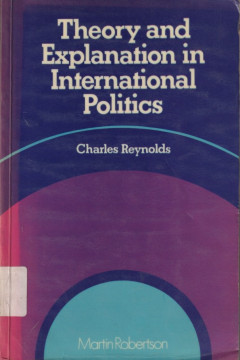
Theory and explanation in international politics
This book provides a comprehensive examination of theoretical approaches used to explain international politics. Charles Reynolds discusses the nature of political explanation, the development of theoretical frameworks in international relations, and the methodological issues surrounding the study of global political behavior. By analyzing major theories and their applications, the book offers …
- Edisi
- -
- ISBN/ISSN
- 0-85520-025-1
- Deskripsi Fisik
- viii, 367 pages ; 23,5 cm
- Judul Seri
- -
- No. Panggil
- 327.101 REY t
 Karya Umum
 Filsafat
 Agama
 Ilmu-ilmu Sosial
 Bahasa
 Ilmu-ilmu Murni
 Ilmu-ilmu Terapan
 Kesenian, Hiburan, dan Olahraga
 Kesusastraan
 Geografi dan Sejarah