Ditapis dengan

Necessity, proportionality, and the use of force by States
There has been considerable debate in the international community as to the legality of the forceful actions in Kosovo in 1999, Afghanistan in 2002 and Iraq in 2003 under the United Nations Charter. There has been consensus, however, that the use of force in all these situations had to be both proportional and necessary. Against the background of these recent armed conflicts, this book offers t…
- Edisi
- Cet. 1
- ISBN/ISSN
- 0-521-83752-9
- Deskripsi Fisik
- xxiii, 259 pages ; 23 cm
- Judul Seri
- -
- No. Panggil
- 341.6 Gar n
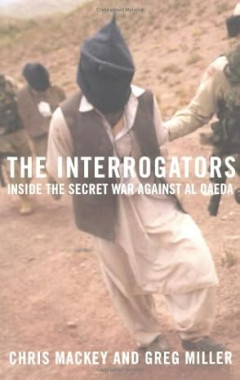
The interrogators inside the secret war against Al Qaeda
In a narrative that reads like a spy thriller, Mackey reveals how he and his fellow interrogators managed to crack even the hardest cases as well as the mis- takes that were made: the blown interrogations, abuses against prisoners, and the failures of American intelligence in the war against terror. From glimpses into classrooms of the U.S. government's secret inter- rogation school to the batt…
- Edisi
- Ed. 1
- ISBN/ISSN
- 0-316-87112-5
- Deskripsi Fisik
- xxvii, 484 pages ; 24 cm
- Judul Seri
- -
- No. Panggil
- 958.1047 Mac i
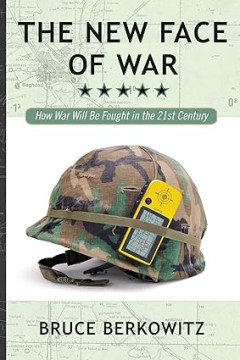
The new face of war: How war will be fought in the 21st century
This book is about the future of battle. It is about the threats the United States will face in the years ahead, and how we must prepare for them. It focuses especially on how the Information Revolution is defining these threats and providing the solutions for dealing with them. The New Face of War explains how they fight and how they will win or lose. There are four key dynamics to the new …
- Edisi
- -
- ISBN/ISSN
- 0-7432-1249-5
- Deskripsi Fisik
- xii, 257 pages ; 24 cm
- Judul Seri
- -
- No. Panggil
- 355.02 Ber n

Prevention of armed conflict: Report of the secretary-general
This report looks at the progress that has been achieved in developing the conflict prevention capacity of the United Nations. It also provides recommendations on how efforts of the United Nations system in this field could be further enhanced, with the cooperation and active involvement of Member States, who ultimately have primary responsibility for conflict prevention. This report stresses t…
- Edisi
- -
- ISBN/ISSN
- 92-1-100891-3
- Deskripsi Fisik
- xi, 106 pages ; 23 cm
- Judul Seri
- -
- No. Panggil
- 355.02 Ann p

My neighbor, my enemy: Justice and community in the aftermath of mass atrocity
Tackling the crucial issue of our day--the rebuilding of countries following ethnic cleansing and genocide, this book evaluates the role of trials and tribunals with regard to social reconstruction and reconciliation. The voices of the people of Rwanda and Yugoslavia are heard through the results of extensive surveys and recorded conversations. Their thoughts of past and future controversially …
- Edisi
- -
- ISBN/ISSN
- 0-521-54264-2
- Deskripsi Fisik
- xix, 349 pages ; 23 cm
- Judul Seri
- -
- No. Panggil
- 341.69 Sto m
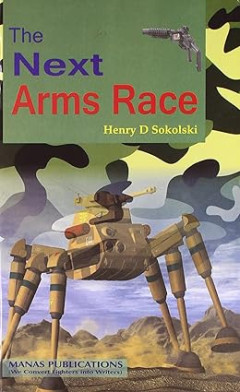
The next arms race
The book is divided in four parts containing fifteen chapters by scholars of eminence. Part I covers the Asian countries, Part II covering the Middle East countries including Israel and African countries, Part III covers South Asian countries including the nuclear weapons capability of China, India and Pakistan. Part IV of the book deals with missile defence and move towards nuclear arms contro…
- Edisi
- -
- ISBN/ISSN
- 978-81-7049-455-3
- Deskripsi Fisik
- 384 pages : illustrations (black and white) ; 22 cm
- Judul Seri
- -
- No. Panggil
- 355.02 Sok n

Understanding international conflicts: An introduction to theory and history …
This book contents: 1. Is there an Enduring Logic of Conflict in World Politics? 2. Origins of the Great Twentieth-Century Conflicts. 3. Balance of Power and World War I. 4. The Failure of Collective Security and World War II. 5. The Cold War. 6. Intervention, Institutions, and Regional Conflicts. 7. Interdependence and Globalization. 8. The Information Age. 9. A New World Order?
- Edisi
- Ed. 4
- ISBN/ISSN
- 0-321-08987-1
- Deskripsi Fisik
- xii, 275 pages : illustrations (black and white) ; 23 cm
- Judul Seri
- -
- No. Panggil
- 327.0904 Nye u

Global warming: Looking beyond Kyoto
The latest report from the Intergovernmental Panel on Climate Change (IPCC) reflects the growing international consensus that the earth's climate is being changed by anthropogenic greenhouse gasses. Evidence presented by the IPCC and others points to the potential for increasingly dangerous weather, new disease outbreaks, regional water shortages, the loss of habitat and species, and other dist…
- Edisi
- -
- ISBN/ISSN
- 978-0-8157-9715-9
- Deskripsi Fisik
- x, 237 pages : illustrations (black and white) ; 23 cm
- Judul Seri
- -
- No. Panggil
- 363.73874 Zed g

Food aid in Sudan: A history of power, politics and profit
Food Aid in Sudan argues that the situation in Sudan is emblematic of a far wider problem. Analysing the history of food aid in the country over fifty years, Jaspars shows that such aid often serves to enrich local regimes and the private sector while leaving war-torn populations in a state of permanent emergency. Drawing on her decades of experience as an aid worker and researcher in the regio…
- Edisi
- Cet. 1
- ISBN/ISSN
- 978-1-78699-209-3
- Deskripsi Fisik
- xiv, 249 pages : illustration (black and white) ; 22 cm
- Judul Seri
- -
- No. Panggil
- 363.88309624 Jas f
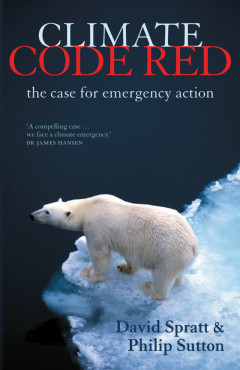
Climate code red: The case for emergency action
This meticulously documented call-to-action reveals extensive scientific evidence that the global warming crisis is far worse than officially indicated - and that we're almost at the point of no return. Serious climate-change impacts are already happening- large ice-sheets are disintegrating, sea-level rises will reach 5 metres this century, and we are seeing devastating species loss. It is no …
- Edisi
- -
- ISBN/ISSN
- 9781921372209
- Deskripsi Fisik
- xv, 304 pages : illustrations (black and white) ; 21 cm
- Judul Seri
- -
- No. Panggil
- 363.73874 Spr c
 Karya Umum
  Filsafat
  Agama
Agama  Ilmu-ilmu Sosial
  Bahasa
  Ilmu-ilmu Murni
  Ilmu-ilmu Terapan
  Kesenian, Hiburan, dan Olahraga
  Kesusastraan
  Geografi dan Sejarah