Ditapis dengan
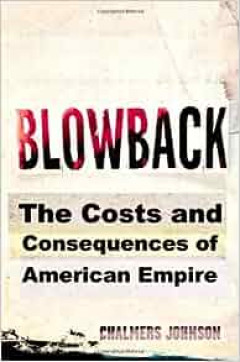
Blowback: The costs and consequences of American empire
Blowback, a term invented by the CIA, refers to the uninted consequences of American policies. In this sure-to-be-controversial book, Chalmers Johnson lays out in vivid detail the dangers faced by our overextended empire, which insists on projecting its military power to every corner of the earth and using American capital and markets to force global economic integration on its own terms. From …
- Edisi
- First Edition
- ISBN/ISSN
- 0-8050-6238-6
- Deskripsi Fisik
- xix, 268 pages : index ; 26 cm
- Judul Seri
- -
- No. Panggil
- 327.73 Joh b
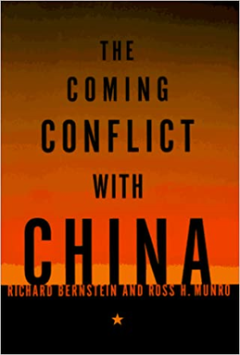
The coming conflict with China
Richard Bernstein and Ross Munro, former Beijing bureau chiefs with long experience in Asian affairs, present a clear-eyed and uncompromising look at the potentially disastrous collision course now taking shape in US-China relations
- Edisi
- First Edition
- ISBN/ISSN
- 0-679-45463-2
- Deskripsi Fisik
- xix, 245 pages : map : index ; 21 cm
- Judul Seri
- -
- No. Panggil
- 327.51073 Ber c
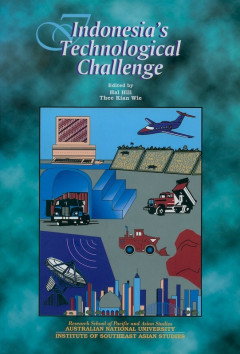
Indonesia's technological challenge
This volume provides a lively review of recent economic and political developments in Indonesia and addresses the issue of the country’s “Technological Challenge” from a variety of perspectives. These include the policy foundations, the analytical issues, case studies, international co-operation and transfers, as well as particular challenges at the sectoral level and among both large and…
- Edisi
- -
- ISBN/ISSN
- 981-230-013-9
- Deskripsi Fisik
- xxv, 414 pages : illustrations (black and white) ; 23 cm
- Judul Seri
- -
- No. Panggil
- 600.598 Hil i

East Timor: Compilation of statements of Indonesian Delegations before the In…
This compilation focuses on the statements made by Indonesian delegations before international forums regarding the issue of East Timor. East Timor's struggle for independence and the subsequent geopolitical developments have been a prominent issue in international diplomacy. Indonesia's role in East Timor's history, from its annexation in 1975 to the eventual referendum and independence in 199…
- Edisi
- -
- ISBN/ISSN
- -
- Deskripsi Fisik
- iii, 55 pages ; 21 cm.
- Judul Seri
- -
- No. Panggil
- 959.8 Ind e

Hot, flat, and crowded: Why the world needs a green revolution-and how we can…
Friedman takes a fresh and provocative look at two of the biggest challenges we face today: the global environmental crisis and America's surprising loss of focus and national purpose since 9/11. It is a groundbreaking account of where we stand now, and shows us how the solutions to these two big problems are linked- how we can restore the world and revive America at the same time.
- Edisi
- -
- ISBN/ISSN
- 978-1-846-14129-4
- Deskripsi Fisik
- 438 pages : index ; 25 cm
- Judul Seri
- -
- No. Panggil
- 320.58 Fri h

The political economy of China's provinces
Traditionally, political scientists and economists have seen China as a single entity and business people have seen China as a single market. This book challenges the notion of a centralised and unified China, and outlines how provinces are taking on new economic and political roles, forced upon them by decentralisation.It is the most thorough data on contemporary Chinese provinces available an…
- Edisi
- -
- ISBN/ISSN
- 9780415207768
- Deskripsi Fisik
- x, 287 pages ; 23,5 cm.
- Judul Seri
- -
- No. Panggil
- 338.951 Hen p

Soft Power: The means to sucess in world politics
Joseph Nye coined the term "soft power" in the late 1980s. It is now used frequently - and often incorrectly - by political leaders, editorial writers, and academics around the world. So what is soft power? Soft power lies in the ability to attract and persuade. Whereas hard power - the ability to coerce - grows out of a country's military or economic might, soft power arises from the attractiv…
- Edisi
- -
- ISBN/ISSN
- 1586483064
- Deskripsi Fisik
- xvi, 191 pages : illustrations ; 22 cm
- Judul Seri
- -
- No. Panggil
- 327.73 Nye s
Cooperation South (Number Two)
The South in an Era of Globalization, Cultural Globalization: Living on a Frontierless Land, Globalization of Mass Media: Opportunities and Challenges for the South, Knowledge Networking for Technology "Leapfrogging", Repositioning Developing Countries in the World Trade Organization, Technological Implications of New Growth Theory for the South, Expanding Lateral Partnerships, Latin American P…
- Edisi
- -
- ISBN/ISSN
- -
- Deskripsi Fisik
- 149 pages, 23 cm
- Judul Seri
- -
- No. Panggil
- 382 Nat c

Failed states: The abuse of power and the assault on democracy
The United States has repeatedly asserted its right to intervene militarily against "failed states" around the globe. Chomsky turns the tables, charging the United States with being a "failed state," and therefore a danger to its own people and the world. "Failed states," Chomsky writes, are those "that do not protect their citizens from violence and perhaps even destruction, that regard themse…
- Edisi
- 1st edition
- ISBN/ISSN
- 978-0-7394-7187-6
- Deskripsi Fisik
- 311 pages : index ; 21 cm.
- Judul Seri
- -
- No. Panggil
- 327 Cho f
Asia-Pacific: a strategic assesment
Dr. David Lai provides a timely assessment of the geostrategic significance of Asia-Pacific. His monograph is also a thought-provoking analysis of the U.S. strategic shift toward the region and its implications. Dr. Lai judiciously offers the following key points. First, Asia-Pacific, which covers China, Northeast Asia, and Southeast Asia, is a region with complex currents. On the one hand, the…
- Edisi
- -
- ISBN/ISSN
- 1584875739
- Deskripsi Fisik
- 23 cm
- Judul Seri
- -
- No. Panggil
- 355. 07 Lai a
 Karya Umum
 Filsafat
 Agama
 Ilmu-ilmu Sosial
 Bahasa
 Ilmu-ilmu Murni
 Ilmu-ilmu Terapan
 Kesenian, Hiburan, dan Olahraga
 Kesusastraan
 Geografi dan Sejarah