Ditapis dengan

Balance of power: theory and practice in the 21st century
Since the sudden disappearance of the Soviet Union, many scholars have argued that the balance of power theory is losing its relevance. This text examines this viewpoint, as well as looking at systematic factors that may hinder or favour the return of balance of power politics
- Edisi
- -
- ISBN/ISSN
- 0-8047-5017-3
- Deskripsi Fisik
- xiv, 384 pages : index ; 24 cm
- Judul Seri
- -
- No. Panggil
- 327.101 Pau b

Emergent actors in world politics: How states & nations develop & dissolve
The disappearance and formation of states and nations after the end of the Cold War have proved puzzling to both theorists and policymakers. Lars-Erik Cederman argues that this lack of conceptual preparation stems from two tendencies in conventional theorizing. First, the dominant focus on cohesive nation-states as the only actors of world politics obscures crucial differences between the state…
- Edisi
- -
- ISBN/ISSN
- 0-691-02148-1
- Deskripsi Fisik
- xiv, 258 pages : illustrations (black and white) : bibl: hlm 233-253 : index ; 23 cm
- Judul Seri
- -
- No. Panggil
- 327.101 Ced e

ASEAN, India, Australia: Towards closer engagement in a new Asia
India's emergence of a great power has sensitized its regional neighbours to its growing role as a key security actor in an increasingly interdependent world. Both Australia and ASEAN now view India as a major player in the formulation and application of their own broad security agendas. This emerging trilateral compendium is particularly evident in such policy areas as maritime security, clima…
- Edisi
- First Published
- ISBN/ISSN
- 978-981-230-963-1
- Deskripsi Fisik
- xxv, 417 pages : illustrations : bibl: hlm 369-398 : index ; 24 cm
- Judul Seri
- -
- No. Panggil
- 327.1 Tow a
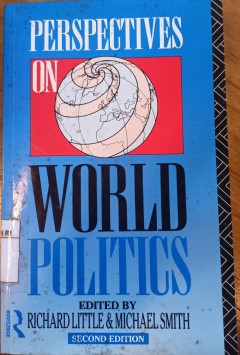
Perspectives on world politics
Perspectives on World Politics has been essential reading for students of international relations since the start of the 1980s. Its focus on three competing perspectives provides a clear and coherent organization of the divergent conceptual tools used to study world politics. Since the first edition was published, however, the orientation of each of the three perspectives has evolved and an imp…
- Edisi
- Second edition
- ISBN/ISSN
- 0-415-05624-1
- Deskripsi Fisik
- vii, 478 pages : illustrations : index ; 22 cm
- Judul Seri
- -
- No. Panggil
- 327.1 Lit p

Hatta and Indonesia's independent and Active foreign policy : Retrospect and …
This book gathers a dozen rising scholars and analysts of Indonesian foreign policy to examine the conditions and extent to which “independent and active principle” - first articulated by Vice President Mohammad Hatta in 1948 - has been used and abused in various strategic policy issues. The book launch event aims to introduce this book to the public, especially stakeholders related to the…
- Edisi
- -
- ISBN/ISSN
- 978-979-1295-44-4
- Deskripsi Fisik
- v, 181 pages : bibl: hlm 155 ; 25 cm
- Judul Seri
- -
- No. Panggil
- 327.1 Lak h
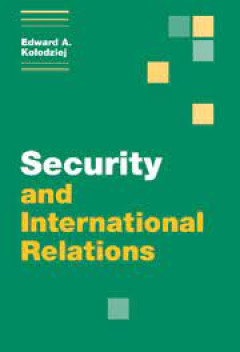
Security and international relations
This new textbook presents security studies as a branch of international relations theory, providing readers with the critical conceptual tools to develop their expertise. The author evaluates the claims of rival theories- realism, neorealism, liberal institutionalism, classical economic liberalism, and Marxism-to explain why international actors choose or eschew force and coercive threats in o…
- Edisi
- First published
- ISBN/ISSN
- 0-521-00116-1
- Deskripsi Fisik
- xi, 349 pages : index ; 23 cm
- Judul Seri
- -
- No. Panggil
- 327.1 Kol s

The global future: A brief introduction to world politics
The global future introduces you to the field of international relations while providing you with a set of concepts and analytic tools to help you understand contemporary events and emerging global trends. Contents: Part I. Trend and transformation in world politics Part II. The actors in world politics Part III. The politics of global security Part IV. The politics of global welfare Pa…
- Edisi
- Second Edition
- ISBN/ISSN
- 978-0-495-00748-7
- Deskripsi Fisik
- xxi, 386 pages : illustrations : maps : index ; 24 cm
- Judul Seri
- -
- No. Panggil
- 327.1 Keg g
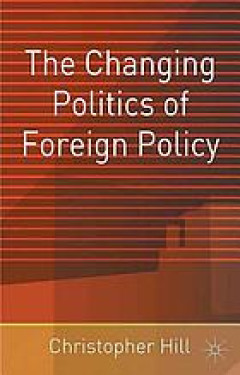
The changing politics of foreign policy
"This book is centrally concerned with the question of who and what foreign policy is - and should be - for. As such it will be of interest to the informed general reader as well as all those involved in the academic study of international relations."
- Edisi
- -
- ISBN/ISSN
- 0-333-75423-9
- Deskripsi Fisik
- xx, 376 pages : index ; 22 cm
- Judul Seri
- -
- No. Panggil
- 327.1 Hil c

Britain's future in Europe: The known plan A to remain or the unknown plan B …
Following the agreement made by Prime Minister David Cameron with the EU on 18-19 February 2016, the day for the referendum for the UK to remain in or leave the EU is set for 23 June 2016. This will be the most important decision taken by the British people in half a century, and whose consequences will live on for another half century. The first edition of this book, published in March 2015…
- Edisi
- Ed. 2
- ISBN/ISSN
- 978-1-78660-070-7
- Deskripsi Fisik
- xiv, 209 pages : index ; 23 cm
- Judul Seri
- -
- No. Panggil
- 327.1 Eme b

Global politics: A new introduction
Global Politics: A New Introduction is an innovative new textbook that provides a completely original way of teaching and learning about world politics. The book engages directly with the issues in global politics that students are most interested in, helping them to understand the key questions and theories and also to develop a critical and inquiring perspective.
- Edisi
- -
- ISBN/ISSN
- 978-0-415-43131-6
- Deskripsi Fisik
- xxxix, 524 pages : index ; 25 cm
- Judul Seri
- -
- No. Panggil
- 327.1 Edk g
 Karya Umum
 Filsafat
 Agama
 Ilmu-ilmu Sosial
 Bahasa
 Ilmu-ilmu Murni
 Ilmu-ilmu Terapan
 Kesenian, Hiburan, dan Olahraga
 Kesusastraan
 Geografi dan Sejarah