Ditapis dengan

Ethiopia photographed: historic photographs of the country and Its people tak…
This book contains a collection of historical photographs of Ethiopia taken between 1867 and 1935, a period during which Ethiopia experienced significant social, political, and cultural change. Compiled by Richard Pankhurst and Denis Gérard, the book presents important visual documentation of Ethiopian society, including portraits of individuals, everyday life, traditions, and major events in …
- Edisi
- =
- ISBN/ISSN
- 978-07103-0504-6
- Deskripsi Fisik
- 168 pages : illustration ; 28 cm
- Judul Seri
- -
- No. Panggil
- 963.04 RIC e
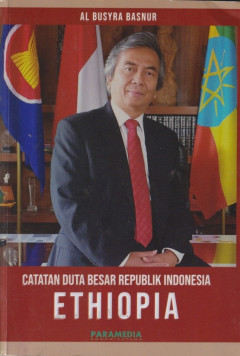
Catatan duta besar republik Indonesia: Ethiopia
This book chronicles Al Busyra Basnur's experiences during his tenure as the Indonesian Ambassador to Ethiopia. Through reflective and informative writing, the author describes the dynamics of the Indonesia-Ethiopia bilateral relationship, diplomatic activities, multilateral cooperation, and observations on Ethiopia's social, political, and cultural landscape. The book also chronicles the embas…
- Edisi
- -
- ISBN/ISSN
- 978-623-91830-3-5
- Deskripsi Fisik
- xiv, 194 halaman : ilustrasi ; 21 cm
- Judul Seri
- -
- No. Panggil
- 327.59863 BUS c
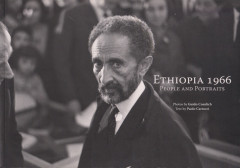
Ethiopia 1966: People and portraits
This book presents a collection of documentary photographs by Guido Cosulich, capturing life in Ethiopia in 1966. Through powerful and expressive black-and-white images, the book captures the diverse faces, expressions, and cultural aspects of Ethiopia at that time. The accompanying text by Paolo Cartocci provides historical and social context for the conditions in Ethiopia in the mid-20th cent…
- Edisi
- -
- ISBN/ISSN
- 978-999448236-8
- Deskripsi Fisik
- 135 pages : illustration ; 21 cm
- Judul Seri
- -
- No. Panggil
- 779.63 GUI e

The History of famine and epidemics in Ethiopia prior to the twentieth century
This book presents a historical examination of the famines and epidemics that occurred in Ethiopia before the twentieth century. Richard Pankhurst draws from a wide range of historical sources, including royal records, travel reports, and colonial archives, to illustrate the patterns of famine causes, types of disease outbreaks, their impact on society, and the responses of local governments an…
- Edisi
- -
- ISBN/ISSN
- -
- Deskripsi Fisik
- 120 pages : illustration ; 21 cm
- Judul Seri
- -
- No. Panggil
- 963.02 RIC t
Church and state in Ethiopia, 1270–1527
Church and State in Ethiopia, 1270–1527 is Taddesse Tamrat's monumental work examining the relationship between the Ethiopian Orthodox Church and royal institutions during the medieval period. The book discusses the origins of the Solomonic dynasty, the role of clerics in government, conflicts between religious and political power centers, and the socio-cultural dynamics that shaped pre-moder…
- Edisi
- -
- ISBN/ISSN
- -
- Deskripsi Fisik
- 327 pages : illustration ; 20,5 cm
- Judul Seri
- -
- No. Panggil
- 963.02 TAD c

Ethiopia: Transition and development in the horn of Africa
Ethiopia: Transition and Development in the Horn of Africa is a comprehensive study of Ethiopia's political, social, and economic changes in the modern era, particularly in the context of the Horn of Africa region. Mulatu Wubneh and Yohannis Abate discuss the dynamics of national development, economic challenges, government policies, international relations, and the environmental and demographi…
- Edisi
- -
- ISBN/ISSN
- 0-86531-426-8
- Deskripsi Fisik
- xv, 224 pages : illustration ; 23,5 cm
- Judul Seri
- -
- No. Panggil
- 963 MUL e
The Ethiopians: an introduction to country and people
The Ethiopians: An Introduction to Country and People is a classic work by Edward Ullendorff that provides a comprehensive overview of the history, culture, language, and society of Ethiopia. This book explains the ethnic diversity, civilizational development, religion, and Ethiopia's relationship with the outside world. Written by one of the leading experts in Ethiopian Studies, this book is a…
- Edisi
- Second Edition
- ISBN/ISSN
- -
- Deskripsi Fisik
- xiv, 235 pages : illustration ; 22 cm
- Judul Seri
- -
- No. Panggil
- 963 EDW t
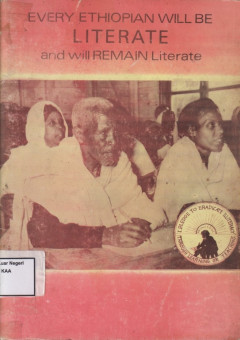
Every Ethiopian will be literate and will remain literate
Every Ethiopian Will Be Literate and Will Remain Literate is an official publication of the National Literacy Campaign Coordinating Committee that documents the background, implementation, achievements, and future targets of Ethiopia's National Literacy Campaign. This program is a major government effort to eradicate illiteracy throughout the country through a mass education approach and commun…
- Edisi
- Revised Edition
- ISBN/ISSN
- -
- Deskripsi Fisik
- viii, 62 pages : illustration ; 24 cm
- Judul Seri
- -
- No. Panggil
- 379.63 THE e

Madagascar: Mon-ile-au-bout-du-monde
Jacques Hannebicque's "Madagascar: Mon-île-au-bout-du-monde" is a documentary work that combines personal narrative, anthropological observation, and beautiful photography to depict the island of Madagascar as a world unto itself at the edge of the ocean. With contributions from figures such as Robert Boudry, Flavien Ranaivo, Jean-Aimé Rakotoarisoa, and Eugène Toulet, the book presents a com…
- Edisi
- -
- ISBN/ISSN
- 2-905259-26-4
- Deskripsi Fisik
- 167 pages; 33 cm
- Judul Seri
- -
- No. Panggil
- 969.1 HAN m
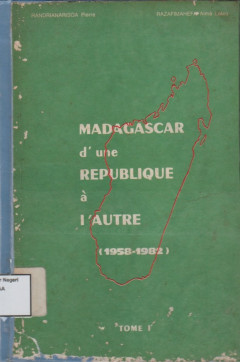
Madagascar from One Republic to Another (1958–1982)
This volume provides a detailed historical and political analysis of Madagascar’s transition between the First Republic and the Second Republic, covering the period from 1958 to 1982. Written by Pierre Randrianarisoa and Aimé Lalao Razafimahefa, the book examines key political events, institutional changes, leadership transitions, and the socio-economic transformations that shaped modern Mad…
- Edisi
- -
- ISBN/ISSN
- -
- Deskripsi Fisik
- 260 pages : illustration ; 24 cm
- Judul Seri
- -
- No. Panggil
- 969.1 RAN m
 Karya Umum
  Filsafat
  Agama
Agama  Ilmu-ilmu Sosial
  Bahasa
  Ilmu-ilmu Murni
  Ilmu-ilmu Terapan
  Kesenian, Hiburan, dan Olahraga
  Kesusastraan
  Geografi dan Sejarah