Ditapis dengan
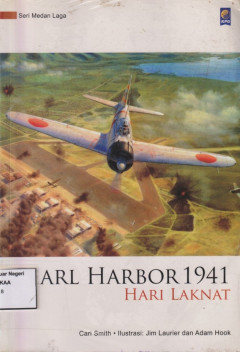
Pearl harbor 1941: Hari laknat
Pearl Harbor 1941: Hari Laknat adalah terjemahan dari karya Carl Smith yang membahas secara ringkas namun detail mengenai serangan mendadak Jepang terhadap pangkalan angkatan laut Amerika Serikat di Pearl Harbor pada 7 Desember 1941. Buku ini menggambarkan latar belakang politik dan militer menjelang serangan, strategi dan jalannya operasi Jepang, serta dampak besar yang ditimbulkan terhadap Am…
- Edisi
- -
- ISBN/ISSN
- 978-979-91-0131-0
- Deskripsi Fisik
- vi, 106 halaman ; 25 cm
- Judul Seri
- -
- No. Panggil
- 940.54 SMI p

Et demain l'Afrique
This book presents Edem Kodjo’s visionary analysis of Africa’s future within its political, economic, and social context. Kodjo outlines the major challenges facing the continent and offers strategic perspectives for advancing Africa in the modern era. It serves as an essential reference in the study of African geopolitics, development, and international relations.
- Edisi
- -
- ISBN/ISSN
- 2-234-01791-2
- Deskripsi Fisik
- 366 pages; 24 cm
- Judul Seri
- -
- No. Panggil
- 960 KOD e
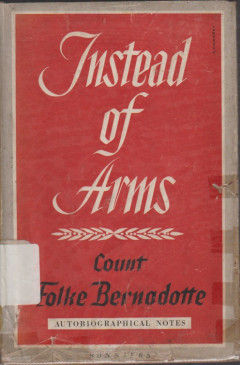
Instead of arms: Autobiographical notes
“Instead of Arms” is an autobiographical work by Swedish writer Gustaf Hellström, presenting a reflective account of his personal life, intellectual development, and experiences during a turbulent period in European history. Through intimate narrative and introspective passages, Hellström explores themes of identity, conflict, moral struggle, and the role of the writer in society. The boo…
- Edisi
- -
- ISBN/ISSN
- -
- Deskripsi Fisik
- 227 pages : illustration ; 19 cm
- Judul Seri
- -
- No. Panggil
- 920 HEL i
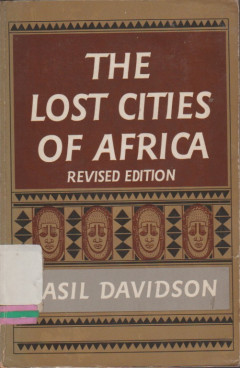
The Lost cities of Africa
Basil Davidson's The Lost Cities of Africa is a classic study of Africa's great civilizations, which for centuries have received little attention in Western historiography. Through archaeological observations, historical research, and photographs of important sites, Davidson explores ancient cities such as Timbuktu, Great Zimbabwe, Ife, Benin, and other cultural centers that attest to the high …
- Edisi
- -
- ISBN/ISSN
- -
- Deskripsi Fisik
- xxiii, 366 pages ; 19,5 cm
- Judul Seri
- -
- No. Panggil
- 930.1 DAV l
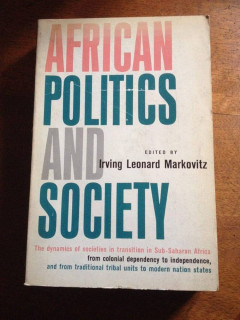
African politics and society
This book examines fundamental issues in African politics and society, including issues of government structure, development processes, social change, and the challenges facing postcolonial African states. Irving L. Markovitz analyzes the internal and external factors influencing African political dynamics and illustrates the complex relationships between the state, society, economy, and modern…
- Edisi
- -
- ISBN/ISSN
- -
- Deskripsi Fisik
- xvi, 485 pages ; 23,5 cm
- Judul Seri
- -
- No. Panggil
- 960 MAR a
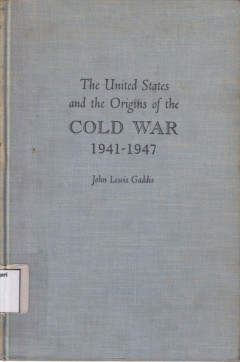
The United states and the origins of the cold war, 1941–1947
The United States and the Origins of the Cold War, 1941–1947 is a seminal historical study by John Lewis Gaddis, examining the political, diplomatic, and strategic roots of the early Cold War. Drawing on American, Soviet, and British archives, Gaddis analyzes how wartime alliances transformed into geopolitical rivalry. The book explores key decisions by Roosevelt, Truman, Stalin, and other po…
- Edisi
- -
- ISBN/ISSN
- 0-231-08302-5
- Deskripsi Fisik
- ix, 396 pages ; 23,5 cm
- Judul Seri
- -
- No. Panggil
- 327.12 GAD t

The Marne: August 1914: The Heroism and horror of the epic battle that turned…
The book provides a dramatic narrative of the First Battle of the Marne in 1914, a decisive engagement that halted the German advance toward Paris during the early phase of World War I. Georges Blond recounts the political tensions, military movements, strategic decisions, and human stories behind the battle. Through vivid descriptions, he portrays the French and British armies’ desperate def…
- Edisi
- -
- ISBN/ISSN
- -
- Deskripsi Fisik
- 289 pages : illustration ; 18 cm
- Judul Seri
- -
- No. Panggil
- 940.3 BLO m

The Downfall of capitalism and communism: A New study of history
The Downfall of Capitalism and Communism presents economist Raveendra N. Batra’s historical and theoretical analysis of global economic systems. Drawing on long-term socio-economic cycles, Batra argues that both capitalism and communism are subject to forces that inevitably lead to their decline. The book outlines the structural weaknesses inherent in each system, examines historical patterns…
- Edisi
- Edisi pertama
- ISBN/ISSN
- 0-333-21645-8
- Deskripsi Fisik
- xi, 283 pages ; 23 cm
- Judul Seri
- -
- No. Panggil
- 330.122 BAT d

The Real history of World War II: A New look at the past
The Real History of World War II offers a comprehensive and visually rich reexamination of the global conflict that shaped the modern world. Written by historian Alan Axelrod, the book presents key events, battles, political decisions, and turning points of the Second World War through accessible narrative supported by maps, photographs, and archival materials. Axelrod challenges conventional i…
- Edisi
- -
- ISBN/ISSN
- 978-1-4027-4090-9
- Deskripsi Fisik
- xiii, 385 pages : illustration ; 23 cm
- Judul Seri
- -
- No. Panggil
- 940.53 AXE r
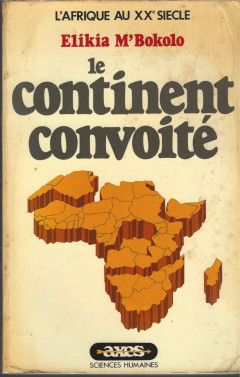
Le continent convoite
This book examines Africa in the 20th century as a continent contested by international powers. Elikia M’Bokolo outlines how geopolitical, economic, and ideological interests shaped Africa’s colonial and postcolonial dynamics. Her analysis highlights conflict, resource exploitation, independence struggles, and Africa’s position in global politics. This work provides a critical overview of…
- Edisi
- -
- ISBN/ISSN
- 2-7310-4105-6
- Deskripsi Fisik
- 281 pages; 21 cm
- Judul Seri
- -
- No. Panggil
- 960 MBO l
 Karya Umum
  Filsafat
  Agama
Agama  Ilmu-ilmu Sosial
  Bahasa
  Ilmu-ilmu Murni
  Ilmu-ilmu Terapan
  Kesenian, Hiburan, dan Olahraga
  Kesusastraan
  Geografi dan Sejarah