Ditapis dengan
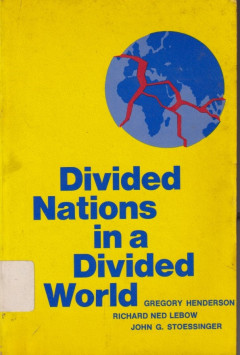
Divided nations in a divided world
Divided Nations in a Divided World explores the political dynamics and international implications of nations that are internally split, such as Korea, Germany, and Vietnam. The authors analyze how historical conflicts, ideological divisions, and global power rivalries shape the status and foreign policies of divided states. The book provides a comprehensive examination of the challenges these n…
- Edisi
- -
- ISBN/ISSN
- 0-679-30056-2
- Deskripsi Fisik
- viii, 470 pages : illustration ; 22,5 cm
- Judul Seri
- -
- No. Panggil
- 327.1 HEN d
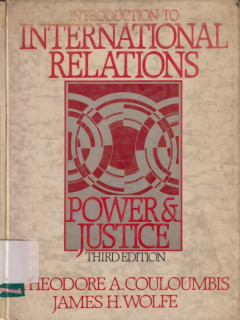
Introduction to international relations: Power and justice
Introduction to International Relations: Power and Justice provides a comprehensive overview of major theories, concepts, and issues in international relations. Couloumbis and Wolfe explore how power, justice, national interests, and global institutions shape interactions among states. This third edition examines classical and contemporary perspectives, including realism, idealism, conflict res…
- Edisi
- Edisi Ketiga
- ISBN/ISSN
- 0-13-485327-X
- Deskripsi Fisik
- xv, 426 pages ; 24 cm
- Judul Seri
- -
- No. Panggil
- 327 COU i
International relations
International Relations by M. Margaret Ball and Hugh B. Killough provides a foundational overview of the major concepts, actors, and dynamics shaping relations among states. Published under the auspices of the London Institute of World Affairs, this work examines the historical evolution of international systems, the role of diplomacy, conflict and cooperation among nations, and the influence o…
- Edisi
- -
- ISBN/ISSN
- -
- Deskripsi Fisik
- viii, 667 pages : illustration ; 23,5 cm
- Judul Seri
- -
- No. Panggil
- 327.1 BAL i

International law in a changing world: Cases, documents, and readings
This book provides a comprehensive collection of cases, documents, and readings that illustrate the dynamic nature of international law in a rapidly changing world. Edited by Edward Collins, Jr., the volume presents essential materials that explore the evolution of legal principles, state behavior, global governance, and the challenges faced by the international community. Designed for students…
- Edisi
- -
- ISBN/ISSN
- -
- Deskripsi Fisik
- xvi, 493 pages ; 24 cm
- Judul Seri
- -
- No. Panggil
- 341 COL i

The Road to Tahrir square: Egypt and the United States from the rise of Nasse…
The Road to Tahrir Square chronicles the complex and often turbulent relationship between Egypt and the United States from the 1950s to the early 2010s. Lloyd C. Gardner traces how successive American administrations engaged with Egyptian leaders—from Gamal Abdel Nasser through Anwar Sadat to Hosni Mubarak—shaping the political trajectory of the Middle East’s most influential nation. The …
- Edisi
- -
- ISBN/ISSN
- 978-1-59558-721-3
- Deskripsi Fisik
- x, 230 pages ; 21 cm
- Judul Seri
- -
- No. Panggil
- 327.73062 GAR r

Theory and explanation in international politics
This book provides a comprehensive examination of theoretical approaches used to explain international politics. Charles Reynolds discusses the nature of political explanation, the development of theoretical frameworks in international relations, and the methodological issues surrounding the study of global political behavior. By analyzing major theories and their applications, the book offers …
- Edisi
- -
- ISBN/ISSN
- 0-85520-025-1
- Deskripsi Fisik
- viii, 367 pages ; 23,5 cm
- Judul Seri
- -
- No. Panggil
- 327.101 REY t

International politics: Anarchy and order in the world society
This classic work by Frederick L. Schuman examines the fundamental nature of international politics, focusing on the tension between anarchy and efforts to create order in the world system. The author analyzes the behavior of states, sources of conflict, the role of power, diplomacy, war, and emerging global institutions. Through historical and theoretical perspectives, the book provides a comp…
- Edisi
- -
- ISBN/ISSN
- -
- Deskripsi Fisik
- xx, 751 pages : illustration ; 21,5 cm
- Judul Seri
- -
- No. Panggil
- 327.1 SCH i
International politics
This third edition of Vernon Van Dyke’s International Politics provides a comprehensive introduction to the major concepts, issues, and analytical frameworks in the study of international relations. The book examines the nature of the international system, the behavior of states, the role of power, nationalism, international law, diplomacy, and the growing importance of international organiza…
- Edisi
- -
- ISBN/ISSN
- -
- Deskripsi Fisik
- xiii, 539 pages ; 24 cm
- Judul Seri
- -
- No. Panggil
- 327.11 DYK i
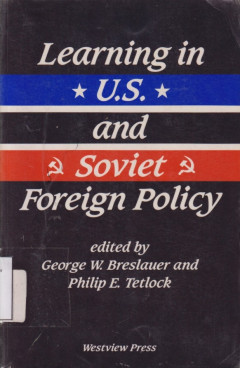
Learning in U.S. and Soviet foreign policy
This volume examines how political leaders and institutions in the United States and the Soviet Union learn from past experiences in shaping their foreign policy decisions. Through comparative case studies, the contributors analyze the cognitive, organizational, and political factors that influence learning in both superpowers during the Cold War era. The book explores how successes and failure…
- Edisi
- -
- ISBN/ISSN
- 0-8133-8264-5
- Deskripsi Fisik
- xiv, 881 pages ; 23 cm
- Judul Seri
- -
- No. Panggil
- 327.730 BRE l

Contemporary research in international relations: A Perspective and a critica…
This book offers a comprehensive analytical review of the evolution of research in international relations. Dina A. Zinnes examines dominant approaches in IR scholarship, evaluating their theoretical foundations, methodological strengths, and empirical limitations. The work provides a critical perspective on the development of quantitative and qualitative research traditions, highlighting chall…
- Edisi
- -
- ISBN/ISSN
- -
- Deskripsi Fisik
- xviii, 477 pages ; 24 cm
- Judul Seri
- -
- No. Panggil
- 327.072 ZIN c
 Karya Umum
  Filsafat
  Agama
Agama  Ilmu-ilmu Sosial
  Bahasa
  Ilmu-ilmu Murni
  Ilmu-ilmu Terapan
  Kesenian, Hiburan, dan Olahraga
  Kesusastraan
  Geografi dan Sejarah