Ditapis dengan

Does America need a foreign policy? Toward a diplomacy for the 21st century
An assessment of how the United States dominant position may be effectively reconciled with the urgent need, in the 21st century, to achieve a new world order. Kissinger examines America's present and future relations with Russia, China, Europe, the Middle East, and other areas in the world. He covers areas such as globilization, military intervention, free trade and the eroding of the planet's…
- Edisi
- Edition 1 Touchstone
- ISBN/ISSN
- 0-684-85567-4
- Deskripsi Fisik
- 350 pages : illustrations : index ; 24 cm
- Judul Seri
- -
- No. Panggil
- 327.73 Kis d
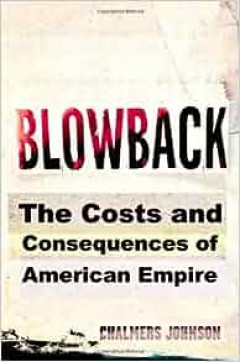
Blowback: The costs and consequences of American empire
Blowback, a term invented by the CIA, refers to the uninted consequences of American policies. In this sure-to-be-controversial book, Chalmers Johnson lays out in vivid detail the dangers faced by our overextended empire, which insists on projecting its military power to every corner of the earth and using American capital and markets to force global economic integration on its own terms. From …
- Edisi
- First Edition
- ISBN/ISSN
- 0-8050-6238-6
- Deskripsi Fisik
- xix, 268 pages : index ; 26 cm
- Judul Seri
- -
- No. Panggil
- 327.73 Joh b
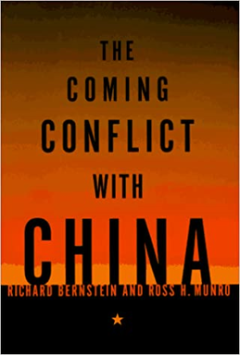
The coming conflict with China
Richard Bernstein and Ross Munro, former Beijing bureau chiefs with long experience in Asian affairs, present a clear-eyed and uncompromising look at the potentially disastrous collision course now taking shape in US-China relations
- Edisi
- First Edition
- ISBN/ISSN
- 0-679-45463-2
- Deskripsi Fisik
- xix, 245 pages : map : index ; 21 cm
- Judul Seri
- -
- No. Panggil
- 327.51073 Ber c

Hot, flat, and crowded: Why the world needs a green revolution-and how we can…
Friedman takes a fresh and provocative look at two of the biggest challenges we face today: the global environmental crisis and America's surprising loss of focus and national purpose since 9/11. It is a groundbreaking account of where we stand now, and shows us how the solutions to these two big problems are linked- how we can restore the world and revive America at the same time.
- Edisi
- -
- ISBN/ISSN
- 978-1-846-14129-4
- Deskripsi Fisik
- 438 pages : index ; 25 cm
- Judul Seri
- -
- No. Panggil
- 320.58 Fri h

Soft Power: The means to sucess in world politics
Joseph Nye coined the term "soft power" in the late 1980s. It is now used frequently - and often incorrectly - by political leaders, editorial writers, and academics around the world. So what is soft power? Soft power lies in the ability to attract and persuade. Whereas hard power - the ability to coerce - grows out of a country's military or economic might, soft power arises from the attractiv…
- Edisi
- -
- ISBN/ISSN
- 1586483064
- Deskripsi Fisik
- xvi, 191 pages : illustrations ; 22 cm
- Judul Seri
- -
- No. Panggil
- 327.73 Nye s

Failed states: The abuse of power and the assault on democracy
The United States has repeatedly asserted its right to intervene militarily against "failed states" around the globe. Chomsky turns the tables, charging the United States with being a "failed state," and therefore a danger to its own people and the world. "Failed states," Chomsky writes, are those "that do not protect their citizens from violence and perhaps even destruction, that regard themse…
- Edisi
- 1st edition
- ISBN/ISSN
- 978-0-7394-7187-6
- Deskripsi Fisik
- 311 pages : index ; 21 cm.
- Judul Seri
- -
- No. Panggil
- 327 Cho f
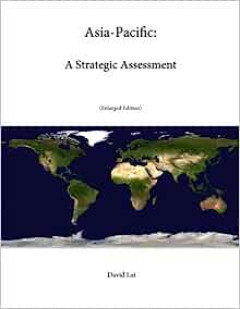
Asia-Pacific: a strategic assesment
Dr. David Lai provides a timely assessment of the geostrategic significance of Asia-Pacific. His monograph is also a thought-provoking analysis of the U.S. strategic shift toward the region and its implications. Dr. Lai judiciously offers the following key points. First, Asia-Pacific, which covers China, Northeast Asia, and Southeast Asia, is a region with complex currents. On the one hand, the…
- Edisi
- -
- ISBN/ISSN
- 1584875739
- Deskripsi Fisik
- 23 cm
- Judul Seri
- -
- No. Panggil
- 355. 07 Lai a
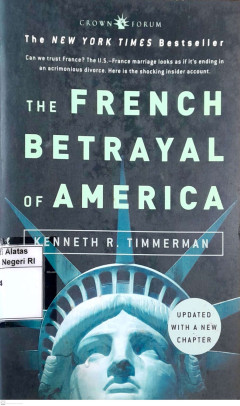
The French betrayal of America
Explores the motivations behind the French government's efforts to undermine American policy toward Iraq, discussing France's support for Saddam Hussein and their secret oil contracts with Iraq worth billions of dollars
- Edisi
- -
- ISBN/ISSN
- 1-4000-5367-6
- Deskripsi Fisik
- 319 pages : index ; 21 cm
- Judul Seri
- -
- No. Panggil
- 327.4407309045 Tim f

The Asia-Europe meeting: Contributing to a new global governance architecture
The Asia-Europe Meeting (ASEM) process was designed in 1996 to bring Asia and Europe closer together. This important collection brings together the discussions from the eighth ASEM Summit held in October 2010 in Brussels. It presents a multifaceted perspective of Asia-Europe convergences and disparities, shedding new light on the interregional political dialogue. Renowned academics and seasoned…
- Edisi
- -
- ISBN/ISSN
- -
- Deskripsi Fisik
- 259 pages : bibl: hlm 249-259 : index ; 24 cm
- Judul Seri
- -
- No. Panggil
- 327.504 Ber a
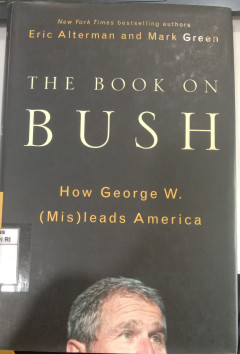
The book on bush: How George W. (mis)leads America
A critical look at the presidency of George W. Bush reveals how the current administration has used misstatements, half-truths, distortions, and other deceptions to mislead Americans and how this manipulation has led to failed policies, hindered homeland security, damaged foreign relations, and undermined efforts to improve the economy.
- Edisi
- First Edition
- ISBN/ISSN
- 0670032735
- Deskripsi Fisik
- 419 pages : notes, index ; 24 cm
- Judul Seri
- -
- No. Panggil
- 973.931092 Alt b
 Karya Umum
  Filsafat
  Agama
Agama  Ilmu-ilmu Sosial
  Bahasa
  Ilmu-ilmu Murni
  Ilmu-ilmu Terapan
  Kesenian, Hiburan, dan Olahraga
  Kesusastraan
  Geografi dan Sejarah