Ditapis dengan
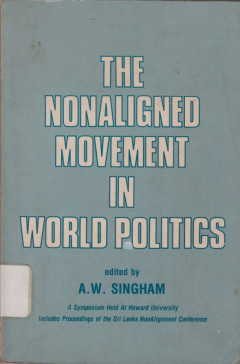
The Nonaligned movement in world politics
This volume examines the emergence, evolution, and political significance of the Non-Aligned Movement within the context of global politics during the Cold War. It analyzes the movement’s ideological foundations, its responses to major world conflicts, and its role in representing the interests of developing nations. Through contributions from various scholars, the book explores how nonalignm…
- Edisi
- -
- ISBN/ISSN
- 0-88208-069-9
- Deskripsi Fisik
- 273 pages ; 23 cm
- Judul Seri
- -
- No. Panggil
- 327.17 TIM n
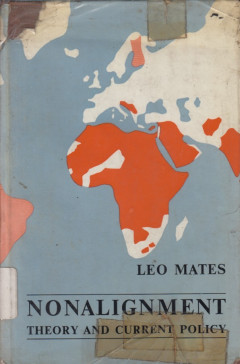
Nonalignment: Theory and current policy
This book provides a foundational theoretical and historical study of the Non-Aligned Movement, written by Leo Mates, one of Yugoslavia’s leading scholars on international politics. It examines the conceptual origins of nonalignment, its evolution in global politics, and its role as a strategic alternative during the Cold War. The author discusses the principles, objectives, and diplomatic pr…
- Edisi
- -
- ISBN/ISSN
- 0-379-00170-5
- Deskripsi Fisik
- 543 pages ; 23,5 cm
- Judul Seri
- -
- No. Panggil
- 327.17 MAT n

The Elephants and the grass: A Study of nonalignment
This book provides an in-depth analysis of the Nonaligned Movement during the Cold War, exploring how emerging nations sought to maintain independence from the influence of major global powers. Cecil V. Crabb, Jr. examines the political dynamics between the superpowers (“the elephants”) and the smaller, developing nations (“the grass”), highlighting the movement’s origins, strategies,…
- Edisi
- -
- ISBN/ISSN
- -
- Deskripsi Fisik
- xiii pages ; 20,5 cm
- Judul Seri
- -
- No. Panggil
- 327.17 CRA e
Nonalignment — a comprehensive and lasting orientation
This publication presents a political address by Stane Dolanc, offering a comprehensive analysis of the Non-Aligned Movement as a long-term and principled orientation for developing countries. Dolanc discusses the ideological foundations of nonalignment, its importance in preserving independence amid global power blocs, and its role in promoting peaceful coexistence, international cooperation, …
- Edisi
- -
- ISBN/ISSN
- -
- Deskripsi Fisik
- 24 pages ; 20 cm
- Judul Seri
- -
- No. Panggil
- 327.17 DOL n
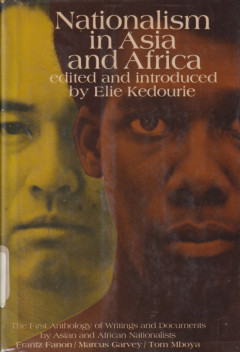
Nationalism in Asia and Africa
This volume is a collection of scholarly essays examining the development, ideology, and impact of nationalist movements across Asia and Africa. Edited by Elie Kedourie, the book explores the political, historical, and intellectual contexts that shaped anti-colonial struggles and nation-building processes in the 20th century. Through contributions from various authors, it provides analytical in…
- Edisi
- -
- ISBN/ISSN
- -
- Deskripsi Fisik
- viii, 573 pages ; 21 cm
- Judul Seri
- -
- No. Panggil
- 320.54 KED n

Basic documents: The tenth conference of heads of state or government of non-…
At its inaugural session, the Conference was privileged to hear an inspiring keynote address delivered by His Excellency Mr. Soeharto, President of the Republic of Indonesia. His insightful and lucid address was welcomed as a significant contribution to the deliberations and successful outcome of the Conference. The President, in noting the collapse of the bipolar structure of the world, stress…
- Edisi
- -
- ISBN/ISSN
- -
- Deskripsi Fisik
- 240 pages ; 24 cm
- Judul Seri
- -
- No. Panggil
- 327 CON b

35 Years of non-aligned movement: Documents 1961–1996. Volume III
This volume is part of the multi-volume collection 35 Years of Non-Aligned Movement: Documents 1961–1996, presenting official declarations, resolutions, communiqués, and statements issued by the Non-Aligned Countries between 1988 and 1996. Covering key meetings from Nicosia to New York, the compilation reflects the evolving priorities of the Movement during the post-Cold War transition. It i…
- Edisi
- -
- ISBN/ISSN
- 81-7128-045-5
- Deskripsi Fisik
- 1714 pages ; 25,5 cm
- Judul Seri
- -
- No. Panggil
- 327.172 NON t
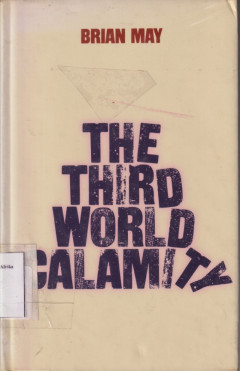
The Third world calamity
This book analyzes the severe social, economic, and political crises affecting Third World countries. Brian May explores the structural causes of underdevelopment, including poverty, inequality, colonial legacies, and global economic imbalances. Through critical examination, the author highlights how these interconnected issues shape the difficult realities faced by developing nations and argue…
- Edisi
- -
- ISBN/ISSN
- 0-7100-0764-7
- Deskripsi Fisik
- xii, 274 pages : illustration ; 22 cm
- Judul Seri
- -
- No. Panggil
- 309.1172 MAY t

The Middle East: A Political and economic survey
This volume provides a comprehensive political and economic survey of the Middle East, examining the region’s historical background, political developments, economic structures, and social dynamics. Edited by Peter Mansfield, the book offers analytical perspectives on the shifting geopolitical landscape, regional conflicts, modernization issues, and the economic challenges faced by Middle Eas…
- Edisi
- -
- ISBN/ISSN
- 0-19-215851-1
- Deskripsi Fisik
- ix, 579 pages : illustration ; 22 cm
- Judul Seri
- -
- No. Panggil
- 956.05 MAN t

Small power politics & international relations in South East Asia
This book provides an in-depth analysis of the political behavior, foreign policy strategies, and international relations of small states in Southeast Asia. Ralph Pettman explores how limited-power nations navigate regional dynamics, negotiate influence, and respond to the pressures of larger global actors. Through case studies and theoretical discussion, the book examines diplomatic patterns, …
- Edisi
- -
- ISBN/ISSN
- 003-900081-8
- Deskripsi Fisik
- 160 pages ; 21 cm
- Judul Seri
- -
- No. Panggil
- 327.159 PET s
 Karya Umum
  Filsafat
  Agama
Agama  Ilmu-ilmu Sosial
  Bahasa
  Ilmu-ilmu Murni
  Ilmu-ilmu Terapan
  Kesenian, Hiburan, dan Olahraga
  Kesusastraan
  Geografi dan Sejarah