Ditapis dengan

The crisis of global capitalism
The global economy, on which the world now depends more than ever, is in crisis. The Russian economy has collapsed, leading to punishing inflation and economic hardship. Scores of Japanese banks are in ruin while the Japanese government muddles along, the nation falling deeper and deeper into recession. The once-booming economies of Thailand, Malaysia, and Indonesia have imploded. Brazil and th…
- Edisi
- First Edition
- ISBN/ISSN
- 979-81-7649-799-1
- Deskripsi Fisik
- xxx, 245 pages : index ; 24 cm
- Judul Seri
- -
- No. Panggil
- 330. 122 Sor c
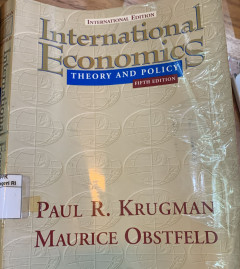
International economics: Theory and policy
This book offers theories that are in line with the real development of today's increasingly interdependent and globalized world economy, and also discusses concrete cases in a popular manner to make it easier for readers to understand relatively abstract theoretical explanations. This book contains: 1. Labor productivity and comparative advantage: The Ricardian model 2. Spesific factors a…
- Edisi
- Ed. 5
- ISBN/ISSN
- 0-321-07727-X
- Deskripsi Fisik
- xxx, 790 pages : index ; 23 cm
- Judul Seri
- -
- No. Panggil
- 330 Kru e

Pitfalls of Papua: Understanding the conflict and its place in Australia-Indo…
For more than half a century, Papua's place in Indonesia has caused serious strains and the occasional crisis in Australia-Indonesia relations. This Lowy Institute Paper provides an in-depth history of Papua's troubled integration into the Indonesian state and Australia's Papua policies. The Paper looks at what the Australian government can best do to assist Papuan development, support good rel…
- Edisi
- First Published
- ISBN/ISSN
- 1-921004-23-1
- Deskripsi Fisik
- xviii, 153 pages : maps : bibl: hlm 147-152 ; 21 cm.
- Judul Seri
- -
- No. Panggil
- 327.9540994 Gib p
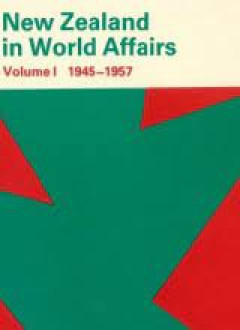
New Zealand in world affairs, 1945-1957
The authoritative New Zealand in World Affairs Volume I, covering the period from the Second World War until 1957, was first published in 1977. Still in demand, it has been reprinted in conjunction with the publication of New Zealand in World Affairs Volume II 1957-1972.
- Edisi
- Volume I
- ISBN/ISSN
- 0-7055-0638-X
- Deskripsi Fisik
- 204 pages : index ; 22 cm
- Judul Seri
- -
- No. Panggil
- 327.93 New n
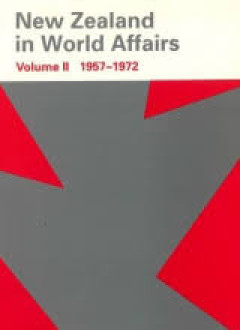
New Zealand in world affairs, 1957-1972
New Zealand in World Affairs Volume II covers the period from 1957 to 1972, when New Zealand diplomacy moved irrevocably away from the Commonwealth and British framework of the past, and when foreign relations first became the object of sustained debate within the country. The volume is introduced by Malcolm Templeton and essays are contributed by Roderic Alley, Roberto Rabel, Rita Ricketts and…
- Edisi
- Volume II
- ISBN/ISSN
- 0-908772-11-4
- Deskripsi Fisik
- xi, 261 pages : ilustrasi : index ; 22 cm
- Judul Seri
- -
- No. Panggil
- 327.93 Kin n

The prosperity agenda : What the world wants from America--and what we need i…
In this provocative, ingenious book, Soderberg and Katulis make one of the most controversial arguments that foreign policy circles have seen in years: no more putting all our eggs in the basket of promoting democracy or market reforms, or even diplomacy, sanctions, or cash handouts to faltering governments. Instead, they argue, we should go right to the citizens of troubled nations and give th…
- Edisi
- -
- ISBN/ISSN
- 978-0-470-10529-0
- Deskripsi Fisik
- xi, 260 pages : index ; 25 cm
- Judul Seri
- -
- No. Panggil
- 327.7300905 Sod p
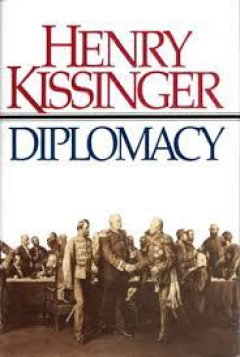
Diplomacy
A brilliant, sweeping history of diplomacy that includes personal stories from the noted former Secretary of State, including his stunning reopening of relations with China. The seminal work on foreign policy and the art of diplomacy. Moving from a sweeping overview of history to blow-by-blow accounts of his negotiations with world leaders, Henry Kissinger describes how the art of diplomacy has…
- Edisi
- -
- ISBN/ISSN
- 0-671-65991-X
- Deskripsi Fisik
- 912 pages : illustration : index ; 24 cm
- Judul Seri
- -
- No. Panggil
- 327.73 Kis d
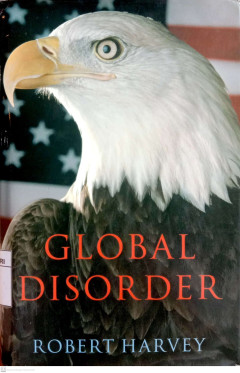
Global disorder
The United States is in danger of acting as world vigilante, venturing out into a dangerous neighbourhood when its interests are visibly threatened. The current doctrine of unilateral self-interest is perfectly coherent, even defensible in the short term; but the long term it is dangerous, even to American interests.
- Edisi
- First Published
- ISBN/ISSN
- 1-84119-629-0
- Deskripsi Fisik
- xx, 476 pages : index ; 24 cm
- Judul Seri
- -
- No. Panggil
- 327.73 Har g

Beyond fifty years of Nigeria's foreign policy: Issues, challenges, and prosp…
How does one predict the future course a country should take to achieve its "vision" in a globalizing world that is very dynamic? It is important to understand the nature of the global order in order to be able to craft a foreign policy that serves, Nigeria's national interest.
- Edisi
- -
- ISBN/ISSN
- 978-002-092-6
- Deskripsi Fisik
- xxiv, 536 pages : index ; 23 cm
- Judul Seri
- -
- No. Panggil
- 327.669 Eze b
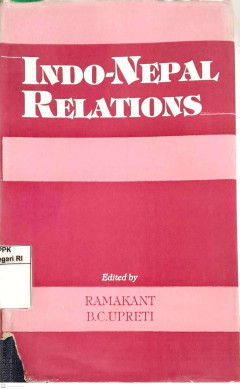
Indo-Nepal relations
In this collection distinguished scholars from India and Nepal have analysed different aspects of Indo- Nepal relations, viz. politico-strategic, economic and socio-cultural. The contributions have focussed upon these aspects from the points of view of the perception of the two countries. Some tension areas have also been analysed and new interpretations have been advanced.
- Edisi
- -
- ISBN/ISSN
- 81-7003-152-4
- Deskripsi Fisik
- x, 367 pages : index ; 22 cm
- Judul Seri
- -
- No. Panggil
- 327.5405496 Ram i
 Karya Umum
 Filsafat
 Agama
 Ilmu-ilmu Sosial
 Bahasa
 Ilmu-ilmu Murni
 Ilmu-ilmu Terapan
 Kesenian, Hiburan, dan Olahraga
 Kesusastraan
 Geografi dan Sejarah