Ditapis dengan

Windhoek: Our Heritage = Ons Erfenis = Unser Erbe
This book is a collection of illustrations and historical descriptions of historic buildings and cultural sites in the city of Windhoek, Namibia. Christine Marais presents detailed visual documentation through architectural sketches and brief notes explaining the background, function, and historical value of each object. This work serves as a reminder of the importance of preserving cultural he…
- Edisi
- -
- ISBN/ISSN
- -
- Deskripsi Fisik
- 80 pages : illustration ; 25 cm
- Judul Seri
- -
- No. Panggil
- 968.81002 MAR w

Invasion-They’re Coming!: The German account of the allied landings and the…
This book presents the German perspective on the Allied invasion of Normandy on June 6, 1944, and the ensuing 80 days of fighting in France. Written by Paul Carell, a former German propaganda official, this book describes the dynamics of strategy, troop movements, and the experiences of German commanders and soldiers in facing the massive attack that determined the course of World War II. With …
- Edisi
- -
- ISBN/ISSN
- -
- Deskripsi Fisik
- 288 pages : illustration ; 21,5 cm
- Judul Seri
- -
- No. Panggil
- 940.5421 CAR i
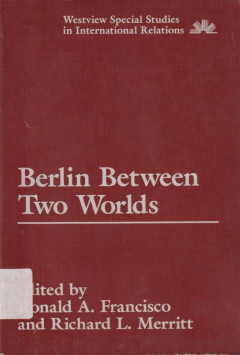
Berlin between two worlds
This book is a collection of academic essays discussing Berlin's unique position as a city divided between two political systems during the Cold War era. The authors analyze the political, social, economic, and international relations developments that shaped the dynamics of West Berlin and East Berlin after 1945. Through a multidisciplinary approach, this book highlights Berlin's role as a sym…
- Edisi
- -
- ISBN/ISSN
- 0-8133-7131-7
- Deskripsi Fisik
- xiii, 184 pages ; 22,5 cm
- Judul Seri
- -
- No. Panggil
- 943.1555 FRA b
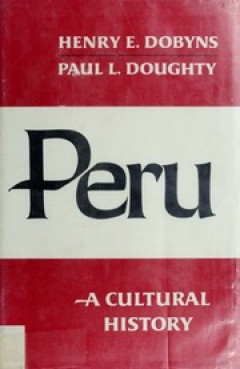
Peru: A Cultural history
This book presents a comprehensive study of Peruvian cultural history from pre-Columbian times to the modern era. Dobyns and Doughty describe the development of Andean society, Inca culture, social changes after the Spanish conquest, and the ethnic, economic, and political dynamics that shape contemporary Peru. Using an anthropological and historical approach, this book provides a comprehensive…
- Edisi
- -
- ISBN/ISSN
- -
- Deskripsi Fisik
- 336 pages, 22 cm
- Judul Seri
- -
- No. Panggil
- 985 DOB p
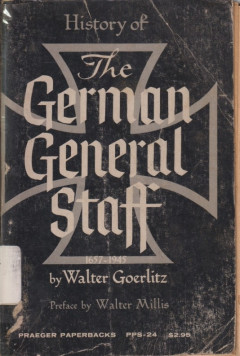
History of the German general staff, 1657–1945
This book presents a comprehensive history of the German General Staff from its formation in the 17th century to its collapse in 1945. Walter Goerlitz outlines the role of the General Staff in shaping Prussian and German military strategy, its influence on national political policy, and its contribution to various major wars, including the Napoleonic Wars, World War I, and World War II. Through…
- Edisi
- -
- ISBN/ISSN
- -
- Deskripsi Fisik
- xviii, 508 pages : illustration ; 20,5 cm
- Judul Seri
- -
- No. Panggil
- 355.00943 GOE h
Germany and freedom: A Personal appraisal
This book is James Bryant Conant's personal assessment of the condition of Germany after World War II and the birth of West Germany as a democratic state. Based on Conant's experience as a diplomat and international observer, this book discusses political developments, social reconstruction, and the challenges of democracy in modern Germany. Conant highlights the relationship between political …
- Edisi
- -
- ISBN/ISSN
- -
- Deskripsi Fisik
- 117 pages ; 20,5 cm
- Judul Seri
- -
- No. Panggil
- 943.087 CON g
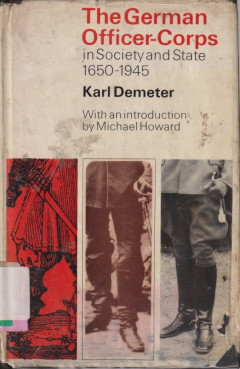
The German officer-corps in society and state 1650–1945
This book is an in-depth study of the German officer corps from the 17th century to the end of World War II. Karl Demeter explains how social structure, military tradition, education, and aristocratic values shaped the character of the German officer corps. This book also traces the role of officers in state politics, their relationship with civil society, and their influence on Prussian and mo…
- Edisi
- -
- ISBN/ISSN
- -
- Deskripsi Fisik
- xiv, 414 pages ; 22 cm
- Judul Seri
- -
- No. Panggil
- 355.00943 DEM g

The Kings depart: The tragedy of Germany – Versailles and the German revolu…
This book presents a historical study of Germany's transition from the collapse of the Empire at the end of World War I to the birth of the Weimar Republic. Richard M. Watt outlines various important events such as Germany's defeat in 1918, the Treaty of Versailles with its political and economic consequences, and the German Revolution of 1918–1919. Through a detailed narrative approach based…
- Edisi
- -
- ISBN/ISSN
- -
- Deskripsi Fisik
- 604 pages : illustration ; 24 cm
- Judul Seri
- -
- No. Panggil
- 943.084 WAT k

Liberators: Latin America’s struggle for Iindependence 1810–1830
From 1810 to 1830, Latin America experienced one of the most dramatic periods in its history as independence movements swept across the continent. In “Liberators,” Robert Harvey presents a vivid narrative of the political struggles, military campaigns, and charismatic leaders including Simón Bolívar, José de San Martín, and other revolutionaries who shaped the fight for liberation from …
- Edisi
- 1
- ISBN/ISSN
- 1-58567-072-3
- Deskripsi Fisik
- xxix, 561 pages : illustration ; 23,5 cm
- Judul Seri
- -
- No. Panggil
- 980.03 HAR l
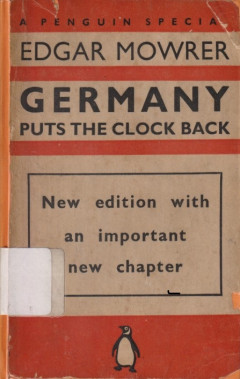
Germany puts the clock back
This book contains Edgar Ansel Mowrer's sharp analysis of German political developments after the Nazi Party rose to power. Written by a renowned international journalist, this book describes how the policies of Adolf Hitler and Nazi leaders changed the course of German history in the early 1930s. Using an investigative style, Mowrer highlights political oppression, propaganda, social change, a…
- Edisi
- -
- ISBN/ISSN
- -
- Deskripsi Fisik
- v, 284 pages ; 18 cm
- Judul Seri
- -
- No. Panggil
- 943.086 MOW g
 Karya Umum
  Filsafat
  Agama
Agama  Ilmu-ilmu Sosial
  Bahasa
  Ilmu-ilmu Murni
  Ilmu-ilmu Terapan
  Kesenian, Hiburan, dan Olahraga
  Kesusastraan
  Geografi dan Sejarah