Ditapis dengan
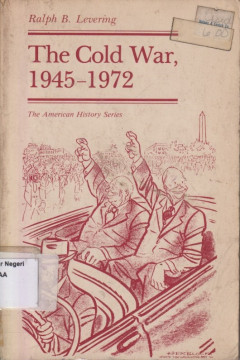
The Cold war, 1945–1972
The Cold War, 1945–1972 by Ralph B. Levering offers a concise and analytical overview of the political, diplomatic, and ideological tensions between the United States and the Soviet Union during the early decades of the Cold War. As part of The American History Series, the book provides a clear narrative covering the origins of the conflict, the development of containment policies, crises suc…
- Edisi
- -
- ISBN/ISSN
- 0-88295-811-9
- Deskripsi Fisik
- xi, 165 pages : illustrations ; 20 cm
- Judul Seri
- -
- No. Panggil
- 327.73 LEV t

The Terrors of ideological politics: Liberal historians in a conservative mood
The Terrors of Ideological Politics examines how American liberal historians responded to the rise of political conservatism during the mid-20th century. Marian J. Morton analyzes the tensions between ideological commitment and scholarly objectivity, showing how historical writing became a battleground for competing political interpretations of the American past. The book explores the role of i…
- Edisi
- -
- ISBN/ISSN
- 0-8295-0229-7
- Deskripsi Fisik
- xi, 192 pages ; 21,5 cm
- Judul Seri
- -
- No. Panggil
- 973.072 MOR t
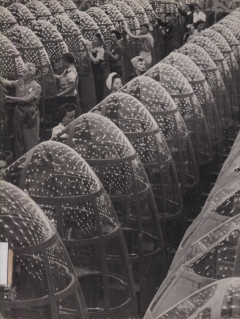
The Home front: U.S.A.
The Home Front: U.S.A. portrays the dramatic transformation of American society during World War II. Written by Ronald H. Bailey with the editors of Time-Life Books, this volume explores how the United States mobilized its economy, industry, and population for the global conflict. It examines rationing programs, war production, civil defense efforts, and the significant roles played by women an…
- Edisi
- -
- ISBN/ISSN
- 0-8094-2490-8
- Deskripsi Fisik
- 208 pages : illustration ; 29 cm
- Judul Seri
- -
- No. Panggil
- 940.542 BAI h

War and decision: Inside the pentagon at the dawn of the war on terrorism
This book is a firsthand account of Douglas J. Feith, U.S. Under Secretary of Defense for Policy during President George W. Bush's early term after the September 11, 2001, attacks. In War and Decision, Feith details the Pentagon's decision-making process, the internal dynamics of the U.S. government, and the strategies that shaped the global war on terrorism. The book provides in-depth insights…
- Edisi
- -
- ISBN/ISSN
- 978-0-06-089973-8
- Deskripsi Fisik
- xiv, 674 pages : illustration ; 23,5 cm
- Judul Seri
- -
- No. Panggil
- 355.0217 FEI w

Battle for our minds: Western elites and the terror threat
This book examines how Western political elites, media outlets, and academics have unwittingly undermined counterterrorism efforts. Michael Widlanski examines terrorist groups' communication strategies, the manipulation of public opinion through the media, and the failure of intelligence analysis to understand ideological threats. Using psychological and geopolitical approaches, this book highl…
- Edisi
- -
- ISBN/ISSN
- 978-1-4516-5903-0
- Deskripsi Fisik
- v, 394 pages ; 24 cm
- Judul Seri
- -
- No. Panggil
- 363.3250973 WID b

The Imperial cruise: A Secret history of empire and war
This book reveals President Theodore Roosevelt's major diplomatic expedition in 1905, known as the "Imperial Cruise." Through the American fleet's voyage to Asia, Roosevelt and William Howard Taft crafted a secret policy that shaped the geopolitics of modern East Asia. It explores the impact of this diplomacy on Japan, the Philippines, China, and Korea, and how Roosevelt-era decisions contribut…
- Edisi
- -
- ISBN/ISSN
- 978-0-316-01400-7
- Deskripsi Fisik
- 387 pages : illustration ; 21 cm
- Judul Seri
- -
- No. Panggil
- 359.4 BRA i

The Origins of the cold war in the near east: Great power conflict and diplom…
This book is a comprehensive study of the origins of the Cold War in the Near East, focusing on the great power rivalry in Iran, Turkey, and Greece after World War II. Bruce R. Kuniholm analyzes the dynamics of international politics between the United States, the Soviet Union, and regional states, and how conflict and diplomacy shaped the postwar geopolitical architecture. Drawing on archival …
- Edisi
- -
- ISBN/ISSN
- 0-691-04665-4
- Deskripsi Fisik
- xxiii, 485 pages ; 24 cm
- Judul Seri
- -
- No. Panggil
- 327.09045 KUN o
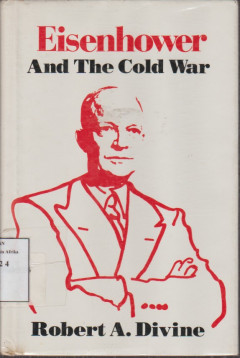
Eisenhower and the cold war
Robert A. Divine's Eisenhower and the Cold War explores President Dwight D. Eisenhower's foreign policy during the Cold War (1953–1961). Divine demonstrates that Eisenhower, despite his cautious approach, played a crucial role in shaping the United States' global strategy through his policies of containing communism, strengthening international alliances, and using nuclear power as a deterren…
- Edisi
- -
- ISBN/ISSN
- 0-19-502823-6
- Deskripsi Fisik
- ix, 181 pages ; 22 cm
- Judul Seri
- -
- No. Panggil
- 327.73 DIV e
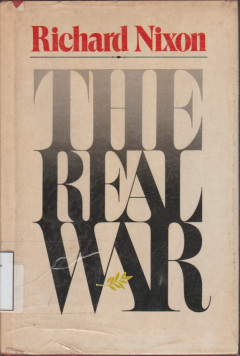
The Real war
The Real War is a global political and strategic analysis written by former US President Richard Nixon. In it, Nixon outlines his views on the geopolitical threats facing the United States during the Cold War, particularly the ideological and military rivalry with the Soviet Union. He emphasizes the need for a firm foreign policy, strengthened national defense, and realistic diplomacy to mainta…
- Edisi
- -
- ISBN/ISSN
- 0-446-51201-X
- Deskripsi Fisik
- 341 pages : illustration ; 23,5 cm
- Judul Seri
- -
- No. Panggil
- 327.73 NIX r
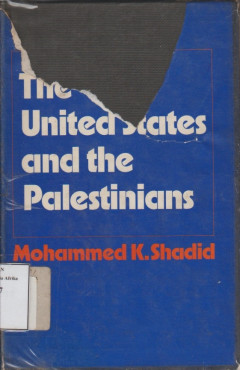
The United States and the Palestinians
This book analyzes the relationship between the United States and the Palestinian people in the context of Middle Eastern politics. Mohammed K. Shadid examines changes in American foreign policy over time, the influence of political lobbies, and the dynamics of US relations with Arab states and Israel. Using historical data, diplomatic policy, and political analysis, the book reveals how the Pa…
- Edisi
- -
- ISBN/ISSN
- 0-312-83315-6
- Deskripsi Fisik
- 252 pages : illustration ; 22 cm
- Judul Seri
- -
- No. Panggil
- 327.730 SHA u
 Karya Umum
  Filsafat
  Agama
Agama  Ilmu-ilmu Sosial
  Bahasa
  Ilmu-ilmu Murni
  Ilmu-ilmu Terapan
  Kesenian, Hiburan, dan Olahraga
  Kesusastraan
  Geografi dan Sejarah