Ditapis dengan
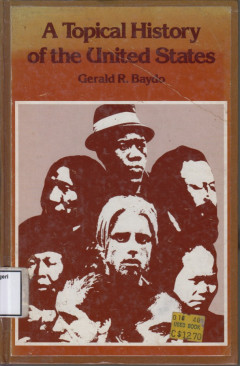
A Topical history of the United States
The topical history of the United States deals with the major themes in America's past and helps the reader to understand the continuity of American history and to approach each topic as an integrated whole. Many special features highlight this stimulating history: - Each chapter contains text, discussion questions that require specific answers from textual material, thought questions that inte…
- Edisi
- -
- ISBN/ISSN
- 0-88273-008-8
- Deskripsi Fisik
- viii, 534 pages ; 24 cm
- Judul Seri
- -
- No. Panggil
- 973 BAY t

The Social fabric: American life from 1607 to the civil war (Second edition)
This anthology presents a collection of historical documents and scholarly essays exploring the social, economic, and cultural development of the United States from 1607 to the Civil War. Edited by John H. Cary and Julius Weinberg, the volume examines everyday life, class structures, labor, religion, and social change in early America. Through primary sources and interpretative analyses, the bo…
- Edisi
- -
- ISBN/ISSN
- -
- Deskripsi Fisik
- xii, 337 pages : illustrations ; 23 cm
- Judul Seri
- -
- No. Panggil
- 973 CAR s
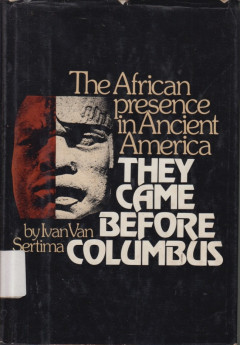
They came before Columbus
This groundbreaking work by Ivan Van Sertima argues that African explorers reached the Americas long before Columbus. Drawing on archaeological evidence, cultural parallels, botanical studies, and early historical accounts, the author presents a case for significant African influence on pre-Columbian American civilizations. The book challenges established historical narratives and offers a revi…
- Edisi
- -
- ISBN/ISSN
- 0-394-40245-6
- Deskripsi Fisik
- xviii, 288 pages : illustrations ; 24,5 cm
- Judul Seri
- -
- No. Panggil
- 970.019 SER t
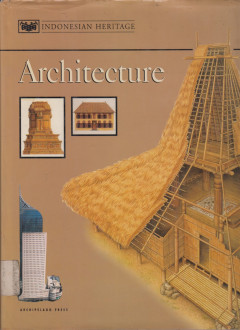
Architecture
Architecture, one of the volumes in the Indonesian Heritage series, provides a comprehensive overview of the diverse architectural traditions of Indonesia. The book explores vernacular, religious, colonial, and modern architectural forms found throughout the archipelago. Written by leading scholars and researchers in architecture, anthropology, and cultural studies, this volume examines the his…
- Edisi
- -
- ISBN/ISSN
- ISBN 981-3018-32-1
- Deskripsi Fisik
- 142 pages : illustrations ; 30 cm
- Judul Seri
- -
- No. Panggil
- 720.9598 TJA a
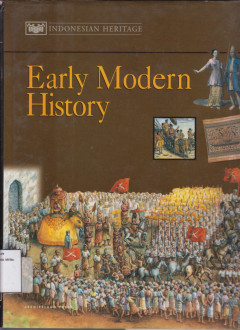
Early modern history
The book Early Modern History is one of the volumes in the Indonesian Heritage series which discusses the development of Indonesian history in the early modern period, starting from the emergence of Islamic kingdoms, the development of maritime trade, to the entry of European colonial powers. Written by leading historians and researchers, this book provides a comprehensive overview of the polit…
- Edisi
- -
- ISBN/ISSN
- 981-3018-32-1
- Deskripsi Fisik
- 148 pages : illustrations ; 30 cm
- Judul Seri
- Indonesian Heritage
- No. Panggil
- 959.8 REI e
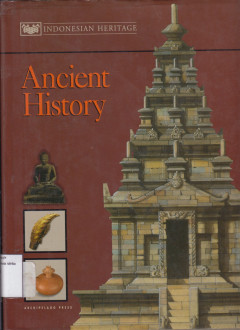
Ancient history
The Ancient History Book is one volume of the Indonesian Heritage series which presents a comprehensive overview of the early history of the Indonesian archipelago. The contents of the book include the development of prehistoric culture, archaeological findings, human migration, the process of early formation of society, as well as cultural interactions that form the basis of Indonesian civiliz…
- Edisi
- -
- ISBN/ISSN
- 981-3018-26-7
- Deskripsi Fisik
- 132 pages : illustrations ; 30 cm
- Judul Seri
- Seri Indonesian Heritage
- No. Panggil
- 959.8 ARD a
The Cuban Revolution, 25 Years Later
This book is part of the Significant Issues Series published by The Center for Strategic and International Studies (CSIS). Examining the Cuban Revolution 25 years after its demise, this book examines its impact on Cuba's political, economic, and social development since 1959, as well as its influence in Latin America and internationally. Written by scholars such as Hugh Thomas, Georges A. Fauri…
- Edisi
- -
- ISBN/ISSN
- -
- Deskripsi Fisik
- xv, 69 pages : illustration ; 22 cm
- Judul Seri
- -
- No. Panggil
- 972.91064 THO c
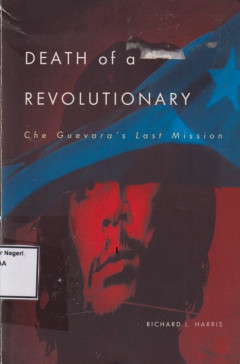
Death of a revolutionary; Che Guevara’s last mission
This book details Ernesto “Che” Guevara’s final mission in Bolivia in 1967, including his guerrilla strategy, the reasons for its failure, and the political and social conditions in Bolivia at the time. Richard L. Harris, in this revised edition, adds new analysis based on documents and interviews that emerged after the original 1970 publication. This book offers a comprehensive historica…
- Edisi
- -
- ISBN/ISSN
- 0-393-32032-4
- Deskripsi Fisik
- 272 pages : illustration ; 21 cm
- Judul Seri
- -
- No. Panggil
- 984.051 HAR d
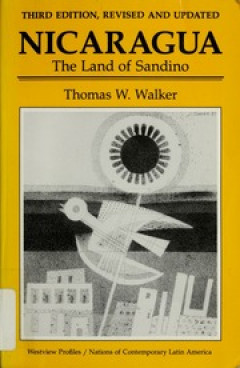
Nicaragua: The Land of Sandino
This revised and updated third edition provides a comprehensive overview of Nicaragua’s historical and political development, focusing particularly on the legacy of Augusto César Sandino and the transformations brought by the Sandinista revolution. Thomas W. Walker analyzes the country’s social, economic, and political challenges, including U.S. involvement, the Contra war, and the shiftin…
- Edisi
- -
- ISBN/ISSN
- 0-8133-1089-X
- Deskripsi Fisik
- 202 pages; 23 cm
- Judul Seri
- -
- No. Panggil
- 972.85 WAL n
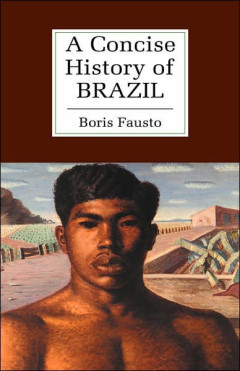
A Concise history of Brazil
This book presents a concise yet comprehensive overview of Brazilian history from prehistoric times, Portuguese colonization, the imperial period, the formation of the republic, and modern development. Boris Fausto outlines changes in Brazilian politics, economy, society, and culture in a coherent and in-depth manner. This English edition, translated by Arthur Brakel, is one of the primary acad…
- Edisi
- -
- ISBN/ISSN
- 978-0-521-56526-4
- Deskripsi Fisik
- 362 pages, 22 x 14 cm
- Judul Seri
- -
- No. Panggil
- 981 FAU c
 Karya Umum
  Filsafat
  Agama
Agama  Ilmu-ilmu Sosial
  Bahasa
  Ilmu-ilmu Murni
  Ilmu-ilmu Terapan
  Kesenian, Hiburan, dan Olahraga
  Kesusastraan
  Geografi dan Sejarah