Ditapis dengan

Southeast Asia's economic crisis : Origins, lessons, and the way forward
In the early 1990s, the World Bank labelled seven East Asian economies -- among them, four in Southeast Asia -- as "miracle economies", which had achieved extraordinarily high rates of economic growth for several decades. In 1996, on the eve of ASEAN's thirtieth birthday, Southeast Asia was experiencing unprecedented harmony and prosperity. For the first time ever, the region's six main, intern…
- Edisi
- -
- ISBN/ISSN
- 981-3055-89-8
- Deskripsi Fisik
- 182 halaman : index ; 23 cm
- Judul Seri
- -
- No. Panggil
- 330.959 Arn s
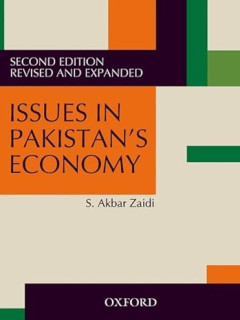
Issues in Pakistan's economy
“Issues in Pakistan’s Economy” by S. Akbar Zaidi was first published in 1999. The book provided comprehensive information on different aspects of the economy in Pakistan since independence. The idea of writing this book originated from Oxford University Press as there was no book on the economy of Pakistan to benefit the graduate students, researchers, scholars, academicians, and the gene…
- Edisi
- Ed. 2
- ISBN/ISSN
- 0-19-597914-1
- Deskripsi Fisik
- xii, 530 pages : illustrations (black and white) : index ; 28 cm
- Judul Seri
- -
- No. Panggil
- 330.95491 Zai i

The rise of India: Its transformation from poverty to prosperity
he book speaks not only to the mind and intellect but also to the heart as it clearly demonstrates that economic development is above all a question of people. It also shows that the Indian society, and particularly its youth, is much more open to changes than its political and bureaucratic class, and would welcome a third wave of reforms that would help the poor to benefit from economic progress.
- Edisi
- -
- ISBN/ISSN
- 978-0-470-82201-2
- Deskripsi Fisik
- ix, 176 pages : index ; 24 cm
- Judul Seri
- -
- No. Panggil
- 330.954 Raj r

Understanding India's economic reforms: The past, the present and the future …
This book contains: 1. Productivity and growth in Indian manufacturing 2. New industrial policy 3. New small enterprise policy 4. Maximizing foreign investment 5. Public versus private sector 6. Trade policy & industrialization in India
- Edisi
- -
- ISBN/ISSN
- 81-7188-105-X
- Deskripsi Fisik
- 248 pages ; 23 cm
- Judul Seri
- -
- No. Panggil
- 330.954 Kap u

Asia hemisfer baru dunia : Pergeseran kekuatan global ke timur yang tak terlu…
Dalam buku Asia Hemisfer Baru Dunia: Pergeseran Kekuatan Global ke Timur yang Tak Terelakkan, Kishore Mahbubani mengulas dengan bukti-bukti keberhasilan negara di Asia yang berkembang menjadi kekuatan utama dunia, terutama China dan India. Namun, yang menjadi ironi adalah ketika kekuatan-kekuatan baru dari Asia itu tumbuh dengan mengadopsi nilai-nilai Barat, kini justru Barat mulai merasa teran…
- Edisi
- -
- ISBN/ISSN
- 978-979-709-608-3
- Deskripsi Fisik
- xx, 362 halaman : illustrations (black and white) : index ; 23 cm
- Judul Seri
- -
- No. Panggil
- 330.95 Mah a
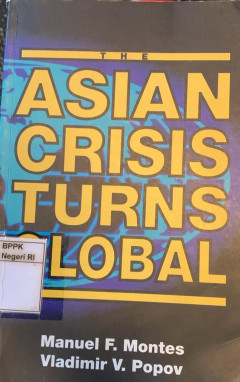
The Asian crisis turns global
In August 1998, the Asian currency crisis that had started in mid-1997 metastasized into a global financial crisis with the devaluation of the rouble and a declaration of a Russian Government default on its internal debt. Is this the first wave of such crises the world will see in the future? One common feature among the countries that have fallen victim to the crisis is that they were all…
- Edisi
- -
- ISBN/ISSN
- 981-230-050-3
- Deskripsi Fisik
- vi, 123 pages : illustrations (black and white) : index ; 22 cm.
- Judul Seri
- -
- No. Panggil
- 330.95 Mon a

Japan's failed revolution: Koizumi and the politics of economic reform
Japan's failed revolution: Koizumi and the politics of economic reform asks why, despite all the high expectation's, the Japanese public's desire for economic reform, and leadership of a majority coalition in a parliamentary democracy, the reformer prime minister Koizumi has not achieved the economic reforms expected of him since he surprisingly attained power over a year ago. this book expl…
- Edisi
- -
- ISBN/ISSN
- 0-7315-3693-2
- Deskripsi Fisik
- ix, 260 pages : index ; 23 cm
- Judul Seri
- -
- No. Panggil
- 330.95 Mul j
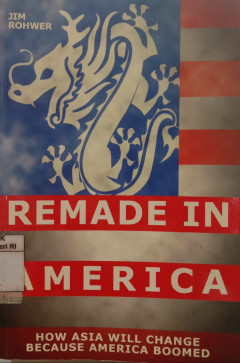
Remade in America: How Asia will change because America boomed
Armed with a thorough knowledge of Asia, Jim Rohwer is a benevolent but sharp witness of the region's fortunes. He gathers hard facts and opinions from impeccable sources and builds around them a very compelling picture of Asia's need to feed on the best standards America can offer. Asia ought to be selective in the process, and Jim Rohwer offers penetrating views on how the countries of the re…
- Edisi
- -
- ISBN/ISSN
- 0-471-47921-7
- Deskripsi Fisik
- xxi, 409 pages : illustrations : index ; 24 cm
- Judul Seri
- -
- No. Panggil
- 330.95 Roh r
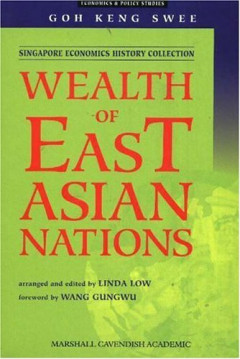
Wealth of East Asian nations
The contents of this book: Part 1 The Singapore Economy Part 2 Industriual Relations Part 3 Public Enterprises and the government
- Edisi
- -
- ISBN/ISSN
- 981-210-332-5
- Deskripsi Fisik
- xxix, 432 pages : index ; 23 cm
- Judul Seri
- -
- No. Panggil
- 330.95 Swe w

Stumbling giant: The threats to China's future
While dozens of recent books and articles have predicted the near-certainty of China's rise to global supremacy, this book boldly counters such widely-held assumptions. Timothy Beardson brings to light the daunting array of challenges that today confront China, as well as the inadequacy of leadership's responses. Threats to China come from many fronts, Beardson shows, and by their number and sh…
- Edisi
- -
- ISBN/ISSN
- 978-0-300-16542-5
- Deskripsi Fisik
- x, 517 pages : bibl: hlm 477-493 : index ; 24 cm
- Judul Seri
- -
- No. Panggil
- 330.951 Bea s
 Karya Umum
 Filsafat
 Agama
 Ilmu-ilmu Sosial
 Bahasa
 Ilmu-ilmu Murni
 Ilmu-ilmu Terapan
 Kesenian, Hiburan, dan Olahraga
 Kesusastraan
 Geografi dan Sejarah