Ditapis dengan

Hong Kong China the red dawn
this book is essential reading for anyone with a vested interest in the future of Hong Kong and China and its impact on global business
- Edisi
- -
- ISBN/ISSN
- 981-4024-89-9
- Deskripsi Fisik
- xiii,218 Halaman
- Judul Seri
- -
- No. Panggil
- 320.95125 Yeu h

Hong Kong & China: Pursuing a new destiny
Hong Kong was torn from China in the ninteeenth century by Britain to create colony thet has become one of the world's economic marvels. The articles about Hong Kong as a part of China, as a society in its own right, an as an important partner of the United States, Hong Kong and its people,it institutions and the prees is vigorous and sets an example for all of Asia. Whatever the outcome will b…
- Edisi
- -
- ISBN/ISSN
- 981-00-8423-4
- Deskripsi Fisik
- 172 pages : index ; 22 cm
- Judul Seri
- -
- No. Panggil
- 320.95125 Ski h
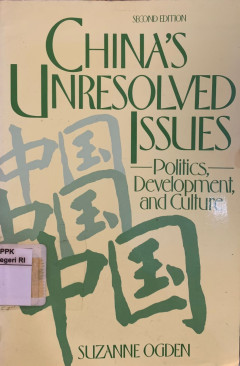
China's unresolved issues: Politics, development, and culture
This clearcut volume offers a unique, thematic treatment of the Chinese political system as it has developed since the Communist takeover in 1949. Author Suzanne Ogden provides a focused, conceptual perspective on the interactional elements of politics/ideology, development, and culture, and maintains a unifying perspective and the ability of China to resolve its problems.
- Edisi
- Ed. 2
- ISBN/ISSN
- 0-13-132747-X
- Deskripsi Fisik
- xii, 364 pages : bibl: hlm 339-353 : index ; 23 cm
- Judul Seri
- -
- No. Panggil
- 320.951 Ogd c

From post-maoism to post-marxism: The erosion of official ideology in Deng's …
This text chronicles Deng Xiaoping's institution of far-reaching and practical economic reforms that seem at odds with Communist theory and its emphasis on ideology. In fact, while Deng often turned to Mao for ideological justification of his reforms, those very reforms seemed to wear away to official ideology. Ultimately, even though the post-Mao government has fostered economic growth, improv…
- Edisi
- -
- ISBN/ISSN
- 0-415-92033-7
- Deskripsi Fisik
- xviii,270 pages : bibl: hlm 225-257 : index ; 22 cm
- Judul Seri
- -
- No. Panggil
- 320.951 Mis f
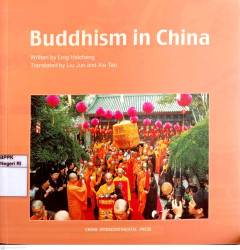
Buddhism in China
China is the second home of Buddhism where many Buddhist sects were originated. Since Buddhism wa introduced to the country some 2.000 years ago, innumerable Buddhist classics have been translated and disseminated. Among the world's three major schools of Buddhism, Pali Language Buddhism, Han-Language Buddhism and Tibetan Language Buddhism, the latter two were both born in China.
- Edisi
- -
- ISBN/ISSN
- 7-5085-0840-8
- Deskripsi Fisik
- 158 pages : illustration ; 21 cm
- Judul Seri
- -
- No. Panggil
- 294.3 Hai b

Why the Dalai Lama matters: His act of truth as the solution for China, Tibet…
Why the Dalai Lama Matters is not only a book about Tibet or the Dalai Lama. It offers revealing, provocative solutions for a world in conflict, dealing with the very fundamentals of human rights and freedom. Why the Dalai Lama Matters explores why he has earned the world's love and respect, and how restoring Tibet's autonomy within China is not only possible, but also highly probable.
- Edisi
- -
- ISBN/ISSN
- 978-1-58270-220-9
- Deskripsi Fisik
- xxiv, 231 pages: illustration ; 23 cm
- Judul Seri
- -
- No. Panggil
- 294.392.3092 Thu w

Perbatasan wilayah laut Indonesia di laut China Selatan: Kepentingan Indonesi…
Setelah diterimanya konsep Negara Kapulauan (Archipelagic State) dalam Konvensi Hukum Laut PBB (UNCLOS) 1982, luas wilayah Negara Republik Indonesia, khususnya wilayah laut semakin nyata.
- Edisi
- -
- ISBN/ISSN
- 978-979-799-364-1
- Deskripsi Fisik
- vi, 152 halaman ; 21 cm
- Judul Seri
- -
- No. Panggil
- 320.12 Sit p
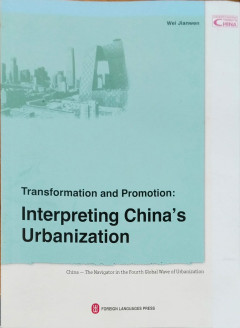
Interpreting China's urbanization
The development of China's urbanization is different from that of the Western developed countries as well as from those of other developing countries. To chart the urbanization path with Chinese characteristics requires a clear understanding of China's distinctive national situation, and its foundation and conditions for urbanization.
- Edisi
- Ed. 1
- ISBN/ISSN
- 978-7-119-08418-3
- Deskripsi Fisik
- 235 pages : illustrations (black and white) : bibl: hlm 229-235 ; 24 cm
- Judul Seri
- -
- No. Panggil
- 307.2 Jia t
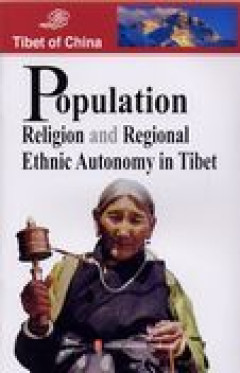
Population religion and regional ethnic autonomy in Tibet
Tibetans form the major part of the population of the Tibet Autonomous Region. Of all Tibetans throughout China, around half live in Tibet while the rest mainly scatter in Qinghai, Gansu, Sichuan and Yunnan provinces.
- Edisi
- First Edition
- ISBN/ISSN
- 978-7-119-05233-5
- Deskripsi Fisik
- 43 pages ; 22 cm
- Judul Seri
- -
- No. Panggil
- 304.609515 Chi p
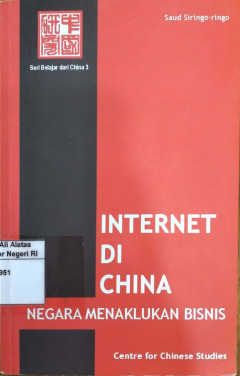
Internet di China: Negara menaklukan bisnis
Seri Belajar dari China mengangkat masalah-masalah menarik dalam perkembangan masyarakat kontemporer Republik Rakyat China yang semoga dapat menjadi sumber inspirasi bagi negara dan bangsa Indonesia yang sama-sama menghadapi tantangan membangun negara. Para penulis merupakan peneliti-peneliti muda, namun handal, harapan masa depan kita.
- Edisi
- -
- ISBN/ISSN
- 9789791774628
- Deskripsi Fisik
- xi, 172 halaman : index ; 21 cm
- Judul Seri
- -
- No. Panggil
- 004.678951
 Karya Umum
  Filsafat
  Agama
Agama  Ilmu-ilmu Sosial
  Bahasa
  Ilmu-ilmu Murni
  Ilmu-ilmu Terapan
  Kesenian, Hiburan, dan Olahraga
  Kesusastraan
  Geografi dan Sejarah