Ditapis dengan
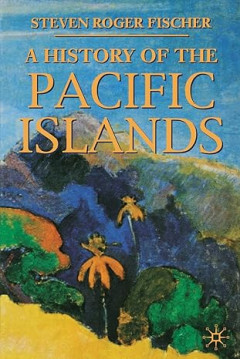
A History of the Pacific Islands
A History of the Pacific Islands traces the human history of nearly one-third of the globe over a 50,000 year span. This is history on a grand scale, taking the islands of Melanesia, Micronesia, and Polynesia from prehistoric culture to the present day th.
- Edisi
- Cet. 1
- ISBN/ISSN
- 0-333-94976-5
- Deskripsi Fisik
- xxvii, 303 pages : illustrations ; 22 cm
- Judul Seri
- -
- No. Panggil
- 940 FIS h
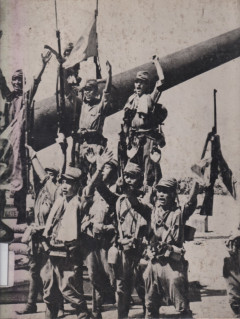
The Rising sun
The Rising Sun explores the dramatic rise of Japan as a military power in the years leading up to World War II and its early wartime expansion across Asia and the Pacific. Written by Arthur Zich with the editors of Time-Life Books, the volume examines Japan’s political transformation, its imperial ambitions, and the strategic decisions that shaped its wartime conduct. The book also traces the…
- Edisi
- -
- ISBN/ISSN
- 0-8094-2520-3
- Deskripsi Fisik
- 208 pages : illustration ; 29 cm
- Judul Seri
- -
- No. Panggil
- 940.54 ZIC r
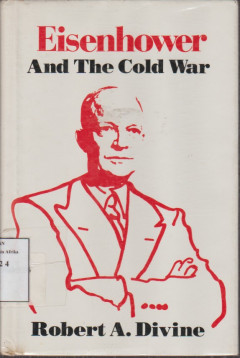
Eisenhower and the cold war
Robert A. Divine's Eisenhower and the Cold War explores President Dwight D. Eisenhower's foreign policy during the Cold War (1953–1961). Divine demonstrates that Eisenhower, despite his cautious approach, played a crucial role in shaping the United States' global strategy through his policies of containing communism, strengthening international alliances, and using nuclear power as a deterren…
- Edisi
- -
- ISBN/ISSN
- 0-19-502823-6
- Deskripsi Fisik
- ix, 181 pages ; 22 cm
- Judul Seri
- -
- No. Panggil
- 327.73 DIV e
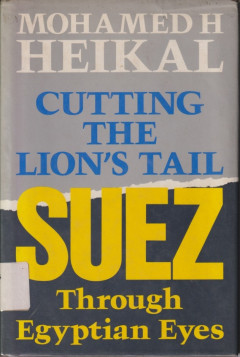
Cutting the lion’s tail: Suez through Egyptian eyes
Cutting the Lion’s Tail: Suez Through Egyptian Eyes presents an authoritative Egyptian perspective on the 1956 Suez Crisis, one of the pivotal conflicts of the modern Middle East. Mohamed Heikal, a leading journalist and close observer of Egyptian politics, provides a detailed account of the political tensions, diplomatic maneuvers, and military actions that culminated in the tripartite attac…
- Edisi
- -
- ISBN/ISSN
- 0-233-97967-0
- Deskripsi Fisik
- xiv, 238 pages : illustration ; 24 cm
- Judul Seri
- -
- No. Panggil
- 956.044 HEI c

Nationhood and the African road to socialism
"Nationhood and the African Road to Socialism" is a collection of political essays by Léopold Sédar Senghor that examines the concepts of African socialism, nation-building, and postcolonial African cultural identity. Senghor emphasizes the importance of developing a model of socialism grounded in African values, traditions, and humanism. Through his ideas, the book provides in-depth insights…
- Edisi
- -
- ISBN/ISSN
- -
- Deskripsi Fisik
- 130 pages : illustration ; 21,5 cm
- Judul Seri
- -
- No. Panggil
- 320.56096 SEN n

The Lost peace: Leadership in a time of horror and hope, 1945–1953
This book examines the crucial transition period in world history following the end of World War II, when global leaders faced the enormous challenge of building peace and a new international order. Robert Dallek explores the political decisions, conflicts of interest, and the origins of tensions that fueled the Cold War. Through in-depth analysis of major figures such as Truman, Churchill, Sta…
- Edisi
- -
- ISBN/ISSN
- 978-0-06-162866-5
- Deskripsi Fisik
- xii, 420 pages : illustration ; 24 cm
- Judul Seri
- -
- No. Panggil
- 909.82 DAL l
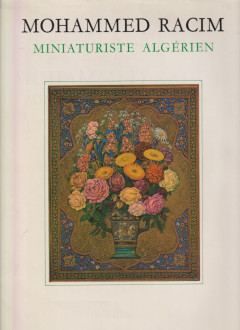
Mohammed racim: Miniaturiste algérien
This monograph presents the life and artistic achievements of Mohammed Racim, one of Algeria’s most renowned miniaturist painters. Written by Mohammed Khadda, the book explores Racim’s contributions to the revival and modernization of traditional Algerian miniature art. Through detailed commentary and visual documentation, the volume highlights Racim’s stylistic influences, cultural ident…
- Edisi
- -
- ISBN/ISSN
- -
- Deskripsi Fisik
- 67 pages : illustration ; 32 cm
- Judul Seri
- -
- No. Panggil
- 759.9561 MOH m
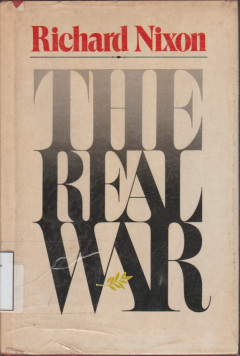
The Real war
The Real War is a global political and strategic analysis written by former US President Richard Nixon. In it, Nixon outlines his views on the geopolitical threats facing the United States during the Cold War, particularly the ideological and military rivalry with the Soviet Union. He emphasizes the need for a firm foreign policy, strengthened national defense, and realistic diplomacy to mainta…
- Edisi
- -
- ISBN/ISSN
- 0-446-51201-X
- Deskripsi Fisik
- 341 pages : illustration ; 23,5 cm
- Judul Seri
- -
- No. Panggil
- 327.73 NIX r

Pan-Africanism: The Idea and movement, 1776–1963
P. Olisanwuché Esedebe's book, Pan-Africanism: The Idea and Movement, 1776–1963, examines the history of the Pan-Africanist idea and movement from the 18th century to the mid-20th century. The author traces the development of Pan-African thought, key figures, Pan-African organizations, and the political and social dynamics underlying the struggle for African unity and the African diaspora. T…
- Edisi
- -
- ISBN/ISSN
- 0-88258-125-2
- Deskripsi Fisik
- xv, 271 pages ; 21 cm
- Judul Seri
- -
- No. Panggil
- 320.54 ESE p
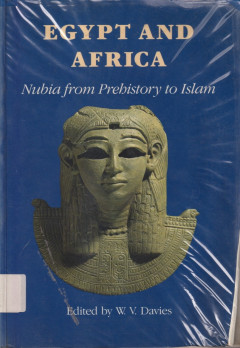
Egypt and Africa: Nubia from prehistory to islam
Egypt and Africa: Nubia from Prehistory to Islam presents a comprehensive overview of the history and culture of Nubia, examining its development from prehistoric times through the Islamic period. W. V. Davies explores the archaeological evidence, political structures, religious practices, and artistic traditions that shaped Nubian civilization. The book highlights the complex and dynamic relat…
- Edisi
- -
- ISBN/ISSN
- 0-7141-0962-2
- Deskripsi Fisik
- x, 320 pages : illustration ; 30 cm
- Judul Seri
- -
- No. Panggil
- 939.78 DAV e
 Karya Umum
  Filsafat
  Agama
Agama  Ilmu-ilmu Sosial
  Bahasa
  Ilmu-ilmu Murni
  Ilmu-ilmu Terapan
  Kesenian, Hiburan, dan Olahraga
  Kesusastraan
  Geografi dan Sejarah