Ditapis dengan
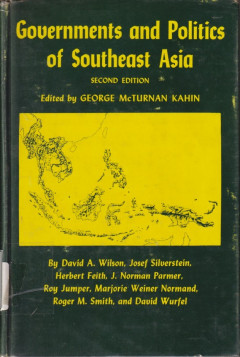
Governments and politics of Southeast Asia
This volume offers a comprehensive examination of the political systems and governmental structures of Southeast Asian nations during the mid-twentieth century. Edited by George McTurnan Kahin, the book brings together contributions from leading scholars who analyze historical foundations, political change, institutional development, and regional dynamics across Southeast Asia. Through country-…
- Edisi
- -
- ISBN/ISSN
- -
- Deskripsi Fisik
- xvii, 796 pages : illustration ; 24 cm
- Judul Seri
- -
- No. Panggil
- 320.959 KAH g

After the cataclysm: Postwar Indochina and the reconstruction of imperial ide…
After the Cataclysm examines the political, social, and ideological aftermath of the Indochina wars, focusing on Vietnam, Cambodia, and Laos following the withdrawal of the United States. Chomsky and Herman analyze how Western media and political institutions constructed narratives about postwar Indochina to justify American foreign policy and sustain Cold War ideological frameworks. The book c…
- Edisi
- -
- ISBN/ISSN
- 0-89608-100-1
- Deskripsi Fisik
- 392 pages ; 21 cm
- Judul Seri
- -
- No. Panggil
- 959.704 CHO a

International politics in East Asia since world war II
This book provides a comprehensive overview of the major political developments and international relations in East Asia following World War II. Donald F. Lach and Edmund S. Wehrle analyze key regional dynamics, including the rise of new nation-states, ideological conflicts, Cold War tensions, and shifting power structures. Through historical context and political analysis, the authors explore …
- Edisi
- -
- ISBN/ISSN
- -
- Deskripsi Fisik
- x, 388 pages : illustration ; 23 cm
- Judul Seri
- -
- No. Panggil
- 327.51 LAC i
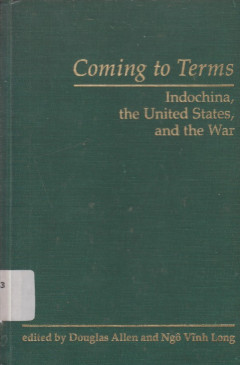
Coming to terms: Indochina, the United States, and the war
Coming to Terms is a scholarly examination of the political, social, and historical dimensions of the Indochina conflict and the role of the United States. Edited by Douglas Allen and Ngô Vĩnh Long, the book brings together contributions from leading researchers who analyze the roots of the war, the consequences for Vietnam, Laos, and Cambodia, and the broader geopolitical implications for So…
- Edisi
- -
- ISBN/ISSN
- 0-8133-1249-3
- Deskripsi Fisik
- ix, 350 pages : illustrations ; 23,5 cm
- Judul Seri
- -
- No. Panggil
- 959.7043 ALL c
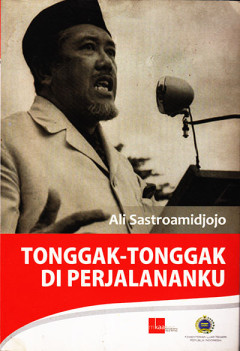
Tonggak-tonggak di perjalananku
Tonggak-tonggak di Perjalananku adalah autobiografi Ali Sastroamidjojo, salah satu tokoh politik penting Indonesia dan mantan Perdana Menteri pada era demokrasi parlementer. Buku ini menelusuri perjalanan hidupnya sejak masa muda, aktivitas politik, perannya dalam diplomasi internasional, hingga keterlibatannya dalam pemerintahan Indonesia di masa awal kemerdekaan. Dengan gaya penceritaan refle…
- Edisi
- 2
- ISBN/ISSN
- -
- Deskripsi Fisik
- 595 halaman : ilustrasi ; 20,5 cm
- Judul Seri
- -
- No. Panggil
- 923.2598 SAS t

The Troubled region: Issues of peace and development in Southeast Asia
This volume examines key political, economic, and social issues affecting Southeast Asia in the post-1945 period. Edited by Parimal Kumar Das, the book compiles scholarly contributions that analyze peace efforts, development challenges, regional security concerns, and socioeconomic transitions across various Southeast Asian nations. By presenting diverse perspectives from researchers and practi…
- Edisi
- -
- ISBN/ISSN
- 81-7036-074-9
- Deskripsi Fisik
- 330 pages : illustrations ; 22,5 cm
- Judul Seri
- -
- No. Panggil
- 959.053 DAS t

India, Pakistan, Nepal and Bangladesh: India as a factor in the intra-regiona…
This book examines the political dynamics and intra-regional interactions among India, Pakistan, Nepal, and Bangladesh in South Asia. P. K. Mishra analyzes India’s central role in shaping regional relations, focusing on historical, political, and strategic factors that influence cooperation and conflict. The study highlights bilateral issues, regional power asymmetry, and the evolution of Sou…
- Edisi
- -
- ISBN/ISSN
- -
- Deskripsi Fisik
- viii, 286 pages : illustration ; 22 cm
- Judul Seri
- -
- No. Panggil
- 327.54 MIS i

Southeast Asia’s second front: The Power struggle in the Malay archipelago
This book analyzes the geopolitical tensions and power struggles that shaped Southeast Asia during the mid-twentieth century, particularly within the Malay Archipelago. Arnold C. Brackman examines regional rivalries, Cold War influences, Communist movements, and the strategic importance of Indonesia, Malaysia, and surrounding territories. Through political analysis and historical context, the a…
- Edisi
- -
- ISBN/ISSN
- -
- Deskripsi Fisik
- xv, 341 pages : illustrations ; 21,5 cm
- Judul Seri
- -
- No. Panggil
- 959.05 BRA s

Black Power
Black Power is Richard Wright’s powerful travel narrative documenting his journey through the Gold Coast (now Ghana) during the rise of African nationalism. Through firsthand observation, Wright explores colonial structures, racial politics, cultural identity, and the struggles of African people toward independence. Blending reportage, political analysis, and personal reflection, the book pro…
- Edisi
- -
- ISBN/ISSN
- 978-0-06-145018-6
- Deskripsi Fisik
- xiii, 812 pages : illustrations ; 20 cm
- Judul Seri
- -
- No. Panggil
- 303.484096 WRI b

The Emergence of modern Southeast Asia: 1511–1957
This volume examines the historical transformation of Southeast Asia from the early sixteenth century to the mid-twentieth century. Edited by historian John Bastin, it explores the political, economic, and social forces that shaped the region during the era of European expansion and colonial rule. The book provides an analytical overview of the emergence of modern states, the impact of Western …
- Edisi
- -
- ISBN/ISSN
- -
- Deskripsi Fisik
- ix, 179 pages : illustrations ; 20,5 cm
- Judul Seri
- -
- No. Panggil
- 959.04 BAS e
 Karya Umum
  Filsafat
  Agama
Agama  Ilmu-ilmu Sosial
  Bahasa
  Ilmu-ilmu Murni
  Ilmu-ilmu Terapan
  Kesenian, Hiburan, dan Olahraga
  Kesusastraan
  Geografi dan Sejarah