Ditapis dengan

Nationalism, regionalism, and security: Problems in South-East Asia
This book presents a comprehensive analysis of nationalism, regionalism, and security issues in Southeast Asia, written by Dr. Roeslan Abdulgani. Based on the Sarojini Naidu Memorial Lectures, it explores the political dynamics of newly independent states, the challenges of regional cooperation, and the evolving security environment in the region. The author discusses the historical roots of So…
- Edisi
- -
- ISBN/ISSN
- -
- Deskripsi Fisik
- viii, 101 pages ; 22 cm
- Judul Seri
- -
- No. Panggil
- 320.954 ABD n
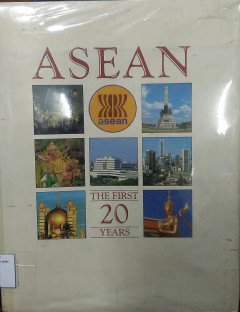
ASEAN: The First 20 years
This book presents a comprehensive overview of the establishment, growth, and achievements of the Association of Southeast Asian Nations (ASEAN) during its first two decades since its founding in 1967. It documents key political, economic, and socio-cultural developments, major agreements, ministerial meetings, and collaborative programs among member states. The publication highlights ASEAN’s…
- Edisi
- -
- ISBN/ISSN
- 9971-4-1053-2
- Deskripsi Fisik
- vii, 219 pages : illustrations ; 33 cm
- Judul Seri
- -
- No. Panggil
- 341.2473 ASE a

Nationalism in Asia
This book provides an analytical overview of the rise and development of nationalism in various regions of Asia. R. S. Chavan examines the historical roots, political dynamics, and socio-cultural forces that shaped nationalist movements across the continent. The work highlights key events, ideological influences, and regional variations that contributed to the formation of modern Asian nation-s…
- Edisi
- -
- ISBN/ISSN
- 0-7069-0608-X
- Deskripsi Fisik
- xvi, 595 pages ; 22 cm
- Judul Seri
- -
- No. Panggil
- 320.54095 CHA n
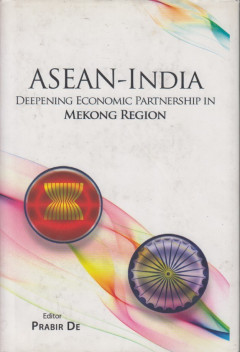
ASEAN–India: Deepening economic partnership in Mekong region
This book examines the evolving economic partnership between ASEAN and India, with a special focus on the Mekong region. It analyzes trade relations, regional connectivity, investment flows, and policy frameworks that shape cooperation between India and Southeast Asian countries. Through research-based chapters, the volume explores opportunities and challenges in deepening regional integration,…
- Edisi
- -
- ISBN/ISSN
- 81-7122-102-5
- Deskripsi Fisik
- xxxv, 314 pages : illustrations ; 23,5 cm
- Judul Seri
- -
- No. Panggil
- 337.159 RDE a

Southeast Asia today-and tomorrow: A Political analysis
This book presents a political analysis of Southeast Asia during the early post-colonial era, examining the major political developments, regional dynamics, and emerging challenges faced by Southeast Asian nations. Richard Butwell explores issues of governance, nationalism, international alignments, and the strategic significance of the region. The work provides historical insights as well as f…
- Edisi
- -
- ISBN/ISSN
- -
- Deskripsi Fisik
- x, 182 pages : illustration ; 20,5 cm
- Judul Seri
- -
- No. Panggil
- 320.959 BUT s
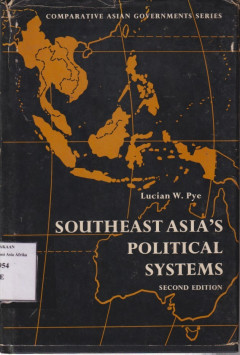
Southeast Asia’s political systems
This book provides a comprehensive analysis of the political systems of Southeast Asian countries, examining the historical, cultural, and social foundations that shape governance in the region. Lucian W. Pye explores the comparative structures of political authority, leadership patterns, modernization challenges, and the interaction between traditional values and modern state-building. As part…
- Edisi
- Kedua
- ISBN/ISSN
- 0-13-823690-9
- Deskripsi Fisik
- xi, 116 pages ; 23,5 cm
- Judul Seri
- -
- No. Panggil
- 320.959 PYE s

The Middle East in global perspective
This edited volume provides a comprehensive examination of the Middle East within the context of shifting global political dynamics. Bringing together contributions from leading scholars and practitioners, the book analyzes political developments, regional conflicts, economic challenges, sociopolitical transformations, and the evolving role of the Middle East in international affairs. It highli…
- Edisi
- -
- ISBN/ISSN
- 0-8133-0296-X
- Deskripsi Fisik
- viii, 359 pages ; 23 cm
- Judul Seri
- -
- No. Panggil
- 320.956 KIP m
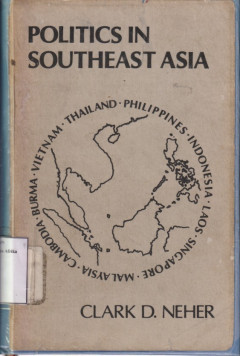
Politics in Southeast Asia
This book presents a comprehensive study of political systems and government structures in Southeast Asia. Clark D. Neher analyzes major political developments, institutional frameworks, leadership patterns, and ideological influences across countries in the region. The work emphasizes the diversity of political experiences in Southeast Asia and explores how historical, cultural, and socioecono…
- Edisi
- -
- ISBN/ISSN
- 0-87073-872-0
- Deskripsi Fisik
- viii, 278 pages : illustration ; 21 cm
- Judul Seri
- -
- No. Panggil
- 320.959 NEH p

South-East Asia 1930–1970: The legacy of colonialism and nationalism
This book provides a comprehensive analysis of Southeast Asia from 1930 to 1970, focusing on the profound political, social, and economic transformations that shaped the region. Fred R. von der Mehden examines the long-lasting impact of colonialism and the rise of nationalist movements that ultimately led to independence across Southeast Asian nations. Through historical interpretation and comp…
- Edisi
- -
- ISBN/ISSN
- 0-500-71004-X
- Deskripsi Fisik
- 144 pages : illustration ; 21 cm
- Judul Seri
- -
- No. Panggil
- 959.05 MEH s

Democracy and democratization: Processes and prospects in a changing world
This book analyzes the processes, challenges, and prospects of democratization in a rapidly changing global political landscape. Georg Sørensen explores the theoretical foundations of democracy, the conditions required for successful democratization, and the obstacles faced by emerging democracies. By examining political transitions in different regions, the author highlights how global power …
- Edisi
- -
- ISBN/ISSN
- 0-8133-1527-1
- Deskripsi Fisik
- xv, 170 pages ; 23,5 cm
- Judul Seri
- -
- No. Panggil
- 321.8 SOR d
 Karya Umum
  Filsafat
  Agama
Agama  Ilmu-ilmu Sosial
  Bahasa
  Ilmu-ilmu Murni
  Ilmu-ilmu Terapan
  Kesenian, Hiburan, dan Olahraga
  Kesusastraan
  Geografi dan Sejarah