Ditapis dengan
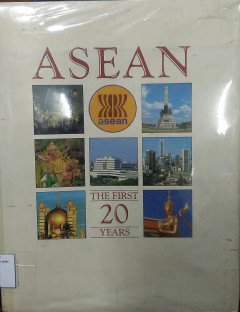
ASEAN: The First 20 years
This book presents a comprehensive overview of the establishment, growth, and achievements of the Association of Southeast Asian Nations (ASEAN) during its first two decades since its founding in 1967. It documents key political, economic, and socio-cultural developments, major agreements, ministerial meetings, and collaborative programs among member states. The publication highlights ASEAN’s…
- Edisi
- -
- ISBN/ISSN
- 9971-4-1053-2
- Deskripsi Fisik
- vii, 219 pages : illustrations ; 33 cm
- Judul Seri
- -
- No. Panggil
- 341.2473 ASE a
Southeast Asia today-and tomorrow: A Political analysis
This book presents a political analysis of Southeast Asia during the early post-colonial era, examining the major political developments, regional dynamics, and emerging challenges faced by Southeast Asian nations. Richard Butwell explores issues of governance, nationalism, international alignments, and the strategic significance of the region. The work provides historical insights as well as f…
- Edisi
- -
- ISBN/ISSN
- -
- Deskripsi Fisik
- x, 182 pages : illustration ; 20,5 cm
- Judul Seri
- -
- No. Panggil
- 320.959 BUT s
The Middle East in global perspective
This edited volume provides a comprehensive examination of the Middle East within the context of shifting global political dynamics. Bringing together contributions from leading scholars and practitioners, the book analyzes political developments, regional conflicts, economic challenges, sociopolitical transformations, and the evolving role of the Middle East in international affairs. It highli…
- Edisi
- -
- ISBN/ISSN
- 0-8133-0296-X
- Deskripsi Fisik
- viii, 359 pages ; 23 cm
- Judul Seri
- -
- No. Panggil
- 320.956 KIP m

South Asia: Post-nehrurvian dynamics of diplomacy
This book examines the shifts in South Asian diplomacy in the post-Nehruvian era, focusing on how regional politics, security concerns, and changes in India's foreign policy have shaped inter-state relations in South Asia. Edited by K.M. Sajad Ibrahim, the volume brings together analyses from scholars on themes such as regional cooperation, conflict dynamics, strategic interests, and the evolvi…
- Edisi
- -
- ISBN/ISSN
- 978-81-7708-355-2
- Deskripsi Fisik
- xxi, 239 pages : illustrations ; 22,5 cm
- Judul Seri
- -
- No. Panggil
- 327.54 IBR s
Coming to terms: Indochina, the United States, and the war
Coming to Terms is a scholarly examination of the political, social, and historical dimensions of the Indochina conflict and the role of the United States. Edited by Douglas Allen and Ngô Vĩnh Long, the book brings together contributions from leading researchers who analyze the roots of the war, the consequences for Vietnam, Laos, and Cambodia, and the broader geopolitical implications for So…
- Edisi
- -
- ISBN/ISSN
- 0-8133-1249-3
- Deskripsi Fisik
- ix, 350 pages : illustrations ; 23,5 cm
- Judul Seri
- -
- No. Panggil
- 959.7043 ALL c

International politics in East Asia since world war II
This book provides a comprehensive overview of the major political developments and international relations in East Asia following World War II. Donald F. Lach and Edmund S. Wehrle analyze key regional dynamics, including the rise of new nation-states, ideological conflicts, Cold War tensions, and shifting power structures. Through historical context and political analysis, the authors explore …
- Edisi
- -
- ISBN/ISSN
- -
- Deskripsi Fisik
- x, 388 pages : illustration ; 23 cm
- Judul Seri
- -
- No. Panggil
- 327.51 LAC i

India, Pakistan, Nepal and Bangladesh: India as a factor in the intra-regiona…
This book examines the political dynamics and intra-regional interactions among India, Pakistan, Nepal, and Bangladesh in South Asia. P. K. Mishra analyzes India’s central role in shaping regional relations, focusing on historical, political, and strategic factors that influence cooperation and conflict. The study highlights bilateral issues, regional power asymmetry, and the evolution of Sou…
- Edisi
- -
- ISBN/ISSN
- -
- Deskripsi Fisik
- viii, 286 pages : illustration ; 22 cm
- Judul Seri
- -
- No. Panggil
- 327.54 MIS i

Black Power
Black Power is Richard Wright’s powerful travel narrative documenting his journey through the Gold Coast (now Ghana) during the rise of African nationalism. Through firsthand observation, Wright explores colonial structures, racial politics, cultural identity, and the struggles of African people toward independence. Blending reportage, political analysis, and personal reflection, the book pro…
- Edisi
- -
- ISBN/ISSN
- 978-0-06-145018-6
- Deskripsi Fisik
- xiii, 812 pages : illustrations ; 20 cm
- Judul Seri
- -
- No. Panggil
- 303.484096 WRI b

Asia and the Western Pacific: Towards a new international order
This volume examines the evolving international order in Asia and the Western Pacific during the post–World War II period. Edited by Hedley Bull, the book brings together analyses from leading scholars associated with the Australian Institute of International Affairs. It explores strategic, political, and diplomatic changes in the region, focusing on the interaction between major powers and A…
- Edisi
- -
- ISBN/ISSN
- 17-005046-7
- Deskripsi Fisik
- xxviii, 387 pages ; 22 cm
- Judul Seri
- -
- No. Panggil
- 327.11 BUL t
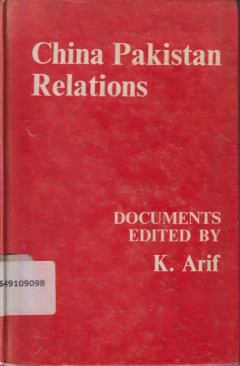
China Pakistan relations 1947–1980
This volume compiles key official documents, statements, agreements, and historical records that trace the evolution of China–Pakistan relations from 1947 to 1980. Edited by K. Arif, the book provides insight into diplomatic exchanges, political developments, security cooperation, and regional dynamics shaping the partnership between the two countries. It serves as an essential reference for …
- Edisi
- -
- ISBN/ISSN
- -
- Deskripsi Fisik
- xvii, 300 pages ; 22 cm
- Judul Seri
- -
- No. Panggil
- 327.549105 ARI c
 Karya Umum
  Filsafat
  Agama
Agama  Ilmu-ilmu Sosial
  Bahasa
  Ilmu-ilmu Murni
  Ilmu-ilmu Terapan
  Kesenian, Hiburan, dan Olahraga
  Kesusastraan
  Geografi dan Sejarah