Ditapis dengan
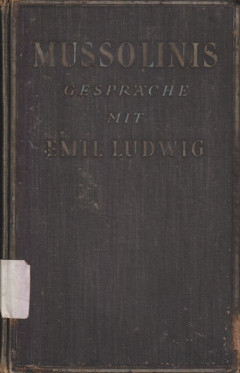
Mussolinis Gespräche mit Emil Ludwig
This book contains a series of conversations and in-depth interviews between renowned German journalist Emil Ludwig and Benito Mussolini, leader of Fascist Italy. Through open and often controversial dialogue, Ludwig reveals Mussolini's personal and political views on power, the state, war, humanity, and his ideological vision for the future of Italy. This book is an important primary source fo…
- Edisi
- -
- ISBN/ISSN
- -
- Deskripsi Fisik
- 231 pages : illustration ; 20,5 cm
- Judul Seri
- -
- No. Panggil
- 945.092 LUD m

The Brutal friendship: Mussolini, Hitler, and the Fall of Italian Fascism
This book is an in-depth study of the complex relationship between Benito Mussolini and Adolf Hitler, and how the alliance between these two totalitarian regimes contributed to the downfall of Italian Fascism. F. W. Deakin traces the development of the personal and political relationship between the two leaders, their failed military strategies, and the internal tensions within Mussolini's regi…
- Edisi
- -
- ISBN/ISSN
- -
- Deskripsi Fisik
- 574 pages ; 18 cm
- Judul Seri
- -
- No. Panggil
- 945.0915 DEA b
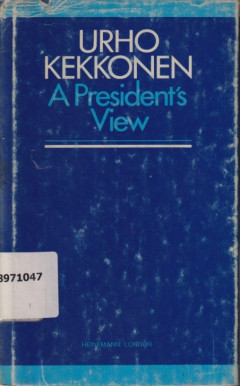
Urho Kekkonen: A President’s view
Urho Kekkonen: A President’s View contains the political views and personal reflections of Finnish President Urho Kekkonen on foreign policy, international relations, and Finland’s position during the Cold War. Through selected essays and speeches, Kekkonen outlines the basic principles of Finland’s policy of neutrality, diplomacy with the Soviet Union and the West, and the political chal…
- Edisi
- -
- ISBN/ISSN
- 434-38631-6
- Deskripsi Fisik
- 195 pages ; 18,5 cm
- Judul Seri
- -
- No. Panggil
- 327.489 KEK u

Les Idées Politiques à Rome sous la République
This book contains a collection of texts selected and presented by Claude Nicolet on the development of political thought in Rome during the Republic. Through classical sources and historical analysis, Nicolet highlights the basic principles of Roman government, ideas about citizenship, power, law, and the socio-political dynamics that formed the foundation of the Republic's institutions. This …
- Edisi
- -
- ISBN/ISSN
- -
- Deskripsi Fisik
- 199 pages ; 18 cm
- Judul Seri
- -
- No. Panggil
- 320.937 NIC l

The Unexpected revolution: Social forces in the Hungarian uprising
Paul Kecskemeti's The Unexpected Revolution is a thorough analysis of the Hungarian Revolution of 1956. It highlights the social forces that drove the uprising, including the roles of students, workers, political elites, and the internal dynamics of the Communist Party. Kecskemeti explores the economic, political, and psychological factors that fueled the rapid changes in Hungary and examines h…
- Edisi
- -
- ISBN/ISSN
- -
- Deskripsi Fisik
- vi, 178 pages ; 22 cm
- Judul Seri
- -
- No. Panggil
- 947.19 KEC u
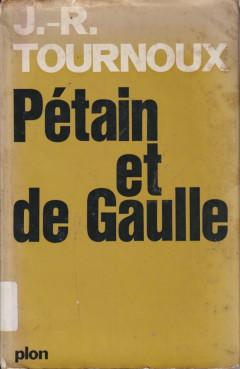
Pétain et De Gaulle
This book presents an in-depth study of two of the most influential and controversial figures in 20th-century French history: Philippe Pétain and Charles de Gaulle. Through his investigative style, J.-R. Tournoux depicts the relationships, ideological conflicts, differences in political vision, and the lives of these two figures who played a major role in World War I, World War II, and the pol…
- Edisi
- -
- ISBN/ISSN
- -
- Deskripsi Fisik
- 556 pages : illustration ; 23,5 cm
- Judul Seri
- -
- No. Panggil
- 944.081 TOU p

America right or wrong: An Anatomy of American nationalism
America Right or Wrong offers a critical examination of American nationalism and its influence on U.S. domestic and foreign policy. Anatol Lieven analyzes the cultural, political, and historical roots of American national identity, highlighting how different strands of nationalism—both civic and ideological—shape America’s worldview and global actions. The book explores the impact of nati…
- Edisi
- -
- ISBN/ISSN
- 978-0-19-984162-2
- Deskripsi Fisik
- x, 297 pages ; 23,5 cm
- Judul Seri
- -
- No. Panggil
- 320.54 LIE a

Histoire des relations internationales. Tome sixième : Le XIXᵉ siècle. II…
This sixth volume of the “Histoire des relations internationales” series examines the development of international relations between 1871 and 1914, a period when Europe reached the peak of its political and economic power. Pierre Renouvin describes the rivalries between major powers, the growth of nationalism, imperialism, the alliance system, and the various international crises that ultim…
- Edisi
- -
- ISBN/ISSN
- -
- Deskripsi Fisik
- 401 pages : illustration ; 22 cm
- Judul Seri
- -
- No. Panggil
- 327.09034 REN h

Mixed messages: American politics and international organization 1919–1999
Mixed Messages explores the complex relationship between the United States and major international organizations from the end of World War I through the end of the twentieth century. Edward C. Luck analyzes how American domestic politics, shifting national interests, and public opinion have shaped U.S. engagement with institutions such as the League of Nations and the United Nations. The book h…
- Edisi
- -
- ISBN/ISSN
- 0-8157-5308-X
- Deskripsi Fisik
- xvi, 374 pages ; 23 cm
- Judul Seri
- -
- No. Panggil
- 341.23 LUC m

A Government as good as its people
This book presents a collection of speeches, essays, and reflections by Jimmy Carter, written during his rise from governor of Georgia to President of the United States. Carter discusses themes of democracy, social justice, moral leadership, and the responsibilities of government to its citizens. Through personal insights and political commentary, he outlines his vision of a government defined …
- Edisi
- -
- ISBN/ISSN
- 0-671-22852-9
- Deskripsi Fisik
- 262 pages ; 22,5 cm
- Judul Seri
- -
- No. Panggil
- 973.925 CAR g
 Karya Umum
  Filsafat
  Agama
Agama  Ilmu-ilmu Sosial
  Bahasa
  Ilmu-ilmu Murni
  Ilmu-ilmu Terapan
  Kesenian, Hiburan, dan Olahraga
  Kesusastraan
  Geografi dan Sejarah