Ditapis dengan
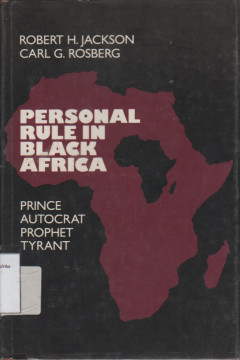
Personal rule in black Africa: Prince, autocrat, prophet, tyrant
Personal Rule in Black Africa examines forms of political leadership rooted in personal power in postcolonial African states. Jackson and Rosberg identify ruler types ranging from princes, autocrats, prophets, to tyrants, and analyze how personal power shapes political structures, state stability, and governance patterns. This book highlights authoritarianism, despotism, political patronage, an…
- Edisi
- -
- ISBN/ISSN
- 0-520-04185-2
- Deskripsi Fisik
- xi, 316 pages : illustration ; 24 cm
- Judul Seri
- -
- No. Panggil
- 320.96 JAC p
A Political geography of Africa
E. A. Boateng's "A Political Geography of Africa" provides a comprehensive study of the political aspects of African geography. Boateng analyzes state formation, territorial boundaries, power patterns, ethnic diversity, colonialism, and the geopolitical dynamics that shaped modern Africa. Using a geographical and political approach, the book explains how physical conditions, history, and …
- Edisi
- -
- ISBN/ISSN
- 0-521-29269-7
- Deskripsi Fisik
- xix, 292 pages : illustration ; 23 cm
- Judul Seri
- -
- No. Panggil
- 320.96 BOA p

Nationhood and the African road to socialism
"Nationhood and the African Road to Socialism" is a collection of political essays by Léopold Sédar Senghor that examines the concepts of African socialism, nation-building, and postcolonial African cultural identity. Senghor emphasizes the importance of developing a model of socialism grounded in African values, traditions, and humanism. Through his ideas, the book provides in-depth insights…
- Edisi
- -
- ISBN/ISSN
- -
- Deskripsi Fisik
- 130 pages : illustration ; 21,5 cm
- Judul Seri
- -
- No. Panggil
- 320.56096 SEN n

Pan-Africanism: The Idea and movement, 1776–1963
P. Olisanwuché Esedebe's book, Pan-Africanism: The Idea and Movement, 1776–1963, examines the history of the Pan-Africanist idea and movement from the 18th century to the mid-20th century. The author traces the development of Pan-African thought, key figures, Pan-African organizations, and the political and social dynamics underlying the struggle for African unity and the African diaspora. T…
- Edisi
- -
- ISBN/ISSN
- 0-88258-125-2
- Deskripsi Fisik
- xv, 271 pages ; 21 cm
- Judul Seri
- -
- No. Panggil
- 320.54 ESE p
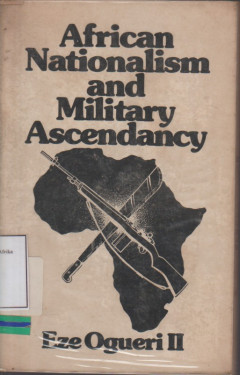
African nationalism and military ascendancy
Eze Ogueri II's book, "African Nationalism and Military Ascendancy," examines the development of African nationalism and the role of the military in the political dynamics of African countries after independence. The author explores the relationship between nationalist movements, political leadership, and the increasing dominance of the military in various African countries, particularly during…
- Edisi
- -
- ISBN/ISSN
- 0-914970-13-5
- Deskripsi Fisik
- vi, 85 pages : illustration ; 20,5 cm
- Judul Seri
- -
- No. Panggil
- 320.54096 OGU a

Nationalism and new states in Africa: From about 1935 to the present
Ali A. Mazrui and Michael Tidy's book, "Nationalism and New States in Africa," examines the development of African nationalism from approximately 1935 to the modern era. The authors outline the historical background of colonialism, the rise of nationalist movements, the struggle for independence, and the political dynamics of new states after independence. The book provides an in-depth analysis…
- Edisi
- -
- ISBN/ISSN
- 0-435-94146-1
- Deskripsi Fisik
- xxix, 401 pages : illustration ; 23,5 cm
- Judul Seri
- -
- No. Panggil
- 320.54096 MAZ n
New States in the modern world
"New States in the Modern World," edited by Martin Kilson, is a collection of essays and lectures on the development of new states that emerged in the 20th century, primarily in Africa. Contributors discuss the political dynamics, governance challenges, national development, international relations, and ideological issues facing postcolonial states. This work provides an in-depth academic persp…
- Edisi
- -
- ISBN/ISSN
- 0-674-62261-8
- Deskripsi Fisik
- xi, 254 pages : illustration ; 24 cm
- Judul Seri
- -
- No. Panggil
- 320.17096 KIL s
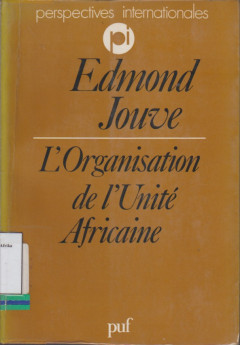
L’Organisation de l’Unité Africaine
Edmond Jouve's book, L’Organisation de l’Unité Africaine, examines the history, structure, objectives, and political dynamics of the Organization of African Unity (OAU), a regional institution established in 1963 to promote unity, solidarity, and liberation among African nations. Jouve examines the OAU's role in conflict resolution, interstate relations, anti-colonial struggles, and its co…
- Edisi
- -
- ISBN/ISSN
- 2-13-038778-0
- Deskripsi Fisik
- 284 pages ; 21,5 cm
- Judul Seri
- -
- No. Panggil
- 341.24 JOU l
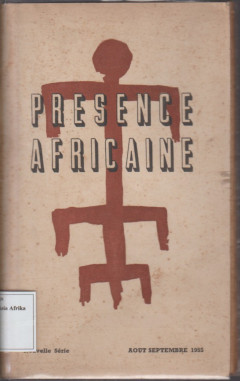
Présence Africaine
Présence Africaine is an important journal that serves as a forum for intellectual, cultural, and political thought on Africa and the diaspora. This issue, published from August–September 1955, is part of the Nouvelle Série, which features articles on literature, art, philosophy, history, and the political struggles of African nations during the colonial period. The journal played a signifi…
- Edisi
- -
- ISBN/ISSN
- -
- Deskripsi Fisik
- 96 pages ; 22,5 cm
- Judul Seri
- -
- No. Panggil
- 960 CON p
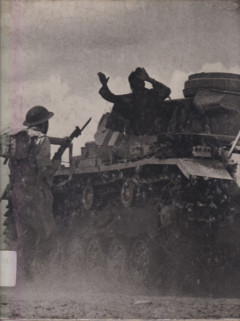
The War in the desert
The War in the Desert provides a vivid and detailed narrative of the North African Campaign during World War II. Written by Richard Collier and the editors of Time-Life Books, it chronicles the dramatic battles fought across Libya and Egypt between Allied and Axis forces. The book explores key figures such as Field Marshal Erwin Rommel and the British Eighth Army, highlighting strategy, militar…
- Edisi
- -
- ISBN/ISSN
- -
- Deskripsi Fisik
- 208 pages : illustration ; 29 cm
- Judul Seri
- -
- No. Panggil
- 940.54 COL w
 Karya Umum
 Filsafat
 Agama
 Ilmu-ilmu Sosial
 Bahasa
 Ilmu-ilmu Murni
 Ilmu-ilmu Terapan
 Kesenian, Hiburan, dan Olahraga
 Kesusastraan
 Geografi dan Sejarah