Ditapis dengan

Nonaligned states: A Great leap forward — A Study in new international econ…
“This book analyzes the role of nonaligned states in shaping the New International Economic Order during the early 1980s. Attar Chand examines the political and economic aspirations of the Non-Aligned Movement, emphasizing its collective efforts to restructure global economic relations in favor of developing countries. Through detailed assessments of policy positions, international negotiatio…
- Edisi
- -
- ISBN/ISSN
- -
- Deskripsi Fisik
- xxxi, 308 pages ; 22 cm
- Judul Seri
- -
- No. Panggil
- 327.17 CHA n
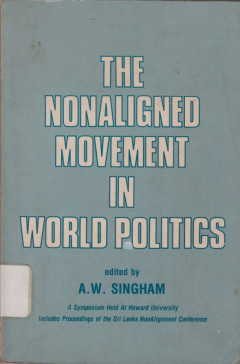
The Nonaligned movement in world politics
This volume examines the emergence, evolution, and political significance of the Non-Aligned Movement within the context of global politics during the Cold War. It analyzes the movement’s ideological foundations, its responses to major world conflicts, and its role in representing the interests of developing nations. Through contributions from various scholars, the book explores how nonalignm…
- Edisi
- -
- ISBN/ISSN
- 0-88208-069-9
- Deskripsi Fisik
- 273 pages ; 23 cm
- Judul Seri
- -
- No. Panggil
- 327.17 TIM n

Basic documents: The tenth conference of heads of state or government of non-…
At its inaugural session, the Conference was privileged to hear an inspiring keynote address delivered by His Excellency Mr. Soeharto, President of the Republic of Indonesia. His insightful and lucid address was welcomed as a significant contribution to the deliberations and successful outcome of the Conference. The President, in noting the collapse of the bipolar structure of the world, stress…
- Edisi
- -
- ISBN/ISSN
- -
- Deskripsi Fisik
- 240 pages ; 24 cm
- Judul Seri
- -
- No. Panggil
- 327 CON b

Democracy and democratization: Processes and prospects in a changing world
This book analyzes the processes, challenges, and prospects of democratization in a rapidly changing global political landscape. Georg Sørensen explores the theoretical foundations of democracy, the conditions required for successful democratization, and the obstacles faced by emerging democracies. By examining political transitions in different regions, the author highlights how global power …
- Edisi
- -
- ISBN/ISSN
- 0-8133-1527-1
- Deskripsi Fisik
- xv, 170 pages ; 23,5 cm
- Judul Seri
- -
- No. Panggil
- 321.8 SOR d

Southeast Asia in international politics, 1941-1956
This book explains about international relations of Southeast Asia during the critical period from World War II to the years immediatelly following the first Indochina settlement. Set against a global background, it explores the policies not only of the countries of the region (including Australia and New Zealand), but also of outside countries with interest in Southeast Asia-the European power…
- Edisi
- -
- ISBN/ISSN
- 0-8014-0971-3
- Deskripsi Fisik
- 372 pages : index ; 24 cm
- Judul Seri
- -
- No. Panggil
- 327.0959 COL s
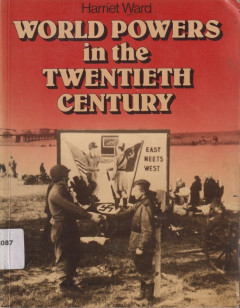
World powers in the twentieth century
World Powers in the Twentieth Century, written by Harriet Ward, provides an accessible and well-illustrated overview of the rise, decline, and interaction of major global powers during the twentieth century. The book examines the political, military, and economic forces that shaped the era, from the First World War and the emergence of superpowers to the Cold War and the changing balance of pow…
- Edisi
- -
- ISBN/ISSN
- ISBN 0 563 16225 2
- Deskripsi Fisik
- xv, 304 pages : illustration ; 24 cm
- Judul Seri
- -
- No. Panggil
- 320.9 WAR w

Red cloud at dawn: Truman, stalin, and the end of the atomic monopoly
On August 29, 1949, the first Soviet test bomb, dubbed “First Lightning,” exploded in the deserts of Kazakhstan. This startling event was not simply a technical triumph that confirmed the ability of the Soviet Union to build nuclear bombs during a period when the United States held a broadcast monopoly. It was also an international event that marked the beginning of an arms race that would …
- Edisi
- -
- ISBN/ISSN
- 978-0-374-25682-1
- Deskripsi Fisik
- xii, 402 pages ; 23 cm
- Judul Seri
- -
- No. Panggil
- 355.825 GOR r
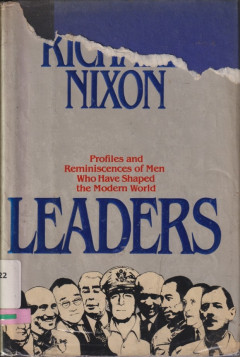
Leaders
In this reflective work, former U.S. President Richard Nixon offers his insights on global leadership through a series of biographical portraits and personal evaluations of major world figures. Drawing from his extensive experience in international politics and diplomacy, Nixon analyzes the qualities, decisions, and historical moments that shaped the leaders who influenced the 20th century. The…
- Edisi
- -
- ISBN/ISSN
- 0-446-51249-4
- Deskripsi Fisik
- 371 pages : illustration ; 23,5 cm
- Judul Seri
- -
- No. Panggil
- 909.82 NIX l

Zero-Sum future: American power in an age of anxiety
Zero-Sum Future examines the shifting landscape of global power in the post–Cold War era, arguing that rising economic insecurity and geopolitical competition are pushing major nations toward zero-sum thinking. Gideon Rachman analyzes how globalization, financial instability, and the emergence of new world powers shape American influence in the 21st century. Through historical context and con…
- Edisi
- -
- ISBN/ISSN
- 978-1-4391-7661-0
- Deskripsi Fisik
- viii, 340 pages ; 24 cm
- Judul Seri
- -
- No. Panggil
- 973.93 RAC z
International politics
This third edition of Vernon Van Dyke’s International Politics provides a comprehensive introduction to the major concepts, issues, and analytical frameworks in the study of international relations. The book examines the nature of the international system, the behavior of states, the role of power, nationalism, international law, diplomacy, and the growing importance of international organiza…
- Edisi
- -
- ISBN/ISSN
- -
- Deskripsi Fisik
- xiii, 539 pages ; 24 cm
- Judul Seri
- -
- No. Panggil
- 327.11 DYK i
 Karya Umum
  Filsafat
  Agama
Agama  Ilmu-ilmu Sosial
  Bahasa
  Ilmu-ilmu Murni
  Ilmu-ilmu Terapan
  Kesenian, Hiburan, dan Olahraga
  Kesusastraan
  Geografi dan Sejarah