Ditapis dengan

The rise of African Nationalism in South Africa: The African National congres…
This book is an in-depth academic study of the rise of African nationalism in South Africa through the history of the African National Congress (ANC) from 1912 to 1952. Peter Walshe traces the organizational development, internal dynamics, struggle strategies, and socio-political influence of the ANC in confronting the strengthening apartheid system. This work provides a comprehensive analysis …
- Edisi
- -
- ISBN/ISSN
- 0-520-01810-9
- Deskripsi Fisik
- 479 pages; 23 cm
- Judul Seri
- -
- No. Panggil
- 968.05 WAL t
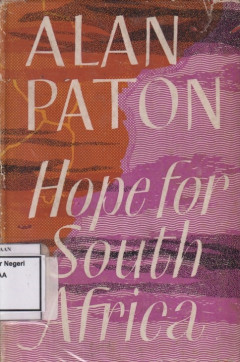
Hope for South Africa
Alan Paton's "Hope for South Africa" examines the political, social, and moral conditions of South Africa during the apartheid era. This book expresses hope for social change and justice for all South Africans. As a humanist and anti-apartheid figure, Paton presents a profound critique of racial injustice while offering an optimistic view of the nation's future. This work is an important …
- Edisi
- -
- ISBN/ISSN
- -
- Deskripsi Fisik
- vii, 94 pages : illustration ; 19 cm
- Judul Seri
- -
- No. Panggil
- 968 PAT h
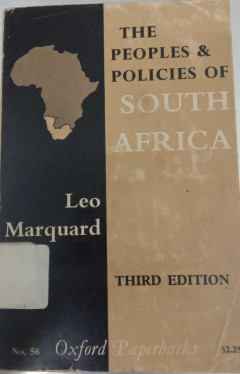
The Peoples and policies of South Africa
Leo Marquard's The Peoples and Policies of South Africa examines the dynamics of South African society, including political structures, government policies, and racial relations during the apartheid era. This third revised edition provides an in-depth analysis of the social, economic, and policy developments that shaped modern South Africa. As a classic work on South Africa, it is an essential …
- Edisi
- Ed. 3
- ISBN/ISSN
- -
- Deskripsi Fisik
- 284 pages; 20 cm
- Judul Seri
- -
- No. Panggil
- 968 MAR t
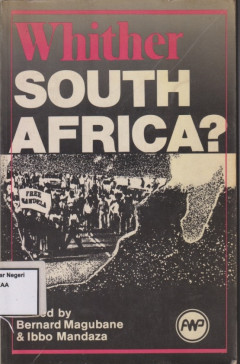
Whither South Africa?
This book is a collection of essays examining the direction of South African political development at the end of the apartheid era. Edited by Bernard Magubane and Ibbo Mandaza, it compiles analyses by political scientists on the social, economic, racial, and political conditions that influenced the country's future. It also evaluates the dynamics of popular resistance, state policies, and the p…
- Edisi
- -
- ISBN/ISSN
- -
- Deskripsi Fisik
- viii, 192 pages ; 21,5 cm
- Judul Seri
- -
- No. Panggil
- 320.968 MAG w
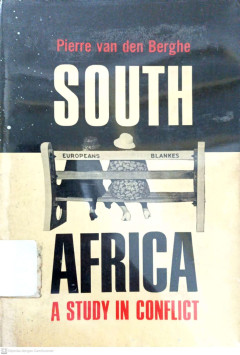
South Africa: A Study in conflict
This book is a scholarly study of the dynamics of social and political conflict in South Africa during the apartheid era. Pierre L. van den Berghe analyzes the historical factors, social structures, racial relations, and political tensions that shaped the conflict in the country. Using a sociological approach, the book explains the roots of division, the apartheid policy, and its impact on Sout…
- Edisi
- -
- ISBN/ISSN
- 520-01294-1
- Deskripsi Fisik
- x, 371 pages ; 20 cm
- Judul Seri
- -
- No. Panggil
- 968 BER s

The African patriots: The story of the African national congress of South Africa
Mary Benson's The African Patriots is a comprehensive history of the African National Congress (ANC), the oldest and most influential political organization in South Africa's liberation struggle. It explores the ANC's development since the early 20th century, its strategies for fighting colonialism and apartheid, and the roles of key figures in shaping the South African nationalist movement. Th…
- Edisi
- cet.2
- ISBN/ISSN
- -
- Deskripsi Fisik
- 310 pages; 22 cm
- Judul Seri
- -
- No. Panggil
- 960 BEN t

No easy walk to freedom: Articles, speeches and trial addresses of Nelson Man…
No Easy Walk to Freedom is a collection of articles, speeches, and official statements by Nelson Mandela during his struggle against apartheid. It contains key texts reflecting Mandela's political thought, including his historic inquiry speech, his defense at the Rivonia trial, and a socio-political analysis of South Africa under apartheid. With a new foreword by Ruth First, the book provides a…
- Edisi
- -
- ISBN/ISSN
- 0-435-90123-0
- Deskripsi Fisik
- xiv, 189 pages : illustrations ; 18,5 cm
- Judul Seri
- -
- No. Panggil
- 923.26 MAN n

Long walk to freedom: The autobiography of Nelson Mandela
This book is the autobiography of Nelson Mandela, the first black former President of South Africa and also the first president elected through a general election. Written by the character himself, this book contains memories and experiences full of drama that shaped Nelson Mandela's personality. His life story is an epic story, full of continuous obstacles and difficulties until he finally suc…
- Edisi
- -
- ISBN/ISSN
- 0-316-87496-5
- Deskripsi Fisik
- ix, 630 pages : index ; 24 cm
- Judul Seri
- -
- No. Panggil
- 920 MAN l
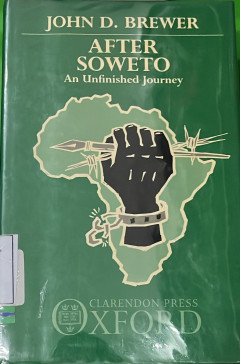
After Soweto : An Unfinished journey
The 1976 uprising in Soweto transformed the nature of both internal and external opposition to apartheid in South Africa, and the effects of this vociferous and sustained protest are felt more strongly than ever today. This book examines the nature of opposition among the African community to apartheid in the crucial years since Soweto by analysing internal African initiatives for bringing abou…
- Edisi
- -
- ISBN/ISSN
- 0-19-827480-7
- Deskripsi Fisik
- xv, 448 pages ; 22 cm
- Judul Seri
- -
- No. Panggil
- 305.800968 BRE a
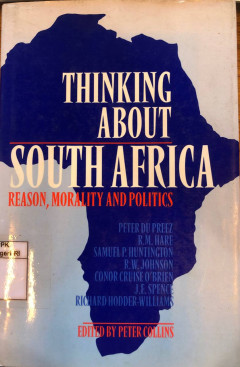
Thinking about South Africa: Reason, morality and politics
Since 1948, South Africa has moved from being a respected member of the British Commonwealth to being a pariah state of the world. How has this come about and what can be done about it? Why, indeed, does it generate far more intense moral passion than do other, arguably worse, regimes?
- Edisi
- First Published
- ISBN/ISSN
- 0-7450-0501-2
- Deskripsi Fisik
- x, 205 pages : index ; 23 cm
- Judul Seri
- -
- No. Panggil
- 320.968 Col t
 Karya Umum
  Filsafat
  Agama
Agama  Ilmu-ilmu Sosial
  Bahasa
  Ilmu-ilmu Murni
  Ilmu-ilmu Terapan
  Kesenian, Hiburan, dan Olahraga
  Kesusastraan
  Geografi dan Sejarah