Ditapis dengan
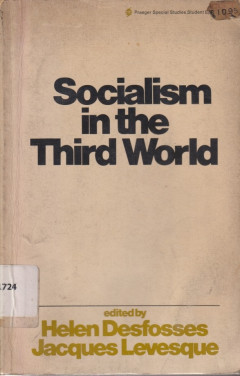
Socialism in the third world
This edited volume explores the development and adaptation of socialist ideas in the Third World during the post-colonial era. Through a series of essays and lectures, contributors examine how newly independent nations incorporated socialist principles into their political and economic systems. The book analyzes case studies across Asia, Africa, and Latin America, highlighting the challenges of…
- Edisi
- -
- ISBN/ISSN
- 0-275-55560-7
- Deskripsi Fisik
- xvi, 318 pages ; 23 cm
- Judul Seri
- -
- No. Panggil
- 335.009 DES s
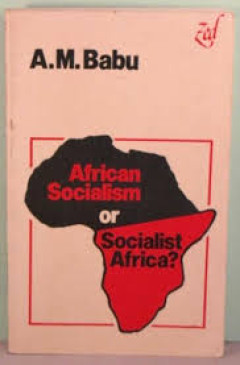
African socialism or socialist Africa
Abdul Rahman Mohamed Babu's book, "African Socialism or Socialist Africa?" is a critical analysis of the concept of "African socialism," widely promoted by African leaders in the post-colonial era. Babu argues that the term is often used to encapsulate nationalist policies that do not fully lead to genuine social transformation. He compares various models of socialism implemented in Africa and …
- Edisi
- cet.2
- ISBN/ISSN
- 9976-1-0053-1
- Deskripsi Fisik
- 174 pages; 22 cm
- Judul Seri
- -
- No. Panggil
- 960 BAB a
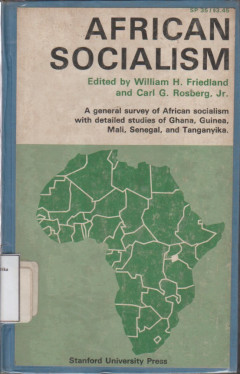
African socialism
African Socialism is a collection of writings that examines the emergence of the concept of African-style socialism in the early years of African independence. Edited by William H. Friedland and Carl G. Rosberg, Jr., this book explores how African leaders such as Nyerere, Senghor, and Nkrumah combined traditional values, communal social structures, and modern aspirations to develop political id…
- Edisi
- -
- ISBN/ISSN
- -
- Deskripsi Fisik
- xi, 313 pages ; 22 cm
- Judul Seri
- -
- No. Panggil
- 320.531096 FRI a

Technology and communist culture: The Socio-cultural impact of technology und…
This book examines the complex relationship between technology and culture in communist societies. Frederic J. Fleron explores how technological innovations influenced social structures, cultural values, and political processes in socialist countries. Using a socio-political approach, the book examines the impact of technology on communist ideology, changes in societal behavior, and the dynamic…
- Edisi
- -
- ISBN/ISSN
- 0-03-021821-7
- Deskripsi Fisik
- xii, 518 pages ; 24 cm
- Judul Seri
- -
- No. Panggil
- 301.243 FLE t
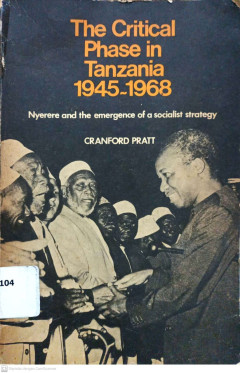
The Critical phase in Tanzania 1945-1968
This book analyzes the crucial phase in Tanzania's political development between 1945 and 1968, when Julius K. Nyerere formulated and implemented the strategy of African socialism known as Ujamaa. Cranford Pratt explains the political, economic, and social dynamics that shaped the country's direction from the late colonial period to the beginning of independence. Using a historical and analytic…
- Edisi
- -
- ISBN/ISSN
- 0-19-572450-X
- Deskripsi Fisik
- x, 309 pages : illustration ; 23 cm
- Judul Seri
- -
- No. Panggil
- 967.8104 PRA c

Freedom and development: A Selection from writings and speeches, 1968-1973
Freedom and Development / Uhuru na Maendeleo collects speeches and writings by Julius K. Nyerere from 1968–1973, when Tanzania was developing its political and economic identity after independence. Through the concept of Ujamaa, or African socialism, Nyerere explains the relationship between political freedom, economic development, and social responsibility. This collection illustrates Nyerer…
- Edisi
- -
- ISBN/ISSN
- -
- Deskripsi Fisik
- xvii, 400 pages : illustration ; 22 cm
- Judul Seri
- -
- No. Panggil
- 320.9678 NYE f
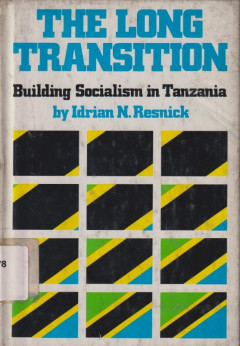
The Long transition: Building socialism in Tanzania
Idrian N. Resnick's The Long Transition: Building Socialism in Tanzania is an in-depth study of the process of building socialism in Tanzania during the leadership of Julius K. Nyerere. The book explores the Ujamaa ideology as the foundation of Tanzanian socialism, and how this theory was applied in the country's economic and social policies. Resnick outlines the challenges faced by the governm…
- Edisi
- -
- ISBN/ISSN
- 0-85345-555-4
- Deskripsi Fisik
- 304 pages ; 21 cm
- Judul Seri
- -
- No. Panggil
- 335.009678 RES l

Nyerere on socialism
The book "Nyerere on Socialism" compiles the introduction and writings of President Julius K. Nyerere, previously published in two works: Freedom and Unity (1966) and Freedom and Socialism / Uhuru na Ujamaa (1968). This work contains an explanation of the concept of Ujamaa, the principles of African socialism, and Nyerere's political ideas in building postcolonial Tanzanian society. Through the…
- Edisi
- -
- ISBN/ISSN
- -
- Deskripsi Fisik
- vi, 58 pages ; 21 cm
- Judul Seri
- -
- No. Panggil
- 320.531 NYE n

Socialist transformation of Indian economy: A Study in social analysis, criti…
Socialist Transformation of Indian Economy by Gyan Chand provides an analytical study of India’s efforts to shape its economic development within a socialist-oriented framework. The book evaluates India’s economic structure, social conditions, and political foundations during the transition from colonial rule to a planned economic system. Chand examines major policy initiatives, land reform…
- Edisi
- -
- ISBN/ISSN
- -
- Deskripsi Fisik
- vii pages ; 22,5 cm
- Judul Seri
- -
- No. Panggil
- 330.954 CHA s
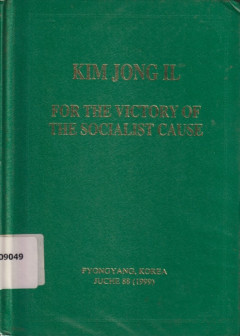
Kim Jong Il: For the victory of the socialist cause
This work presents the ideological principles, policies, and strategic viewpoints of Kim Jong Il regarding the building and strengthening of the socialist cause in the Democratic People’s Republic of Korea. Published in 1999 by the Foreign Languages Publishing House in Pyongyang, the book outlines the theoretical foundations of socialism, the role of leadership, and the tasks necessary to ens…
- Edisi
- -
- ISBN/ISSN
- -
- Deskripsi Fisik
- 261 pages ; 21 cm
- Judul Seri
- -
- No. Panggil
- 951.9043 KIM k
 Karya Umum
  Filsafat
  Agama
Agama  Ilmu-ilmu Sosial
  Bahasa
  Ilmu-ilmu Murni
  Ilmu-ilmu Terapan
  Kesenian, Hiburan, dan Olahraga
  Kesusastraan
  Geografi dan Sejarah