Ditapis dengan
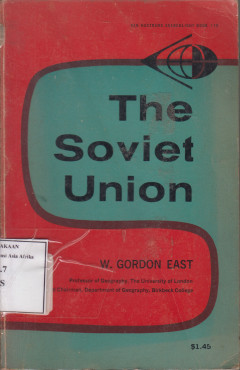
The Soviet Union
This book provides a comprehensive geographical and socio-economic survey of the Soviet Union as it existed in the early 1960s. Written by noted geographer W. Gordon East, the work examines the physical landscape, population distribution, natural resources, agriculture, industry, and regional differences across the vast Soviet territory. It also discusses historical influences that shaped the S…
- Edisi
- -
- ISBN/ISSN
- -
- Deskripsi Fisik
- 136 pages : illustrations ; 20,5 cm
- Judul Seri
- -
- No. Panggil
- 914.704 EAS s

American dreams: The United States since 1945
For a brief, bright moment in 1945, America stood at its apex, looking back on victory not only against the Axis powers but against the Great Depression, and looking ahead to seemingly limitless power and promise. What we've done with that power and promise over the past six decades is a vitally important and fascinating topic that has rarely been tackled in one volume, and never by a historian…
- Edisi
- -
- ISBN/ISSN
- 978-1-59420-262-9
- Deskripsi Fisik
- x, 420 pages ; 24 cm
- Judul Seri
- -
- No. Panggil
- 973. 9 BRA a

Society, culture, and change in the Middle East
This book explores the social structures, cultural patterns, and dynamic processes of change occurring in the Middle East during the mid-twentieth century. Raphael Patai analyzes traditional and modern influences shaping Middle Eastern societies, addressing issues such as family life, social organization, modernization, and cultural transformation. As an expanded edition of his earlier work, th…
- Edisi
- -
- ISBN/ISSN
- 0-8122-7289-7
- Deskripsi Fisik
- 560 pages ; 20,5 cm
- Judul Seri
- -
- No. Panggil
- 306.0956 PAT s
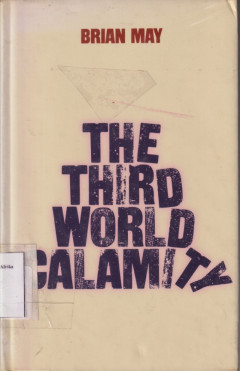
The Third world calamity
This book analyzes the severe social, economic, and political crises affecting Third World countries. Brian May explores the structural causes of underdevelopment, including poverty, inequality, colonial legacies, and global economic imbalances. Through critical examination, the author highlights how these interconnected issues shape the difficult realities faced by developing nations and argue…
- Edisi
- -
- ISBN/ISSN
- 0-7100-0764-7
- Deskripsi Fisik
- xii, 274 pages : illustration ; 22 cm
- Judul Seri
- -
- No. Panggil
- 309.1172 MAY t

The Middle East: A Political and economic survey
This volume provides a comprehensive political and economic survey of the Middle East, examining the region’s historical background, political developments, economic structures, and social dynamics. Edited by Peter Mansfield, the book offers analytical perspectives on the shifting geopolitical landscape, regional conflicts, modernization issues, and the economic challenges faced by Middle Eas…
- Edisi
- -
- ISBN/ISSN
- 0-19-215851-1
- Deskripsi Fisik
- ix, 579 pages : illustration ; 22 cm
- Judul Seri
- -
- No. Panggil
- 956.05 MAN t
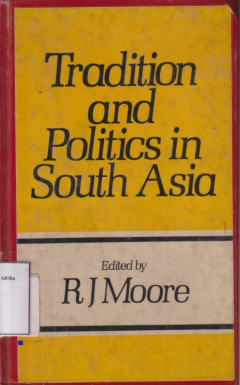
Tradition and politics in South Asia
This volume examines the complex interactions between political structures, traditional institutions, and cultural practices in South Asia. Edited by R. J. Moore, the book brings together scholarly essays that explore how historical traditions have shaped political behavior, governance, and social change across countries such as India, Pakistan, Bangladesh, and Sri Lanka. The work provides insi…
- Edisi
- -
- ISBN/ISSN
- 0-7069-0608-X
- Deskripsi Fisik
- xxii, 266 pages ; 21 cm
- Judul Seri
- -
- No. Panggil
- 320.954 MOO t

The Westernization of Asia: A Comparative political analysis
This book provides a comparative political analysis of the Westernization process in Asia. Frank C. Darling examines how Asian societies responded politically, culturally, and institutionally to Western influence from the nineteenth to the twentieth century. The study explores major themes including political modernization, social transformation, colonial legacies, and the development of contem…
- Edisi
- -
- ISBN/ISSN
- 0-8161-9005-4
- Deskripsi Fisik
- xxii, 503 pages : illustrations ; 24 cm
- Judul Seri
- -
- No. Panggil
- 320.95 DAR w

The Westernization of Asia: A Comparative political analysis
This book offers a comparative political analysis of the Westernization process in Asia. Frank C. Darling examines the historical, political, and social forces that have shaped the region’s responses to Western influence. The study explores how Asian countries adapted or resisted Western political models, and evaluates the impact of Westernization on governance, social structures, and nationa…
- Edisi
- -
- ISBN/ISSN
- 0-8161-9005-4
- Deskripsi Fisik
- xxii, 503 pages ; 21 cm
- Judul Seri
- -
- No. Panggil
- 320.95 DAR w
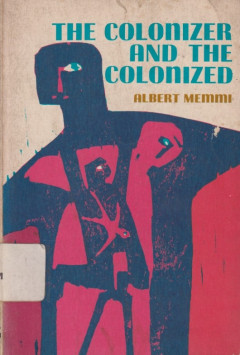
The Colonizer and the colonized
The Colonizer and the Colonized is a classic analysis of the psychology, structures, and consequences of colonialism. Albert Memmi explores the complex and often destructive relationship between the oppressor and the oppressed, revealing how the colonizer maintains domination and how the colonized internalizes inferiority. Through philosophical, sociological, and historical insights, Memmi illu…
- Edisi
- -
- ISBN/ISSN
- 0-8070-0297-6
- Deskripsi Fisik
- xviii, 153 pages ; 20 cm
- Judul Seri
- -
- No. Panggil
- 325.3 MEM c
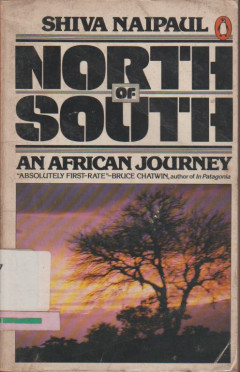
North of south: An African journey
North of South: An African Journey is a vivid travel narrative by Shiva Naipaul that chronicles his explorations across Kenya, Tanzania, and Zambia during the late 1970s. Through sharp, reflective, and often provocative observations, Naipaul examines the complex ethnic, political, and cultural landscapes of post-independence East Africa. The book captures the region’s tensions between tradit…
- Edisi
- -
- ISBN/ISSN
- 0-14-00.4894-4
- Deskripsi Fisik
- 349 pages : illustration ; 19,5 cm
- Judul Seri
- -
- No. Panggil
- 916.7 NAI n
 Karya Umum
  Filsafat
  Agama
Agama  Ilmu-ilmu Sosial
  Bahasa
  Ilmu-ilmu Murni
  Ilmu-ilmu Terapan
  Kesenian, Hiburan, dan Olahraga
  Kesusastraan
  Geografi dan Sejarah