Ditapis dengan
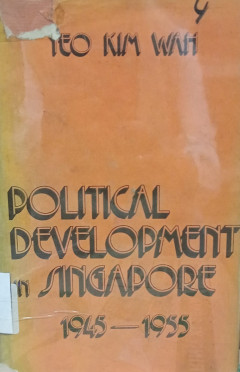
Political development in Singapore 1945-55
This book examines Singapore’s political transformation in the decade following World War II, highlighting the emergence of new political institutions and rising local political consciousness. It analyzes the interplay between British colonial policies and the growing demand for self-governance among Singapore’s diverse population. The author explores key political movements, societal chang…
- Edisi
- -
- ISBN/ISSN
- -
- Deskripsi Fisik
- x, 230 pages ; 22 cm
- Judul Seri
- -
- No. Panggil
- 320.959 WAH p
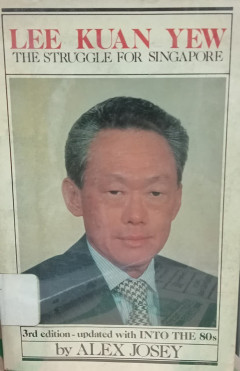
Lee Kuan Yew: The struggle for Singapore
Lee Kuan Yew: The Struggle for Singapore by Alex Josey presents the political journey of Lee Kuan Yew in leading Singapore through its most turbulent years. The book explores his determination to secure independence, build a stable government, and shape the nation’s identity. It highlights the challenges he faced, including political conflicts, foreign pressures, and internal divisions. Overa…
- Edisi
- 3
- ISBN/ISSN
- 0-207-14300-5
- Deskripsi Fisik
- xi, 345 pages : iilustrations ; 21 cm
- Judul Seri
- -
- No. Panggil
- 923.2597 JOS l
Lee Kuan Yew
This book by Alex Josey presents an insightful biography of Lee Kuan Yew, the founding father of modern Singapore. It traces his early life, education, and rise to political leadership during a critical period in Southeast Asian history. The author highlights Lee’s strategic vision, firm governance, and transformative policies that shaped Singapore into a stable and prosperous nation. Through…
- Edisi
- -
- ISBN/ISSN
- -
- Deskripsi Fisik
- vii, 647 pages ; 22,5 cm
- Judul Seri
- -
- No. Panggil
- 923.25957 JOS l

Early Singapore 1300s-1819: Evindece in Maps, Text and Artefacts
This volume brings together nine essays that explore Singapore’s pre-colonial history through a rich combination of maps, historical texts, and archaeological artefacts. It argues that the island, known as Temasek, was already an important regional port and trading hub centuries before Stamford Raffles arrived in 1819. Through excavation findings such as ceramics, coins, and glassware the aut…
- Edisi
- -
- ISBN/ISSN
- 981-05-0283-4
- Deskripsi Fisik
- 148 pages : iilustrations ; 24 cm
- Judul Seri
- -
- No. Panggil
- 959.252 MIK e
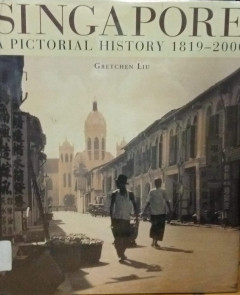
Singapore : A Pictorial history 1819-2000
This richly illustrated coffee-table book chronicles Singapore’s dramatic transformation over nearly two centuries from a humble coastal village in 1819 to a thriving modern city-state by the year 2000. Written by Gretchen Liu, the narrative is anchored by more than 1,200 rare photographs, paintings, lithographs, and engravings, many drawn from archives in Singapore and abroad. The book is o…
- Edisi
- -
- ISBN/ISSN
- 981-3018-81-X
- Deskripsi Fisik
- 400 pages : illustrations ; 29.5 cm
- Judul Seri
- -
- No. Panggil
- 959.52 LIU s

Riot & revolution in Singapore & Malaya 1945-1963
This book examines simultaneous revolutionary struggles in urban Singapore and rural Malaya led by the Malayan Communist Party (MCP) between 1945 and 1963. In Singapore, Clutterbuck focuses on students and trade unions as the base for communist mobilization, exploring their attempts to influence political power through strikes and organization. In Malaya, he analyzes the MCP’s guerrilla insur…
- Edisi
- -
- ISBN/ISSN
- 0-571-10181-X
- Deskripsi Fisik
- 321 pages ; 22 cm
- Judul Seri
- -
- No. Panggil
- 959.204 CLU r
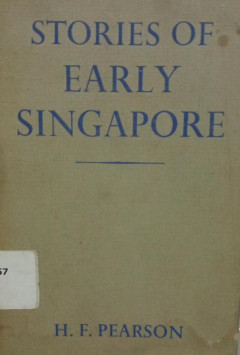
Stories of early Singapore
Stories of Early Singapore by H. F. Pearson presents a collection of engaging narratives about Singapore’s formative years, highlighting key events, prominent figures, and everyday life during the island’s early development. Through accessible storytelling, the book explores how Singapore transformed from a small trading outpost into a thriving colonial settlement. It offers readers a blend…
- Edisi
- -
- ISBN/ISSN
- -
- Deskripsi Fisik
- 128 pages : illustrations ; 18 cm
- Judul Seri
- -
- No. Panggil
- 959.57 PEA s
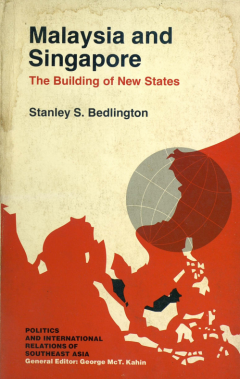
Malaysia and Singapore : The Building of New States
This concise and informed introduction to the way the Malaysian and Singapore governments work is based on the author’s unusual combination of academic training and professional field experience. Stanley Bedlington goes beyond a mere description of government institutions and political parties. He moves easily across various disciplines, including history, anthropology, sociology, and politic…
- Edisi
- -
- ISBN/ISSN
- 0-8014-0910-1
- Deskripsi Fisik
- 285 pages ; 25 cm
- Judul Seri
- -
- No. Panggil
- 320.959 5 BED m
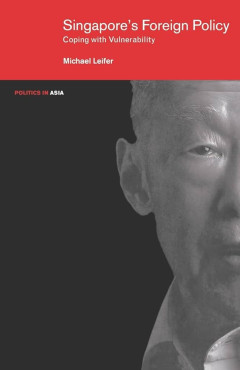
Singapore's foreign policy: Coping with vulnerability
This book assesses the profound influence on Singapore's foreign policy of its government's perception of the island-state's innate vulnerability
- Edisi
- -
- ISBN/ISSN
- 0-415-23353-4
- Deskripsi Fisik
- xiv, 177 pages : index ;22 cm.
- Judul Seri
- -
- No. Panggil
- 327.5957 Lei s

Singapore and the Indonesian revolution 1945-50 : Recollections of Suryono Da…
Singapore became a base for Indonesian specil operations during the years 1945 50, both as a sports b material needed by the newly Independent Bopulle f Indonesia in the fara of probable designs on the part of the Netherlands East Indies government to force » milltary solution to the nilics, and as a tromalt port in the commendal Velovions between the neighbouring countries. This book, based o…
- Edisi
- -
- ISBN/ISSN
- 981-3016-17-5
- Deskripsi Fisik
- x, 73 pages : illustrations ; 23 cm
- Judul Seri
- -
- No. Panggil
- 959.8035 Dar s
 Karya Umum
  Filsafat
  Agama
Agama  Ilmu-ilmu Sosial
  Bahasa
  Ilmu-ilmu Murni
  Ilmu-ilmu Terapan
  Kesenian, Hiburan, dan Olahraga
  Kesusastraan
  Geografi dan Sejarah