Ditapis dengan
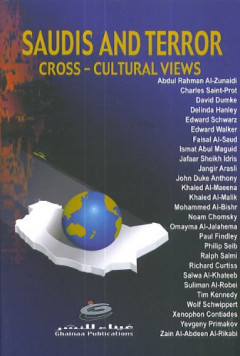
Saudis and terror cross-cultural views
Saudis and Terror: Cross-Cultural Views is a multi-perspective anthology written by scholars, intellectuals, and media analysts from Saudi Arabia, Europe, the U.S., Russia, and other parts of the Arab world. The book examines terrorism from many different angles — its definition, causes, ideology, history, and political dimensions. It challenges prevailing narratives and stereotypes by highli…
- Edisi
- -
- ISBN/ISSN
- 9960-9454-6-4
- Deskripsi Fisik
- 372 pages ; 21 cm
- Judul Seri
- -
- No. Panggil
- 363.3209 SAU s

J. R. Jayewardene of Sri Lanka a political biography volume 1: 1960-1956
J. R. Jayewardene of Sri Lanka: A Political Biography, Volume 1 (1906–1956) by K. M. de Silva explores the early life and political formation of one of Sri Lanka’s most influential leaders. The book traces Jayewardene’s rise from his education and legal background to his emergence as a prominent figure in the independence movement. It examines his evolving political ideology, key policy p…
- Edisi
- -
- ISBN/ISSN
- 0-7043-2658-2
- Deskripsi Fisik
- 336 pages : 23 cm
- Judul Seri
- -
- No. Panggil
- 954.93 SIL j

Singapore: Struggle for success
Singapore: Struggle for Success explores Singapore’s rapid transformation from a small colonial trading post into an independent, economically vibrant nation. Drysdale highlights the political challenges, ethnic complexities, and strategic decisions that shaped the country’s path to stability. The book examines how strong leadership, social cohesion, and economic planning contributed to Sin…
- Edisi
- -
- ISBN/ISSN
- 9971-65-081-9
- Deskripsi Fisik
- 506 pages : illustrations ; 23,5 cm
- Judul Seri
- -
- No. Panggil
- 959.52 DRY s

Ummar bin Khattab: Sebuah telaah mendalam tentang pertumbuhan islam dan kedau…
Buku ini menyajikan biografi komprehensif Umar bin Khattab, menggambarkan perjalanannya dari masa jahiliyah, masuk Islam, hingga menjadi khalifah kedua setelah Abu Bakar. Haekal mengeksplorasi peran penting Umar dalam memperkuat struktur kekhalifahan, memperluas wilayah Islam melalui penaklukan, dan membangun sistem pemerintahan yang adil. Selain itu, buku ini menganalisis pemikiran sosial, ijt…
- Edisi
- Cetakan 1
- ISBN/ISSN
- 978-8100-38-7
- Deskripsi Fisik
- 912 halaman ; 23,5 cm
- Judul Seri
- -
- No. Panggil
- 297.9122 HAE u
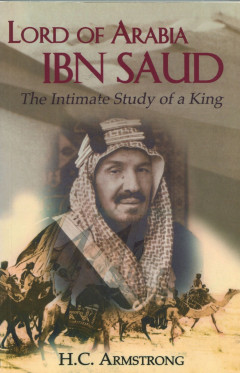
Lord of Arabia Ibn Saud: The Intimate study of a king
Lord of Arabia is a detailed biography of Ibn Saud, the founding father and first monarch of Saudi Arabia. Armstrong explores his rise from tribal leader to king, portraying both his charisma and political skill. Through historical narrative, the book examines how Ibn Saud combined traditional religious values with modern statecraft, unifying disparate Arabian territories. It also delves into h…
- Edisi
- -
- ISBN/ISSN
- 0-7103-1184-2
- Deskripsi Fisik
- 296 pages : illustrations ; 22 cm
- Judul Seri
- -
- No. Panggil
- 923.1 ARM l
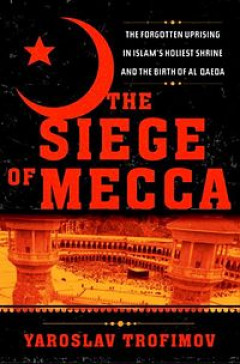
The Siege of Mecca
On November 20, 1979, hundreds of Islamist militants led by Saudi preacher Juhayman al-Otaybi stormed and seized the Grand Mosque in Mecca, Islam’s holiest site, trapping tens of thousands of worshippers inside. The siege lasted two weeks and resulted in hundreds of deaths, in an event that was largely ignored by the global media at the time. Trofimov draws on newly declassified documents and…
- Edisi
- -
- ISBN/ISSN
- 978-0-385-51925-5
- Deskripsi Fisik
- x, 301 pages : iilustrations ; 24 cm
- Judul Seri
- -
- No. Panggil
- 953.053 TRO s
The New Arabians
Peter Mansfield's book, The New Arabians, examines the historical, cultural, religious, and social changes experienced by the people of Saudi Arabia, Kuwait, Bahrain, Qatar, and the United Arab Emirates. Mansfield highlights how the Gulf Arab states were previously overlooked by the West until the discovery of vast oil reserves in the region. The 1973 oil embargo brought global attention to the…
- Edisi
- 1
- ISBN/ISSN
- 0-385-17911-1
- Deskripsi Fisik
- ix, 274 pages : illustration ; 24 cm
- Judul Seri
- -
- No. Panggil
- 953.8 MAN n
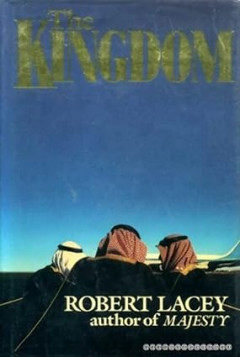
The Kingdom
The Kingdom is a vivid historical and sociopolitical portrait of Saudi Arabia, exploring the extraordinary rise and consolidation of the Al Saud family. Lacey traces how a once-nomadic clan transformed itself into a powerful monarchy, deeply rooted in Islamic tradition yet shaped by modern forces. Through detailed narrative, he examines the country’s religious foundations, tribal structures, …
- Edisi
- 1
- ISBN/ISSN
- 0-09-145790-4
- Deskripsi Fisik
- xi, 630 pages : illustration ; 24 cm
- Judul Seri
- -
- No. Panggil
- 953.805 LAC k

The House of Saud: The Rise and rule of the most powerful dynasty in the Ara…
The book provides a revealing account of the emergence and consolidation of the Saudi royal family as one of the most influential dynasties in the Middle East. It traces the historical roots of the House of Saud, their alliance with Wahhabi religious leaders, and their rise to power in the Arabian Peninsula. Through political analysis and investigative reporting, the book examines how the famil…
- Edisi
- -
- ISBN/ISSN
- 0-03-043731-8
- Deskripsi Fisik
- v, 569 pages ; 24 cm
- Judul Seri
- -
- No. Panggil
- 953.8 HOL h
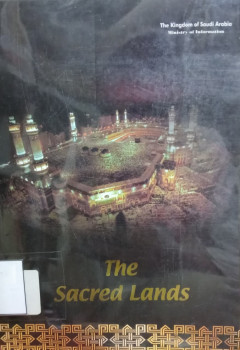
The Sacred lands
The Sacred Lands presents an illustrated and historical overview of the holiest sites of Islam located in the Kingdom of Saudi Arabia, particularly Mecca and Medina. The book highlights their religious significance, the development of the sacred precincts, and the spiritual traditions associated with pilgrimage. Through descriptive narrative and visual documentation, it offers readers a deeper …
- Edisi
- -
- ISBN/ISSN
- 9960-43-216-5
- Deskripsi Fisik
- 160 pages : illustrastions ; 24 cm
- Judul Seri
- -
- No. Panggil
- 726.1 TIM s
 Karya Umum
  Filsafat
  Agama
Agama  Ilmu-ilmu Sosial
  Bahasa
  Ilmu-ilmu Murni
  Ilmu-ilmu Terapan
  Kesenian, Hiburan, dan Olahraga
  Kesusastraan
  Geografi dan Sejarah