Ditapis dengan

The era of the French revolution, 1789–1799: Ten years that shook the world
This book provides a comprehensive overview of the decade-long French Revolution that transformed the modern world. Leading historian Leo Gershoy examines the causes, political dynamics, social conflicts, and key figures who shaped the course of the revolution. With insightful and accessible analysis, this work demonstrates how the French Revolution was not only a turning point in French histor…
- Edisi
- -
- ISBN/ISSN
- -
- Deskripsi Fisik
- 190 pages ; 18 cm
- Judul Seri
- -
- No. Panggil
- 944.04 GER e
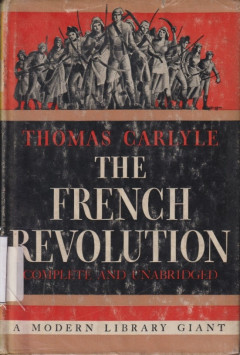
The French revolution: A History
Thomas Carlyle's The French Revolution: A History is one of the classic works of historiography on the French Revolution. In a dramatic and visceral narrative style, Carlyle depicts the events, figures, and social dynamics that shaped one of the greatest revolutions in world history. The book offers a moral and philosophical interpretation of the radical changes that occurred in France between …
- Edisi
- -
- ISBN/ISSN
- -
- Deskripsi Fisik
- xxix, 748 pages : illustration ; 21 cm
- Judul Seri
- -
- No. Panggil
- 944.04 CAR f

A Turning wheel: Three decades of the Asian revolution as witnessed by a corr…
A Turning Wheel presents three decades of political, social, and revolutionary transformation across Asia as observed by Robert Shaplen, a long-time correspondent for The New Yorker. Drawing from firsthand reporting, Shaplen chronicles key events and upheavals in countries such as Vietnam, China, Indonesia, and others shaping the modern Asian landscape. The book combines journalistic narrative …
- Edisi
- -
- ISBN/ISSN
- 0-394-41752-6
- Deskripsi Fisik
- xvii, 397 pages : illustrations ; 24,5 cm
- Judul Seri
- -
- No. Panggil
- 950.4 SHA t
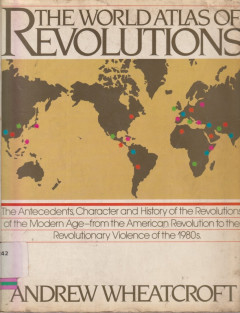
The World atlas of revolutions
The World Atlas of Revolutions presents a collection of maps depicting various revolutions and coups that have occurred in various parts of the world throughout modern history. This book presents a visual analysis of patterns of political change, social forces, and the geographical impact of revolutionary movements and power struggles. Through thematic maps and narrative explanations, this work…
- Edisi
- -
- ISBN/ISSN
- 0-671-46286-5
- Deskripsi Fisik
- 208 pages : illustration ; 28 cm
- Judul Seri
- -
- No. Panggil
- 912.132242 WHE w
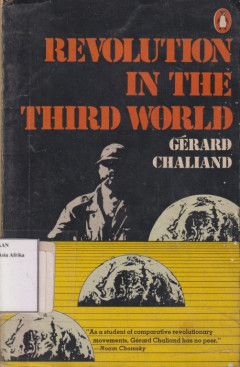
Revolution in the third world
Revolution in the Third World provides a comprehensive analysis of revolutionary movements across Asia, Africa, and Latin America during the post–World War II era. Gérard Chaliand examines the historical conditions, political dynamics, and strategies that shaped guerrilla struggles and socialist-oriented revolutions in developing regions. Drawing on comparative cases, the book explores the i…
- Edisi
- -
- ISBN/ISSN
- 0-14-04796-4
- Deskripsi Fisik
- xxii, 202 pages ; 20 cm
- Judul Seri
- -
- No. Panggil
- 320.5 CHA r
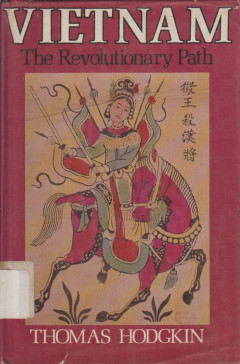
Vietnam: The Revolutionary path
This book presents an analytical study of the revolutionary development of Vietnam during the twentieth century. Thomas Hodgkin explores the historical processes that shaped Vietnam’s struggle against colonial domination and its pursuit of national liberation. Drawing on political writings, historical documents, and the ideology of key figures such as Ho Chi Minh, the author examines the moti…
- Edisi
- -
- ISBN/ISSN
- 0-333-28110-1
- Deskripsi Fisik
- x, 433 pages : illustration ; 24 cm
- Judul Seri
- -
- No. Panggil
- 959.704 HOD v

Revolutions and revolutionary movements
This book provides a comprehensive analysis of various revolutions and revolutionary movements in the modern world. James DeFronzo discusses the social, economic, political, and psychological factors that drive revolutions, as well as how these movements develop and influence the social order. By reviewing a number of case studies from different countries, this book highlights common patterns i…
- Edisi
- -
- ISBN/ISSN
- 0-8133-0668-X
- Deskripsi Fisik
- xvi, 336 pages : illustration ; 23 cm
- Judul Seri
- -
- No. Panggil
- 303.64 DEF r
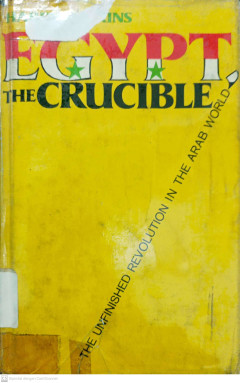
Egypt The Crucible the unfinished revolution in the Arab world
Egypt: The Crucible explores the political and social forces that shaped the modern Arab world, focusing on Egypt as the center of these transformations. Harry Hopkins provides a detailed account of Egypt’s unfinished revolution, examining the struggles for power, ideological conflicts, and historical developments that influenced political movements across the Arab region. Through maps, photo…
- Edisi
- -
- ISBN/ISSN
- -
- Deskripsi Fisik
- xxiv, 533 pages : illustration ; 22 cm
- Judul Seri
- -
- No. Panggil
- 962 HOP e

The new cold what? religious nationalism confronts the secular state
Will the 1990s become the decade of a new Cold War between the religious Third World and the secular West? Mark Juergensmeyer paints a provocative picture of the new religious revolutionaries in the Middle East, South Asia, Central Asia, and Eastern Europe. Impassioned Muslim leaders in Egypt, Palestine, and Algeria, political rab- bis in Israel, militant Sikhs in India, and tri- umphant Cathol…
- Edisi
- 1
- ISBN/ISSN
- 0-520-08078-5
- Deskripsi Fisik
- xi,292 Halaman : index ; 25 cm
- Judul Seri
- -
- No. Panggil
- 320.5509048 JUE n
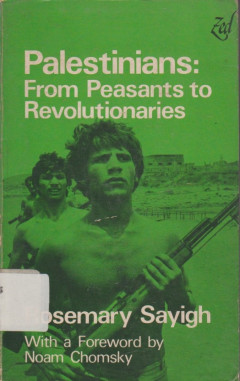
Palestinians: From peasants to revolutionaries
This is Rosemary Sayigh's seminal work, chronicling the history of the Palestinian people through in-depth interviews with refugees in Lebanese camps. Using an anthropological and political approach, Sayigh traces the transformation of Palestinian society from traditional peasants to a group involved in a modern revolutionary movement. The book depicts the experiences, struggles, identities, an…
- Edisi
- -
- ISBN/ISSN
- 0-905762-25-8
- Deskripsi Fisik
- 206 pages : illustration ; 21,5 cm
- Judul Seri
- -
- No. Panggil
- 956.953 SAY p
 Karya Umum
  Filsafat
  Agama
Agama  Ilmu-ilmu Sosial
  Bahasa
  Ilmu-ilmu Murni
  Ilmu-ilmu Terapan
  Kesenian, Hiburan, dan Olahraga
  Kesusastraan
  Geografi dan Sejarah