Ditapis dengan

From diaspora dependence to market creation: Refocusing Indonesia’s gastrod…
The role of gastrodiplomacy in the strengthening of Indonesia's economic diplomacy in the direction of the 2045 national vision is the subject of this paper. Using SWOT, systems thinking and design thinking analyses, it identifies structural challenges, such as inconsistent policies, poor quality control and logistics, and limited funding, while recognising opportunities in global food trends, …
- Edisi
- -
- ISBN/ISSN
- -
- Deskripsi Fisik
- -
- Judul Seri
- -
- No. Panggil
- Sesdilu 79-2025

Enhancing diplomacy’s performance by addressing the needs of third culture…
The present analysis investigates the requirements of Third Culture Kids (TCKs) in order to facilitate the effectiveness of diplomats and the Ministry of Foreign Affairs. Diplomatic assignments involving repeated relocations between countries can present difficulties for children in terms of their education, social relationships, identity and emotional well-being. The study therefore recommends…
- Edisi
- -
- ISBN/ISSN
- -
- Deskripsi Fisik
- -
- Judul Seri
- -
- No. Panggil
- Sesdilu 79-2025
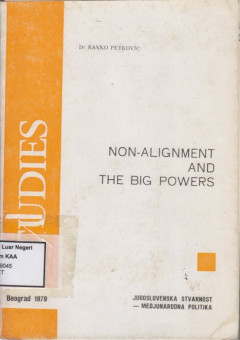
Non-Alignment and the big powers
Non-Alignment and the Big Powers analyzes the development, principles, and political significance of the Non-Aligned Movement in the context of global power rivalry. Dr. Ranko Petkovic examines how non-aligned countries attempted to assert independence from the dominant blocs during the Cold War while promoting peace, sovereign equality, and collective cooperation. The book also explores the re…
- Edisi
- -
- ISBN/ISSN
- -
- Deskripsi Fisik
- 46 pages ; 20 cm
- Judul Seri
- -
- No. Panggil
- 327.17 PET n

The Soviet empire: Expansion & détente
The book The Soviet Empire: Expansion & Détente is one volume in the Critical Choices for Americans series, which discusses the development of Soviet foreign policy from the beginning of the Cold War to the mid-1970s. This work describes the dynamics of Soviet geopolitical expansion, whether through military influence, ideology, or intervention in various regions of the world. In addition, th…
- Edisi
- -
- ISBN/ISSN
- 0-669-00421-9
- Deskripsi Fisik
- xix, 417 pages ; 23,5 cm
- Judul Seri
- -
- No. Panggil
- 327.47 GRI s
The American Republic: Politics, institutions, and policies
This book offers a comprehensive overview of the political system of the United States, examining its institutions, public policies, and the dynamics of governance. It provides an analytical foundation for understanding how American political structures operate, the roles of key actors, and the processes that shape national decision-making. Designed for political science students, the volume bl…
- Edisi
- -
- ISBN/ISSN
- 0-314-28509-1
- Deskripsi Fisik
- ix, 353 pages : illustrations ; 25,5 cm
- Judul Seri
- -
- No. Panggil
- 320.973 RED a
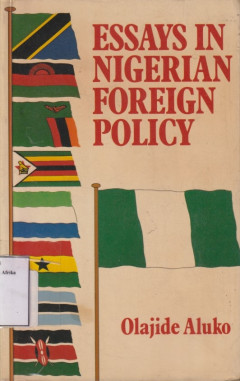
Essays on Nigerian foreign policy
Essays on Nigerian Foreign Policy by Olajide Aluko is a collection of scholarly analyses examining the development, direction, and challenges of Nigeria’s foreign policy. Written by one of Nigeria’s leading experts in international relations, the essays explore Nigeria’s diplomatic posture within Africa and the global arena, its relations with major powers, and the impact of domestic poli…
- Edisi
- -
- ISBN/ISSN
- -
- Deskripsi Fisik
- 288 pages ; 21,5 cm
- Judul Seri
- -
- No. Panggil
- 327.669 ALU e

Non-Aligned Movement under India’s chairmanship
Published by the Indian Institute for Non-Aligned Studies, the book Non-Aligned Movement Under India’s Chairmanship examines India’s role during its leadership of the Non-Aligned Movement (NAM). First published in November 1986, the book provides an overview of India’s diplomatic activities, work programs, and political positions in guiding the movement’s direction in the mid-1980s. It …
- Edisi
- -
- ISBN/ISSN
- -
- Deskripsi Fisik
- 47 pages; 22 cm
- Judul Seri
- -
- No. Panggil
- 327.172 IND n

Brazilian foreign policy in changing times; The Quest for autonomy from sarne…
This book examines the dynamics of Brazilian foreign policy from the administrations of José Sarney to Luiz Inácio Lula da Silva. Vigevani and Cepaluni emphasize how Brazil sought to increase its autonomy within the international system, particularly in its relations with the United States and other countries. Through political and international relations analysis, the book highlights the shi…
- Edisi
- -
- ISBN/ISSN
- 978-0-7391-2881-7
- Deskripsi Fisik
- xx, 169 pages ; 23,5 cm
- Judul Seri
- -
- No. Panggil
- 327.81 VIG b

China's future: Foreign policy and economic development in the post-Mao era
This book analyzes China’s foreign policy and economic development in the period following the death of Mao Zedong. Written within the framework of the Council on Foreign Relations’ 1980s Project, the study examines how domestic economic reforms and international strategic considerations shaped China’s evolving role in global politics. The authors explore policy choices, external relation…
- Edisi
- -
- ISBN/ISSN
- 0-07-069958-5
- Deskripsi Fisik
- xiv, 202 pages ;23 cm
- Judul Seri
- -
- No. Panggil
- 327.51 WHI c
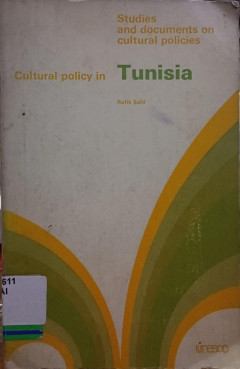
Cultural policy in Tunisia
This book analyzes the development and implementation of cultural policy in Tunisia within the context of national modernization and post-independence state-building. It examines the role of government institutions in promoting cultural activities, preserving national heritage, and supporting artistic creation. The study also discusses the relationship between culture, education, and social dev…
- Edisi
- -
- ISBN/ISSN
- 92-3-100850-1
- Deskripsi Fisik
- 56 pages : illustration ; 24 cm
- Judul Seri
- -
- No. Panggil
- 353.7 SAI c
 Karya Umum
  Filsafat
  Agama
Agama  Ilmu-ilmu Sosial
  Bahasa
  Ilmu-ilmu Murni
  Ilmu-ilmu Terapan
  Kesenian, Hiburan, dan Olahraga
  Kesusastraan
  Geografi dan Sejarah