Ditapis dengan
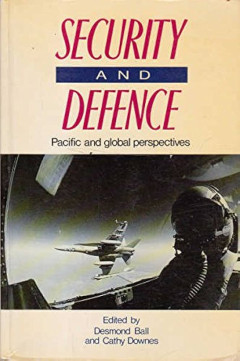
Security and defence: Pacific and global perspectives
Security and defence" provides a comprehensive in-depth study of Australia and the Asia--Pacific region, with a fresh approach which counters the traditional Euro- and American-centric view of strategy and defence in this part of the world. It deals with three broad issues of concern: * Global issues: the future of the nuclear strategic balance between the super-powers, the development of non-p…
- Edisi
- -
- ISBN/ISSN
- 0-04-442161-3
- Deskripsi Fisik
- xxv,517 pages : bibl: hlm 472-482 : index ; 23 cm.
- Judul Seri
- -
- No. Panggil
- 327.1 Bal s
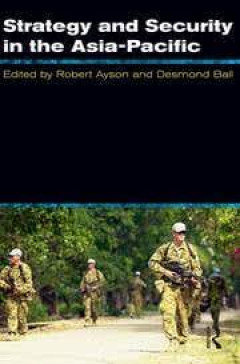
Strategy and security in the Asia-Pacific
Strategy and Security in the Asia-Pacific provides the analytical frameworks needed to make sense of this complex but exciting strategic universe. Offering a unique mix of global strategic thinking and Asia-Pacific security analysis, this book is for readers from Sydney to Seoul who want to put their own local security challenges in a wider regional and global context. It is also for North Amer…
- Edisi
- First Published
- ISBN/ISSN
- 1-74114-798-0
- Deskripsi Fisik
- xxiii, 343 pages : index ; 23 cm
- Judul Seri
- -
- No. Panggil
- 303.625095 Ays s

Asia's deadly triangle: How arms, energy and growth threaten to destabilize A…
In the early 1970s, the Middle East began arming itself with the windfall profits from oil price increases. Now Asia, with its newfound affluence as the world's lowest-cost and highest-quality manufacturer, is devoting much of its windfall profits to arms. Growth and emerging energy shortages are giving birth to dangerous new tensions. These build on ancient antagonisms, the residue of the Cold…
- Edisi
- -
- ISBN/ISSN
- 1-85788-160-5
- Deskripsi Fisik
- xi, 253 pages : illustrations (black and white) ; 24 cm
- Judul Seri
- -
- No. Panggil
- 355 Cal a

Asia Pacific regionalism: Reading in international economic relations
Asia Pacific Readings in International Economic Relations describes the main historical, theoretical and policy developments leading to closer economic integration and cooperation in the Asia Pacific region. With an introduction to the issues by Ross Garnaut and Peter Drysdale, this book brings together a representative part of the literature that has emerged from analysis of Asia Pacific regio…
- Edisi
- -
- ISBN/ISSN
- 0-06-312140-9
- Deskripsi Fisik
- xviii, 433 pages : illustrations (black and white) ; 23 cm
- Judul Seri
- -
- No. Panggil
- 337.5 Gar a
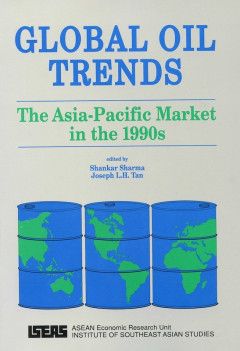
Global oil trends: The Asia-Pacific market in the 1990s
The Gulf crisis has once again drawn attention to the volatility of the worlds largest industry. Even in its aftermath, trends in the world oil market are unclear. Global Oil Trends provides a detailed assessment and long-term perspective of the global oil market in general and the Asia-Pacific market in particular. The 1990 oil crisis is reviewed and the possible impact of growing environmenta…
- Edisi
- -
- ISBN/ISSN
- 981-3035-96-X
- Deskripsi Fisik
- ix, 133 pages : illustration (black and white) ; 24 cm.
- Judul Seri
- -
- No. Panggil
- 338.2095 Sha g

Forward engagement: RSIS as a think tank of international studies and securit…
In many ways, the S. Rajaratnam School of International Studies (RSIS) is a microcosm of the Singapore brand of government. The DNA of Singapore's policymaking is its forward-looking nature. S. Rajaratnam's trademark is taking the long view while Lee Kuan Yew articulated his wish for leadership foresight and the admiration for 'helicopter quality' candidates in policymaking. This was how RSIS' …
- Edisi
- -
- ISBN/ISSN
- 978-0-00-098716-7
- Deskripsi Fisik
- xviii, 155 pages ; 23 cm
- Judul Seri
- -
- No. Panggil
- 355.03 Cho f
Asia-Pacific: New geographies of the Pacific rim
The great processes reshaping our world today can be summed up by the term "globalisation". Together with the communications revolution and massive urbanisation, it is reshaping theorganisation of global space. It is illustrated by technological change, pronounced economic growth, the dominance of giant corporations, ever more open markets and universal consumption. Dramatic developments have o…
- Edisi
- -
- ISBN/ISSN
- 0-7748-0646-X
- Deskripsi Fisik
- xxi, 362 pages ; 24 cm
- Judul Seri
- -
- No. Panggil
- 337.15 Wat a

Open regionalism and trade liberalization: An Asia-Pacific contribution to th…
Open Regionalism is regional economic co-operation without discrimination against countries outside the region. The concept grew from the experience of rapid growth, and expanding trade and investment across national borders, in East Asia and the Pacific. It became the guiding idea of Asia-Pacific Economic Co-operation. It is now recognized as being the means through which the growing appeal of…
- Edisi
- Cet. 1
- ISBN/ISSN
- 1-86448-395-4
- Deskripsi Fisik
- xiii, 216 pages : illustrations (black and white) ; 23 cm
- Judul Seri
- -
- No. Panggil
- 382.71 Gar o

The Asia-Pacific security lexicon
The Asia-Pacific Security Lexicon focuses on the vocabulary of Asia-Pacific security, mainly as it developed in the creative decade of the 1990s. The goals is to dissect thirty-four ideas and concepts that have been at the core of debates about multilateral security co-operation.
- Edisi
- -
- ISBN/ISSN
- 981-230-149-6
- Deskripsi Fisik
- xi, 224 pages ; 23 cm.
- Judul Seri
- -
- No. Panggil
- 341.7 Cap a
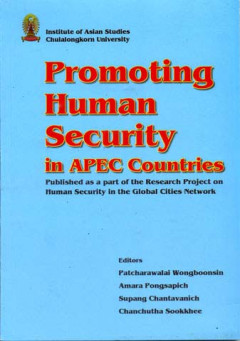
Promoting human security in APEC countries
Contents: Part I - Defining impact of the APEC process - Human security in the APEC region - Needs for a human securty surveillance system Part II - Human security issues and surveillance economic indicators - Indicators for redistribution of economic benefits towards health security - Human security issues and surveillance indicator food, etc.
- Edisi
- -
- ISBN/ISSN
- 974-9980-68-9
- Deskripsi Fisik
- iii, 170 pages : illustrations (black and white) ; 21 cm
- Judul Seri
- -
- No. Panggil
- 362.9 Won p
 Karya Umum
  Filsafat
  Agama
Agama  Ilmu-ilmu Sosial
  Bahasa
  Ilmu-ilmu Murni
  Ilmu-ilmu Terapan
  Kesenian, Hiburan, dan Olahraga
  Kesusastraan
  Geografi dan Sejarah