Ditapis dengan
Nuclear India: Volume II
This volume of Nuclear India by J. P. Jain explores India’s evolving nuclear policy, strategic motivations, and defense considerations. The author examines the historical development of India’s nuclear program, technological capabilities, and the geopolitical pressures influencing national security decisions. The book analyzes regional tensions in South Asia, global nuclear diplomacy, and I…
- Edisi
- -
- ISBN/ISSN
- -
- Deskripsi Fisik
- vxvii, 440 pages ; 22 cm
- Judul Seri
- -
- No. Panggil
- 355.0217 JAI n
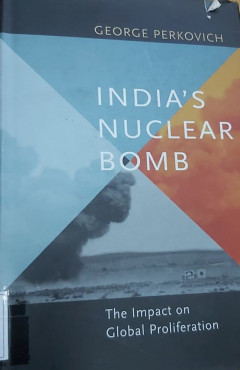
India's nuclear bomb: The Impact on global proliferation
In May 1998, India shocked the world—as well as many of its own citizens—by detonating five nuclear weapons in the Rajasthan desert. This landmark act raised central questions: Why did India pursue nuclear weapon status at a time when 149 nations had signed a ban on nuclear testing? What prompted India’s new Hindu nationalist government to depart from decades of nuclear restraint? And how…
- Edisi
- -
- ISBN/ISSN
- 0-520-21772-1
- Deskripsi Fisik
- xiii, 597 pages ; 25 cm
- Judul Seri
- -
- No. Panggil
- 355.02 PER i
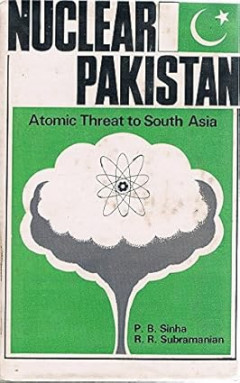
Nuclear Pakistan: Atomic threat to South Asia
Nuclear Pakistan: Atomic Threat to South Asia comprehensively examines the development of Pakistan's nuclear program and its implications for South Asian regional security. P. B. Sinha and R. R. Subramanian explore the political, strategic, and security motivations that drove Pakistan to develop nuclear capabilities following prolonged tensions and rivalry with India. The book's analysis encomp…
- Edisi
- -
- ISBN/ISSN
- -
- Deskripsi Fisik
- vii, 163 pages: illustration; 22 cm
- Judul Seri
- -
- No. Panggil
- 327.5491 SIN n

The Iran threat: President Ahmadinejad and the coming nuclear crisis
he Iran Threat: President Ahmadinejad and the Coming Nuclear Crisis examines the evolution of Iran’s nuclear program during the presidency of Mahmoud Ahmadinejad and its implications for regional and global security. The book explores Iran’s political background, its nuclear ambitions, and the international community’s responses to the emerging threat. The author analyzes Iran’s foreign…
- Edisi
- 1
- ISBN/ISSN
- 978-1-4039-7664-2
- Deskripsi Fisik
- xx, 237 pages : illustrations ; 24,5 cm
- Judul Seri
- -
- No. Panggil
- 355.82 JAF i
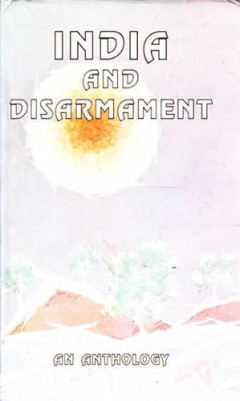
India and disarmament
Provides an analytical study of India’s disarmament policy and its role in global efforts to reduce and eliminate weapons of mass destruction. The book examines India’s historical commitment to universal disarmament, its diplomatic initiatives, and its proposals at international fora. It also discusses the constraints India faces — including national security considerations, geopolitical …
- Edisi
- -
- ISBN/ISSN
- -
- Deskripsi Fisik
- 294 pages ; 22,5 cm
- Judul Seri
- -
- No. Panggil
- 954.3271 IND i

Ethics and weapons of mass destruction: Religious and secular perspectives
This volume offers a unique perspective on the discussion of weapons of mass destruction (WMD) by broadening the terms of the debate to include secular as well as religious investigations not normally considered. Its contributed essays feature a structured dialogue between representatives of the following ethical traditions-- Buddhism, Christianity, Confucianism, feminism, Hinduism, Islam, Juda…
- Edisi
- First Published
- ISBN/ISSN
- 0-521-54526-9
- Deskripsi Fisik
- xiii, 533 pages : index ; 23 cm
- Judul Seri
- -
- No. Panggil
- 172.42 Has e

Failed states: The abuse of power and the assault on democracy
The United States has repeatedly asserted its right to intervene militarily against "failed states" around the globe. Chomsky turns the tables, charging the United States with being a "failed state," and therefore a danger to its own people and the world. "Failed states," Chomsky writes, are those "that do not protect their citizens from violence and perhaps even destruction, that regard themse…
- Edisi
- 1st edition
- ISBN/ISSN
- 978-0-7394-7187-6
- Deskripsi Fisik
- 311 pages : index ; 21 cm.
- Judul Seri
- -
- No. Panggil
- 327 Cho f

Nuclear diplomacy in East Asia : US and the Korean nuclear crisis management
This Book Is An Analytical Study Of The Diplomatic Strategies Of The U.S., North And South Korea, China And Japan In The Resolution Of The Korean Nuclear Crisis, Which Began With The North Korean Announcement Of Withdrawal From Npt On 12 March 1993. Dust Jacket Slightly Damaged.
- Edisi
- First Pulished
- ISBN/ISSN
- 81-7095-048-1
- Deskripsi Fisik
- xii, 414 pages : index ; 23 cm
- Judul Seri
- -
- No. Panggil
- 327.2 Kap n

The peninsula question: A chronicle of the second Korean nuclear crisis
Through interviews, gives a behind-the-scenes look at negotiations to denuclearize the Korean peninsula. Offering multiple perspectives on the second Korean nuclear crisis, provides a window of understanding on the historical, geopolitical, and security concerns at play on the peninsula since 2002, paying special attention to China's dealings with North Korea
- Edisi
- -
- ISBN/ISSN
- 978-0-8157-3010-1
- Deskripsi Fisik
- xii, 592 pages : index ; 25 cm.
- Judul Seri
- -
- No. Panggil
- 327.1747095193 Fun p

Disarmament as humanitarian action from perspective to practice
This volume provides practical insights from humanitarian contexts such as international work on explosive remnants of war, small arms and anti- personnel mines.
- Edisi
- -
- ISBN/ISSN
- 92-9045-182-3
- Deskripsi Fisik
- x, 168 pages ; 21 cm
- Judul Seri
- -
- No. Panggil
- 327.1747 Bor d
 Karya Umum
  Filsafat
  Agama
Agama  Ilmu-ilmu Sosial
  Bahasa
  Ilmu-ilmu Murni
  Ilmu-ilmu Terapan
  Kesenian, Hiburan, dan Olahraga
  Kesusastraan
  Geografi dan Sejarah