Ditapis dengan

The Rise of nationalism in Vietnam, 1900–1941
This scholarly work by William J. Duiker examines the emergence and development of Vietnamese nationalism during the early twentieth century. The book analyzes the political, social, and intellectual forces that shaped resistance against French colonial rule between 1900 and 1941. Duiker explores the roles of various nationalist groups, reform movements, revolutionary leaders, and ideological i…
- Edisi
- -
- ISBN/ISSN
- 0-8014-0951-9
- Deskripsi Fisik
- 313 pages : illustration ; 22,5 cm
- Judul Seri
- -
- No. Panggil
- 959.704 DUI r

Cutting the lion’s tail: Suez through Egyptian eyes
Cutting the Lion’s Tail: Suez Through Egyptian Eyes presents an authoritative Egyptian perspective on the 1956 Suez Crisis, one of the pivotal conflicts of the modern Middle East. Mohamed Heikal, a leading journalist and close observer of Egyptian politics, provides a detailed account of the political tensions, diplomatic maneuvers, and military actions that culminated in the tripartite attac…
- Edisi
- -
- ISBN/ISSN
- 0-233-97967-0
- Deskripsi Fisik
- xiv, 238 pages : illustration ; 24 cm
- Judul Seri
- -
- No. Panggil
- 956.044 HEI c

Nationhood and the African road to socialism
"Nationhood and the African Road to Socialism" is a collection of political essays by Léopold Sédar Senghor that examines the concepts of African socialism, nation-building, and postcolonial African cultural identity. Senghor emphasizes the importance of developing a model of socialism grounded in African values, traditions, and humanism. Through his ideas, the book provides in-depth insights…
- Edisi
- -
- ISBN/ISSN
- -
- Deskripsi Fisik
- 130 pages : illustration ; 21,5 cm
- Judul Seri
- -
- No. Panggil
- 320.56096 SEN n

Pan-Africanism: The Idea and movement, 1776–1963
P. Olisanwuché Esedebe's book, Pan-Africanism: The Idea and Movement, 1776–1963, examines the history of the Pan-Africanist idea and movement from the 18th century to the mid-20th century. The author traces the development of Pan-African thought, key figures, Pan-African organizations, and the political and social dynamics underlying the struggle for African unity and the African diaspora. T…
- Edisi
- -
- ISBN/ISSN
- 0-88258-125-2
- Deskripsi Fisik
- xv, 271 pages ; 21 cm
- Judul Seri
- -
- No. Panggil
- 320.54 ESE p
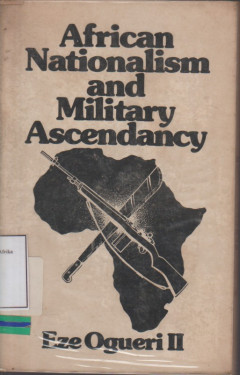
African nationalism and military ascendancy
Eze Ogueri II's book, "African Nationalism and Military Ascendancy," examines the development of African nationalism and the role of the military in the political dynamics of African countries after independence. The author explores the relationship between nationalist movements, political leadership, and the increasing dominance of the military in various African countries, particularly during…
- Edisi
- -
- ISBN/ISSN
- 0-914970-13-5
- Deskripsi Fisik
- vi, 85 pages : illustration ; 20,5 cm
- Judul Seri
- -
- No. Panggil
- 320.54096 OGU a

Nationalism and new states in Africa: From about 1935 to the present
Ali A. Mazrui and Michael Tidy's book, "Nationalism and New States in Africa," examines the development of African nationalism from approximately 1935 to the modern era. The authors outline the historical background of colonialism, the rise of nationalist movements, the struggle for independence, and the political dynamics of new states after independence. The book provides an in-depth analysis…
- Edisi
- -
- ISBN/ISSN
- 0-435-94146-1
- Deskripsi Fisik
- xxix, 401 pages : illustration ; 23,5 cm
- Judul Seri
- -
- No. Panggil
- 320.54096 MAZ n

I Speak of freedom: A Statement of African ideology
In this influential work, Kwame Nkrumah outlines his vision for African unity, political freedom, and postcolonial development. I Speak of Freedom presents Nkrumah’s reflections on nationalism, anti-colonial struggle, and the responsibilities of independent African states. Through speeches, essays, and policy statements, he articulates the ideological foundations of Pan-Africanism and emphasi…
- Edisi
- -
- ISBN/ISSN
- -
- Deskripsi Fisik
- xii, 291 pages : illustration ; 21 cm
- Judul Seri
- -
- No. Panggil
- 320.9667 KWA i
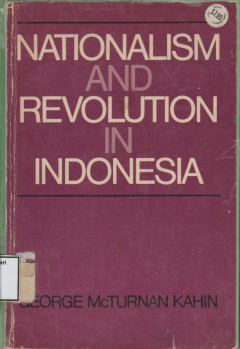
Nationalism and revolution in Indonesia
The book Nationalism and Revolution in Indonesia is a classic study by George McTurnan Kahin that describes the political, social, and military dynamics of the Indonesian Revolution of 1945–1949. Based on extensive field research and direct interviews with movement leaders, this book analyzes the development of Indonesian nationalism, diplomatic and military conflicts with the Netherlands, an…
- Edisi
- -
- ISBN/ISSN
- 0-8014-9108-8
- Deskripsi Fisik
- xi, 490 pages ; 21,5 cm
- Judul Seri
- -
- No. Panggil
- 959.803 KAH n

Road to exile the Indonesian Nationalist movement 1927-1934
In 1927 Indonesia's first true nationalist party, the PNI, was formed with Sukarno as its young leader. This inaugurated a period of hectic political activity when the men who were later to lead the Republic of Indonesia hammered out the goals and methods of their independence struggle, in the process laying the seeds of some of the major conflicts which would later affect the Republic. By 1934…
- Edisi
- -
- ISBN/ISSN
- 0 7081 0310 3
- Deskripsi Fisik
- xii, 254 pages ; 22,5 cm
- Judul Seri
- -
- No. Panggil
- 959.8 ING r

East Timor: Nationalism & colonialism
ast Timor: Nationalism & Colonialism offers a compelling examination of the historical forces that shaped East Timor’s struggle for self-determination. Jill Jolliffe traces the roots of Timorese nationalism from the colonial period under Portugal through the geopolitical pressures that culminated in Indonesia’s invasion and subsequent occupation. Drawing on firsthand reporting, archival res…
- Edisi
- -
- ISBN/ISSN
- 0-7022-1481-7
- Deskripsi Fisik
- 362 pages; 22 cm
- Judul Seri
- -
- No. Panggil
- 959.86 JOL e
 Karya Umum
  Filsafat
  Agama
Agama  Ilmu-ilmu Sosial
  Bahasa
  Ilmu-ilmu Murni
  Ilmu-ilmu Terapan
  Kesenian, Hiburan, dan Olahraga
  Kesusastraan
  Geografi dan Sejarah