Ditapis dengan

Malay politics in Malaysia: A Study of the UMNO and PAS
This study examines the two major Malay political parties in Malaysia, the United Malays National Organization (UMNO) and Partai Islam (PAS), focusing on the years 1945 - 1969 to coincide with the emergence of broadly based political parties and the ending of an era in Malaysian politics with the tragic racial riots in May 1969. There is an introductory chapter giving an overview of the pre-196…
- Edisi
- -
- ISBN/ISSN
- -
- Deskripsi Fisik
- xii, 326 pages : ilustrations ; 24 cm
- Judul Seri
- -
- No. Panggil
- 324.25951 FUN m

Malaysian numismatic heritage
This book provides a comprehensive overview of the development of money in Malaysia from its early days to the modern era. Beginning with a basic explanation of the function of money, the book then traces the history of Malaysian numismatics, including traditional forms of currency, coins from Malay kingdoms, and currencies introduced during the European colonial period. It then discusses ch…
- Edisi
- -
- ISBN/ISSN
- 983-9586-36-x
- Deskripsi Fisik
- xi, 386 pages : illustrations ; 30 cm
- Judul Seri
- -
- No. Panggil
- 737.409 BAN m
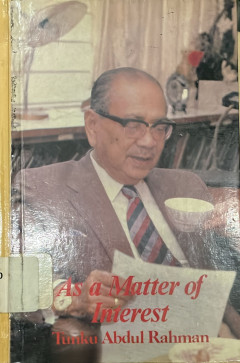
As Matter of interest
Tunku Abdul Rahman Putra Al-Haj, D.M.N., K.O.M., C.H., has had a distinguished career as a lawyer, statesman, diplomat and Prime Minister. The Tunku was born on 8th February 1903 and is a prince of the royal house of Kedah. He was educated at St. Catherine's College, Cambridge and graduated as a Bachelor of Arts in law and history. He was called to the Bar from the Inner Temple in 1948. In 194…
- Edisi
- -
- ISBN/ISSN
- -
- Deskripsi Fisik
- vii, 268 pages : ilustrations ; 21 cm
- Judul Seri
- -
- No. Panggil
- 959.5 RAH a
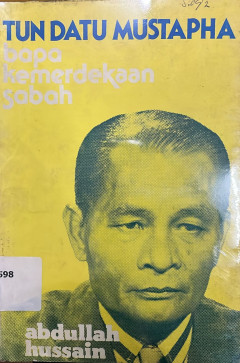
Tun Datu Mustapha : bapa kemerdekaan Sabah
This book is an important biography that reviews the life and political role of Tun Datu Haji Mustapha bin Datu Harun, a central figure in Sabah's history. Written by Abdullah Hussain, this work describes Mustapha's life journey from his Bajau-Suluk family background, his struggles during the Japanese occupation, to his role in the Sabah independence negotiations and the formation of Malaysia. …
- Edisi
- -
- ISBN/ISSN
- -
- Deskripsi Fisik
- xii, 186 pages : ilustrations ; 21 cm
- Judul Seri
- -
- No. Panggil
- 923.159 HUS t

Malaysia and Singapore in international diplomacy : Documents and commentaries
This book presents a collection of important documents and analytical commentary related to diplomatic relations between Malaysia (formerly Malaya) and Singapore in the post-independence international context. Peter J. Boyce presents diplomatic sources, government speeches, agreements, and foreign policy analyses that reflect how the two countries manage their bilateral relations and their posi…
- Edisi
- -
- ISBN/ISSN
- -
- Deskripsi Fisik
- xii, 268 pages : 27 cm
- Judul Seri
- -
- No. Panggil
- 327.595 BOY m
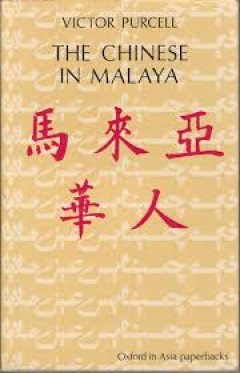
The Chinese in Malaya
The Chinese have been entering Southeast Asia since the early years of the fifteenth century. By 1941, in Malay alone, there were about 2,580,000 Chinese, outnumbering the natives. The detailed history of this movement into Malaya has been written by Victor Purcell, who delineates the story of the beginnings of contacts and carries it through to July 1947 . Mr Purcell is highly qualified to eng…
- Edisi
- -
- ISBN/ISSN
- 0-19-638085-5
- Deskripsi Fisik
- xii, 327 pages ; 24 cm
- Judul Seri
- -
- No. Panggil
- 325.51 PUR c
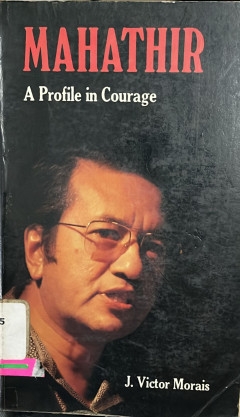
Mahathir: A Profile in courage
Dr Mahathir Mohamad represents a new generation of self-made and self-confident Malaysians. Oncelabeled an 'ultra" and expelled from UMNO. Dr Mahathir emerged from the political wilderness to become the fourth Prime Minister of Malaysia. The setbacks and moments of glory are narrated in this book. More importantly, the text also gives insight to Mahathir's background and philosophy as well as …
- Edisi
- -
- ISBN/ISSN
- -
- Deskripsi Fisik
- viii, 293 pages : ilustrations ; 23 cm
- Judul Seri
- -
- No. Panggil
- 923.2595 MOR m

Special guest: The Detention in Malaysia of an ex-cabinet minister
For many reasons autobiographical writing has not, in times past, been prominent in Asian society, but more recently increasing numbers of politicians and statesmen, writers and artists, administrators and ordinary men 'of excellence' have turned to describing their own lives, for the enlightenment of others. The titles in this series come initially from South-East Asia. Many are translations. …
- Edisi
- -
- ISBN/ISSN
- -
- Deskripsi Fisik
- viii, 210 pages : ilustrations ; 23 cm
- Judul Seri
- -
- No. Panggil
- 923.2595 ISH s
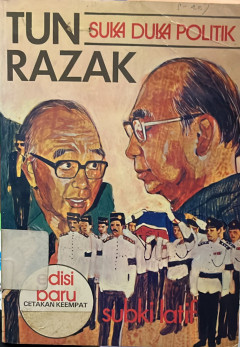
Suka duka politik: Tun Razak
This book provides an in-depth look at the political life of Tun Abdul Razak Hussein, from his experiences as a national figure to his policies as Malaysia's second Prime Minister. Subky Latif highlights the major challenges Razak faced in managing ethnic conflicts, economic crises, and national security, particularly in the period after May 13, 1969. In a critical narrative, Latif analyzes how…
- Edisi
- -
- ISBN/ISSN
- -
- Deskripsi Fisik
- xii, 165 pages : ilustrations ; 18 cm
- Judul Seri
- -
- No. Panggil
- 923.2 LAT s

Merdeka!: British rule and the struggle for independence in Malaya, 1945-1957
Merdeka! describes the explosive situation in Malaya between the end of the Second World War until the termination of direct British rule in 1957. It discusses how the leading contenders for power and influence manoeuvered for pre-eminence in the political arena. The author suggests that the political reforms of the 1950s and the British government’s support of and final transfer of power to …
- Edisi
- -
- ISBN/ISSN
- -
- Deskripsi Fisik
- xii, 220 pages ; 23 cm
- Judul Seri
- -
- No. Panggil
- 959.5 HOO m
 Karya Umum
  Filsafat
  Agama
Agama  Ilmu-ilmu Sosial
  Bahasa
  Ilmu-ilmu Murni
  Ilmu-ilmu Terapan
  Kesenian, Hiburan, dan Olahraga
  Kesusastraan
  Geografi dan Sejarah