Ditapis dengan

Thought and behaviour in modern Japanese politics
A seminal study that analyzes the intellectual foundations, patterns of thought, and political behavior that shaped modern Japanese politics. Maruyama examines how the legacy of feudalism, traditional power structures, and hierarchical norms influenced Japan’s political development before and after World War II. The book explores the relationship between ideology, political institutions, and …
- Edisi
- -
- ISBN/ISSN
- 0-19-580453-8
- Deskripsi Fisik
- ix, 407 pages ; 20 cm
- Judul Seri
- -
- No. Panggil
- 320.952 MAR t
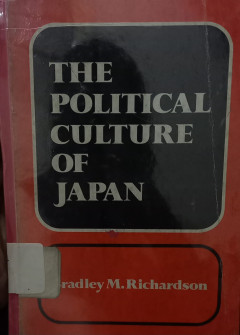
The Political culture of Japan
The values, beliefs, and behaviors that shape political life in Japan. The book explores how historical experiences, social structures, and cultural norms influence citizen participation, leadership styles, policy-making, and institutional development. Richardson highlights the interaction between traditional practices and modern democratic principles, offering insights into political continuit…
- Edisi
- -
- ISBN/ISSN
- 0-520-03049-4
- Deskripsi Fisik
- xi, 271 pages ; 20 cm
- Judul Seri
- -
- No. Panggil
- 361.61 RIC p

Japanese politics--an inside view: Readings from Japan
A detailed examination of Japan’s political system from a domestic perspective. The book compiles analyses and essays that explore the structure and function of political institutions, the role of political parties, electoral behavior, and policymaking processes. Itoh emphasizes how cultural, historical, and social factors shape political decision-making in Japan. This collection provides rea…
- Edisi
- -
- ISBN/ISSN
- -
- Deskripsi Fisik
- x, 248 pages : illustrations ; 21 cm
- Judul Seri
- -
- No. Panggil
- 952 ITO j

Japan's changing political and security role: Domestic and international aspects
The central objective of this study is to describe and analyse the politics of security policy change in Japan and its significance to the Asia-Pacific region as a whole.
- Edisi
- -
- ISBN/ISSN
- 981-3035-98-6
- Deskripsi Fisik
- 57 pages ; 24 cm
- Judul Seri
- -
- No. Panggil
- 327.3433952 Kat j

Creating single-party democracy: Japan's postwar political system
The contents of this book: 1. The 1955 System: Origin and Transformation 2. Rearmament Controversis and Cultural Conflict in Japan: The Case of the Conservation 3. The Japan Socialist Party before the Mid-1960s
- Edisi
- -
- ISBN/ISSN
- 0-8179-9111-5
- Deskripsi Fisik
- 173 pages : illustrations (black and white) : index ; 24 cm
- Judul Seri
- -
- No. Panggil
- 324.252 Tet c
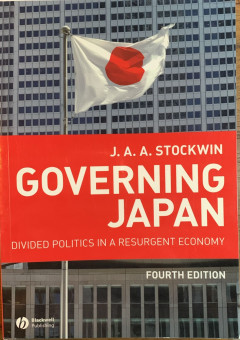
Governing Japan: Divided politics in a resurgent economy
This fourth edition provides an in-depth, up-to-date, chronological analysis of Japan’s current political system and the contributions of its leaders. It emphasizes why Japan and its politics matters in a global society. This book contains: 1. Ideal for college courses on Japanese or comparative politics as well as for those interested in Japanese war memory, constitutional revision, an…
- Edisi
- Ed. 4
- ISBN/ISSN
- 978-1-4051-5416-1
- Deskripsi Fisik
- xvi, 298 pages : index ; 24 cm.
- Judul Seri
- -
- No. Panggil
- 320.952 Sto g

Structure and policy in Japan and the United States
The authors explain outcomes ranging from national budgetary priorities through nuclear-power regulations and military-security commitments. They show that the political leadership in both countries is in control of policy, but that political institutions explain why the bureaucracies of the two countries receive different missions and operating procedures. This volume is a powerful contributio…
- Edisi
- -
- ISBN/ISSN
- 0-521-46710-1
- Deskripsi Fisik
- xiv, 292 pages : illustrations : bibl: hlm 261-282 : index ; 24 cm.
- Judul Seri
- -
- No. Panggil
- 320.60952 Cow s

The state and politics in Japan
This book provides a comprehensive guide to the state and politics in Japan at the start of the twenty-first century. In it, Ian Neary asks if the state in Japan is in any important sense different from states in western societies. He seeks to answer this question through an examination of the historical process that created the modern state, a description of the main institutions and actors in…
- Edisi
- -
- ISBN/ISSN
- 0-7456-2134-1
- Deskripsi Fisik
- xxv, 236 pages : illustrations (black and white) : index ; 25 cm
- Judul Seri
- -
- No. Panggil
- 320.452 Nea s
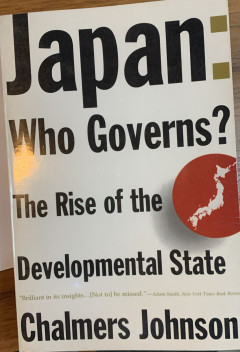
Japan, who governs? : The rise of the developmental state
The godfather of Japanese revisionism, author of MITI and the Japanese Miracle and president of the Japan Policy Research Institute explains how--and why--Japan has become a world power in the past 25 years. Johnson lucidly explains here how the Japanese economy will thrive as it moves from a producer-dominated economy to a consumer-oriented headquarters for all of East Asia.
- Edisi
- -
- ISBN/ISSN
- 0-393-03739-8
- Deskripsi Fisik
- 384 pages ; 21 cm.
- Judul Seri
- -
- No. Panggil
- 338.952 Joh j
 Karya Umum
  Filsafat
  Agama
Agama  Ilmu-ilmu Sosial
  Bahasa
  Ilmu-ilmu Murni
  Ilmu-ilmu Terapan
  Kesenian, Hiburan, dan Olahraga
  Kesusastraan
  Geografi dan Sejarah