Ditapis dengan
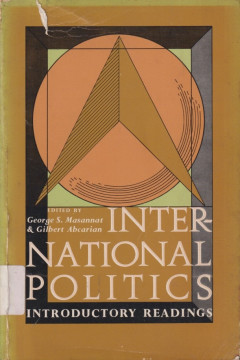
International politics: Introductory readings
This anthology provides a comprehensive introduction to the field of international politics through selected foundational readings edited by George S. Masannat and Gilbert Abcarian. It presents essential theoretical perspectives, historical analyses, and contemporary discussions that help readers understand the dynamics of international relations. The book is designed for students and scholars …
- Edisi
- -
- ISBN/ISSN
- -
- Deskripsi Fisik
- xiii, 498 pages ; 23,5 cm
- Judul Seri
- -
- No. Panggil
- 327 MAS i

Non-Aligned Movement under India’s chairmanship
Published by the Indian Institute for Non-Aligned Studies, the book Non-Aligned Movement Under India’s Chairmanship examines India’s role during its leadership of the Non-Aligned Movement (NAM). First published in November 1986, the book provides an overview of India’s diplomatic activities, work programs, and political positions in guiding the movement’s direction in the mid-1980s. It …
- Edisi
- -
- ISBN/ISSN
- -
- Deskripsi Fisik
- 47 pages; 22 cm
- Judul Seri
- -
- No. Panggil
- 327.172 IND n

Inaugural address and responses: Fifth conference of heads of state or govern…
This official conference volume contains the inaugural address and formal responses delivered at the Fifth Conference of Heads of State or Government of Non-Aligned Countries held in Colombo, Sri Lanka, on 16–19 August 1976. The document presents key political statements, declarations, and diplomatic positions of member states regarding international cooperation, peace, decolonization, global…
- Edisi
- -
- ISBN/ISSN
- -
- Deskripsi Fisik
- 509 page ; 24 cm
- Judul Seri
- -
- No. Panggil
- 327.17 FIF i
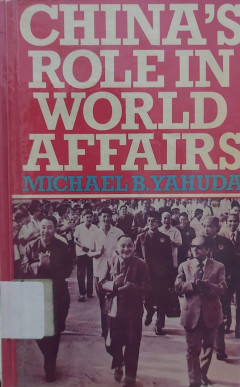
China's role in world affairs
This book analyzes China’s role in international politics and world affairs during the Cold War period. It examines China’s foreign policy behavior, ideological foundations, and diplomatic strategies, highlighting how domestic political factors and global power structures shaped China’s interaction with both developing and developed countries
- Edisi
- -
- ISBN/ISSN
- 0-19-827256-1
- Deskripsi Fisik
- 298 pages ; 21,5 cm
- Judul Seri
- -
- No. Panggil
- 327.51 YAH c
La marche verte
The book "Hassan II presents La Marche Verte" is a non-fiction book based on official speeches and documents, rather than a fictional narrative. It documents a real political event, namely the peaceful mass march of King Hassan II from Morocco to the Spanish Sahara in 1975, known as the "Green March."
- Edisi
- -
- ISBN/ISSN
- 2-259-02218-9
- Deskripsi Fisik
- 472 Pages : 22,5 cm
- Judul Seri
- -
- No. Panggil
- 923.164 VED l

Fundamental texts: Declarations, resolutions, action programme for economic C…
This book contains the fundamental texts produced at the Fifth Summit of the Heads of State or Government of the Non-Aligned Movement held in Colombo, Sri Lanka, on August 16–19, 1976. The main contents include political declarations, resolutions, and action programs for economic cooperation among developing countries. These documents reflect the political positions of the Non-Aligned Movemen…
- Edisi
- -
- ISBN/ISSN
- -
- Deskripsi Fisik
- iv, 205 pages ; 24 cm
- Judul Seri
- -
- No. Panggil
- 337.060 NON f
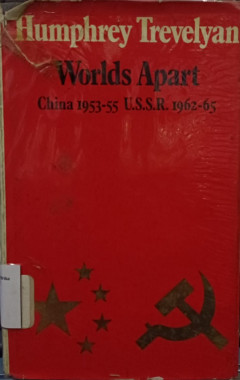
Worlds Apart : China 1953-55 U.S.S.R. 1962-65
This book examines two critical periods in the Cold War era, focusing on the divergence between the People's Republic of China (PRC) and the Soviet Union (USSR). The first part of the study delves into the period 1953–1955, when China, under the leadership of Mao Zedong, navigated its relationship with the Soviet Union after Stalin’s death, exploring the fluctuating dynamics between the two…
- Edisi
- -
- ISBN/ISSN
- 333-13023-5
- Deskripsi Fisik
- 320 pages : 22 cm
- Judul Seri
- -
- No. Panggil
- 320.5 TRE w

The Collected documents of the group of 77. Volume 1
The volume compiles foundational documents of the Group of 77, a coalition of developing nations established to promote collective economic interests and enhance joint negotiating capacity within the United Nations system. The collection includes historical records, resolutions, policy statements, and other primary sources related to international economic cooperation, development issues, and t…
- Edisi
- Second Series
- ISBN/ISSN
- 0-379-00969-2
- Deskripsi Fisik
- lii, 592 pages ; 26 cm
- Judul Seri
- -
- No. Panggil
- 338.91 SAU g

Cuba’s international relations: The Anatomy of a nationalistic foreign policy
This book presents an in-depth analysis of Cuban foreign policy after the 1959 Revolution. H. Michael Erisman explains how Cuba's nationalistic ideology and internal political dynamics shaped the country's diplomatic strategy at the regional and global levels. The discussion covers Cuba's relations with Latin American countries, the Soviet Union, the Third World, and its struggles in internatio…
- Edisi
- -
- ISBN/ISSN
- 0-8133-0042-8
- Deskripsi Fisik
- xv, 203 pages ; 23 cm
- Judul Seri
- -
- No. Panggil
- 327.7291 ERI c
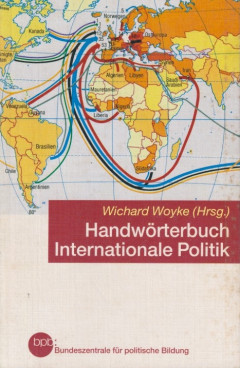
Handworterbuch internationale politik
This handbook provides a comprehensive reference on key concepts, institutions, theories, actors, and developments in international politics. Edited by Wichard Woyke, the volume offers concise and authoritative explanations relevant for students, scholars, and practitioners in political science and international relations. The revised ninth edition reflects updated research and contemporary glo…
- Edisi
- -
- ISBN/ISSN
- 3-89331-489-X
- Deskripsi Fisik
- xxiii, 676 pages ; 18,5 cm
- Judul Seri
- -
- No. Panggil
- 327.03 WOY h
 Karya Umum
  Filsafat
  Agama
Agama  Ilmu-ilmu Sosial
  Bahasa
  Ilmu-ilmu Murni
  Ilmu-ilmu Terapan
  Kesenian, Hiburan, dan Olahraga
  Kesusastraan
  Geografi dan Sejarah