Ditapis dengan

Positioning Indonesia as a media hub in Southeast Asia: Enhancing the presenc…
This paper examines strategies to enhance foreign media presence in order to strengthen Indonesia's position as a regional media hub in Southeast Asia. It identifies structural barriers including fragmented licensing procedures, inconsistent regulatory frameworks, and press freedom challenges that diminish Indonesia's appeal as a base for international journalists. Through analysis of three key…
- Edisi
- -
- ISBN/ISSN
- -
- Deskripsi Fisik
- -
- Judul Seri
- -
- No. Panggil
- Sesdilu 79-2025

The future of Preferential Trade Agreements: Rebalancing foreign policy and t…
Indonesia has strengthened its strategic position in international trade through its participation in the G20, WTO, and various bilateral and regional trade agreements. Beyond major trade agreements, Preferential Trade Agreements (PTAs) with developing countries offer strategic value by strengthening economic diplomacy, expanding diplomatic relations, and opening access to non-traditional marke…
- Edisi
- -
- ISBN/ISSN
- -
- Deskripsi Fisik
- -
- Judul Seri
- -
- No. Panggil
- Sesdilu 77-2024
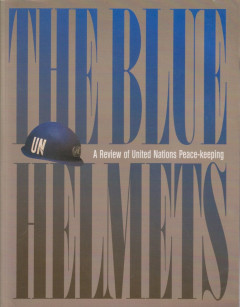
The blue helmets: A Review of United Nations peace-keeping
The Blue Helmets: A Review of United Nations Peace-keeping (Third Edition) provides a comprehensive overview of the history, development, and operations of United Nations peacekeeping missions around the world. Published by the United Nations Department of Public Information, this edition documents key peacekeeping activities, mandates, challenges, and outcomes from various UN missions. It high…
- Edisi
- 3
- ISBN/ISSN
- 92-1-100611-2
- Deskripsi Fisik
- xvi, 808 pages : illustration ; 28 cm
- Judul Seri
- -
- No. Panggil
- 341.584 UNI b

A Strategy of interdependence: A Program for the control of conflict between …
This book presents a comprehensive program for controlling conflict between the United States and the Soviet Union during the Cold War era. Vincent P. Rock outlines a strategic framework based on political interdependence, diplomatic negotiation, and cooperative security measures. The work analyzes sources of tension between the two superpowers and proposes practical mechanisms to prevent escal…
- Edisi
- -
- ISBN/ISSN
- -
- Deskripsi Fisik
- xv, 399 pages ; 23 cm
- Judul Seri
- -
- No. Panggil
- 327.17 ROC s
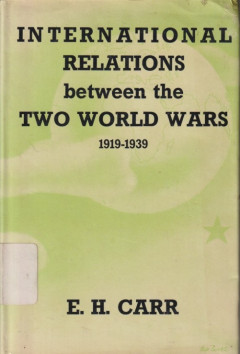
International relations between the two world wars 1919–1939
This book provides a comprehensive analysis of international relations during the interwar period from 1919 to 1939. E. H. Carr examines the political, economic, and diplomatic developments that shaped the fragile international order after World War I. The work discusses the consequences of the peace treaties, the rise of new power dynamics, and the failures of collective security leading to Wo…
- Edisi
- -
- ISBN/ISSN
- 0 333 08318 0
- Deskripsi Fisik
- viii, 302 pages : illustration ; 19 cm
- Judul Seri
- -
- No. Panggil
- 327.090 CAR i

Codification of the principles of peaceful and active coexistence
This book discusses the formulation and legal codification of the principles of peaceful and active coexistence in international relations. Tomislav Mitrovic analyzes political, legal, and diplomatic frameworks that support cooperation among nations, particularly during the global tensions of the mid-20th century. The work explores the foundations of peaceful coexistence as a guiding principle …
- Edisi
- -
- ISBN/ISSN
- -
- Deskripsi Fisik
- 54 pages ; 20 cm
- Judul Seri
- -
- No. Panggil
- 327 MIT c

The next 100 years: A forecast for the 21st century
In his thought-provoking new book, George Friedman, founder of STRATFOR-the preeminent private intelligence and forecasting firm-focuses on what he knows best, the future. Positing that civilization is at the dawn of a new era, he offers a lucid, highly readable forecast of the changes we can expect around the world during the twenty-first century, all based on his own through analysis and rese…
- Edisi
- Cetakan Pertama
- ISBN/ISSN
- 0-393-03075-x
- Deskripsi Fisik
- xxi, 253 pages : illustration : index ; 22 cm
- Judul Seri
- -
- No. Panggil
- 303.49 Fri n
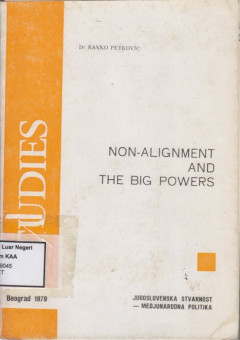
Non-Alignment and the big powers
Non-Alignment and the Big Powers analyzes the development, principles, and political significance of the Non-Aligned Movement in the context of global power rivalry. Dr. Ranko Petkovic examines how non-aligned countries attempted to assert independence from the dominant blocs during the Cold War while promoting peace, sovereign equality, and collective cooperation. The book also explores the re…
- Edisi
- -
- ISBN/ISSN
- -
- Deskripsi Fisik
- 46 pages ; 20 cm
- Judul Seri
- -
- No. Panggil
- 327.17 PET n

International organization in the modern world: The Regional and the global p…
A Hard and Bitter Peace: A Global History of the Cold War offers a comprehensive global perspective on the Cold War, moving beyond a purely U.S.–Soviet framework. The book traces the origins of the conflict from the late stages of World War II and examines how ideological rivalry, decolonization, nationalism, and imperial legacies shaped global politics. It highlights the experiences of Asia,…
- Edisi
- -
- ISBN/ISSN
- 1-85567-329-0
- Deskripsi Fisik
- 262 pages ; 23 cm
- Judul Seri
- -
- No. Panggil
- 327 TAY i
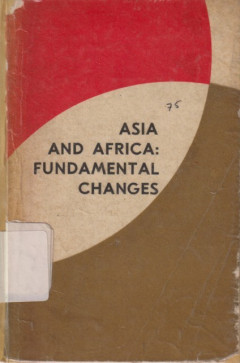
Asia and Africa: Fundamental changes
A collection of analytical essays discussing major political, social, and economic transformations occurring in Asia and Africa during the mid-twentieth century. Edited by Soviet scholars, the book examines decolonization, national liberation movements, and the emergence of newly independent states. It highlights ideological, cultural, and geopolitical shifts that shaped Asia-Africa relations i…
- Edisi
- -
- ISBN/ISSN
- -
- Deskripsi Fisik
- 384 pages ; 16,5 cm
- Judul Seri
- -
- No. Panggil
- 327.5 PAV a
 Karya Umum
  Filsafat
  Agama
Agama  Ilmu-ilmu Sosial
  Bahasa
  Ilmu-ilmu Murni
  Ilmu-ilmu Terapan
  Kesenian, Hiburan, dan Olahraga
  Kesusastraan
  Geografi dan Sejarah