Ditapis dengan
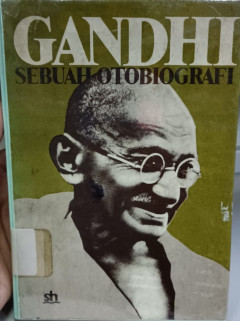
An Autobiography: The Story of my experiments with truth
The personal narrative of Mohandas K. Gandhi, chronicling his life from childhood to 1921. Written originally in Gujarati and translated by Mahadev Desai, the book provides deep insight into Gandhi’s spiritual, political, and moral development. Gandhi describes his quest for truth, his experiments with diet, self-discipline, education, and social reform, as well as his emergence as a leader o…
- Edisi
- -
- ISBN/ISSN
- -
- Deskripsi Fisik
- xv, 528 pages ; 20,3 cm
- Judul Seri
- -
- No. Panggil
- 954.035092 GAN a
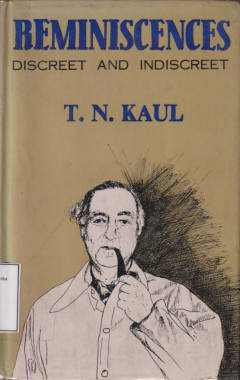
Reminiscences: Discreet and indiscreet
Reminiscences: Discreet and Indiscreet is the autobiographical account of T. N. Kaul, one of India’s most influential diplomats. In this memoir, Kaul reflects on his long career in foreign service, offering candid and insightful commentary on India’s foreign policy, international negotiations, political leaders, and major global events that shaped the 20th century. Blending personal anecdot…
- Edisi
- -
- ISBN/ISSN
- -
- Deskripsi Fisik
- 312 pages : illustrations ; 22,5 cm
- Judul Seri
- -
- No. Panggil
- 327.20954 KAU r
Jawaharlal Nehru : A Biography, Volume I 1889-1947
This first volume of Sarvepalli Gopal's remarkable biography, covering Nehru's youth and ending with independence in 1947, is written from first-hand knowledge of the man whom he served for ten years in the Ministry for External Affairs and from the free access granted him by Prime Minister Indira Gandhi to her father's private papers. The only surviving son of a politically ambitious lawyer, …
- Edisi
- -
- ISBN/ISSN
- 0-674-47310-8
- Deskripsi Fisik
- 398 pages : illustrations ; 24 cm
- Judul Seri
- -
- No. Panggil
- 923.54 GOP j
Jawaharlal Nehru : A Biography, Volume II 1947-1956
The second volume of Sarvepalli Gopal's remarkable work covers the first nine years of Nehru's prime ministership. Like the first volume, it is more than a biography, describing and analysing in detail both domestic and foreign issues of the period: the struggle between India and Pakistan for Kashmir, the first elections of free India based on adult suffrage; Korea, the Suez crisis, the invasio…
- Edisi
- -
- ISBN/ISSN
- -
- Deskripsi Fisik
- 346 pages : illustrations ; 23 cm
- Judul Seri
- -
- No. Panggil
- 923.54 GOP j
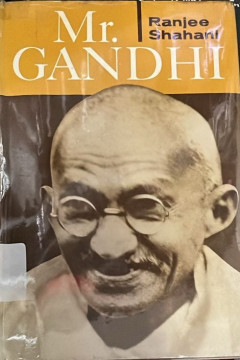
Mr, Gandhi
This is not a formal biography of the great Gandhiji, but a portrait of the man behind the public image. Focusing on the inner stresses and fires that forged his character, it shows Gandhi not as some kind of emanation of divinity, but as a man of extraordinary faith and capacity. Cast from a leader-dictator mold, shy and yet intrepid, possessing no visible power, he was the inspiration and dr…
- Edisi
- -
- ISBN/ISSN
- -
- Deskripsi Fisik
- 211 pages ; 21 cm
- Judul Seri
- -
- No. Panggil
- 923.254 923.254 SHA m
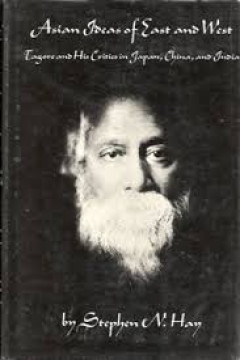
Asian ideas of east and west
After receiving the Nobel Prize for Literature in 1913, the Bengali poet-philosopher Raabindranath Tagore embarked on a series of lecture tours of Japan, China, and his native India. Tagore was convinced that a unique spirituality unified Asia and he attempted, un-successtully, to persuade Chinese and Japanese intellectuals to join India in realizing a common civilization. Although Tagore faile…
- Edisi
- -
- ISBN/ISSN
- 674-04975-6
- Deskripsi Fisik
- 480 pages : illustrations ; 24 cm
- Judul Seri
- -
- No. Panggil
- 923.5 HAY a

Jawaharlal Nehru : A Biography, Volume II 1947-1956
The second volume of Sarvepalli Gopal's unique work covers the first nine years of Nehru's prime ministership. Like the first volume, it is more than a biography, describing and analyzing in detail both domestic and foreign issues of the period: the struggle between India and Pakistan for Kashmir, the first elections of free India based on adult suffrage, Korea, the Suez crisis, the invasion of…
- Edisi
- -
- ISBN/ISSN
- 0-674-47311-6
- Deskripsi Fisik
- 346 pages : illustrations ; 24 cm
- Judul Seri
- -
- No. Panggil
- 923.254 GOP j
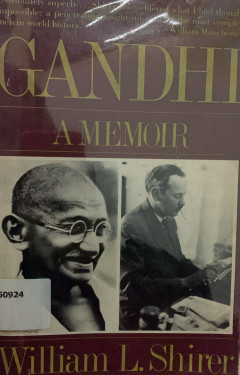
Gandhi: A Memoir
Recalling his friendship and conversations with the late Indian leader, William Shirer presents a portrait of Gandhi that spotlights his frailties as well as his accomplishments. As a young foreign correspondent, William Shirer reported briefly on Gandhi'but the year was 1931, when India's struggle for independence peaked and Gandhi scored perhaps his greatest political success. The year before…
- Edisi
- -
- ISBN/ISSN
- 0-671-25080-9
- Deskripsi Fisik
- 245 pages : illustrations ; 23,5 cm
- Judul Seri
- -
- No. Panggil
- 923.254 SHI g

The last Mughal: The fall of a dynasty, Delhi, 1857
The Last Mughal is much more than the biography of one man. It is the story of a city, Delhi, teeming with conmen and holy men, hawkers and prostitutes. It is also a lament for the lost world of the Mughals, a genuinely multicultural synthesis of Indian and Islamic traditions, from music to miniature painting. Above all, it is a terrific retelling of the event that ended Zafar's reign the India…
- Edisi
- First Edition
- ISBN/ISSN
- 9780747587262
- Deskripsi Fisik
- xxix, 578 pages ; ilustrations, maps, bibliography, index ; 20 cm
- Judul Seri
- -
- No. Panggil
- 954 Dal l
 Karya Umum
  Filsafat
  Agama
Agama  Ilmu-ilmu Sosial
  Bahasa
  Ilmu-ilmu Murni
  Ilmu-ilmu Terapan
  Kesenian, Hiburan, dan Olahraga
  Kesusastraan
  Geografi dan Sejarah