Ditapis dengan
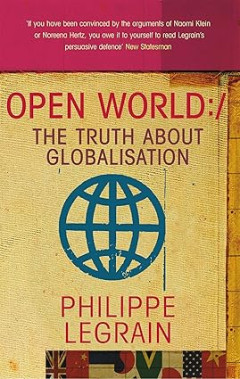
Open world: The truth about globalisation
Globalization is one of the most controversial issues in the world today. While protestors take to the streets at international summits, it is becoming conventional wisdom that companies are taking over the world, that governments' ability to tax, spend and regulate is under threat from global competition, that globalization harms the poor and that democracy is at risk. The author of this text …
- Edisi
- -
- ISBN/ISSN
- 0-349-11529-X
- Deskripsi Fisik
- 374 pages : illustrations : bibl: 348-357 : index ; 20 cm
- Judul Seri
- -
- No. Panggil
- 330.12 Leg o

Indonesia in the new world: Globalisation, nationalism and sovereignty
Globalisation is more complex than ever. The effects of the global financial crisis and increased inequality have spurred anti-globalisation sentiment in many countries and encouraged the adoption of populist and inward-looking policies. This has led to some surprising results: Duterte, Brexit and Trump, to name a few. In Indonesia, the disappointment with globalisation has led to rising protec…
- Edisi
- -
- ISBN/ISSN
- 978-981-4148-22-3
- Deskripsi Fisik
- xix, 333 pages : illustrations (black and white) : index ; 23 cm
- Judul Seri
- -
- No. Panggil
- 330.9598 Pat i

The globalization MYTH
Globalisation increases inequality, crushes dissent and subjugates democratically elected governments to the will of global capital. Right? Wrong. Shipman explains why globalisation is good - why it can spread the profits and spare the trees - and how multinationals will undermine the market economy far quicker than the revolutionary. Introduction 1. Bad company 2. Trading insults 3. Capita…
- Edisi
- -
- ISBN/ISSN
- 1-84046-359-7
- Deskripsi Fisik
- 236 pages : bibl: 229-230 : index ; 20 cm
- Judul Seri
- -
- No. Panggil
- 330 Shi g

The prosperity agenda : What the world wants from America--and what we need i…
In this provocative, ingenious book, Soderberg and Katulis make one of the most controversial arguments that foreign policy circles have seen in years: no more putting all our eggs in the basket of promoting democracy or market reforms, or even diplomacy, sanctions, or cash handouts to faltering governments. Instead, they argue, we should go right to the citizens of troubled nations and give th…
- Edisi
- -
- ISBN/ISSN
- 978-0-470-10529-0
- Deskripsi Fisik
- xi, 260 pages : index ; 25 cm
- Judul Seri
- -
- No. Panggil
- 327.7300905 Sod p

America and Europe: Conflict and power: Globalisation, regionalism and U.S.-E…
There is a nascent war between American power and the European Union and, its allies, over domestic and international socio-political organisation. The Americans have a more marked disposition towards realism, power and liberal economics. Europe and Canada prefer a state managed economy, equality. social cohesion, post-modern rhetoric and international dialogue In such confrontation we have the…
- Edisi
- -
- ISBN/ISSN
- 1-4134-4348-6
- Deskripsi Fisik
- 470 pages : index ; 26 cm
- Judul Seri
- -
- No. Panggil
- 327.17 Rea a

Singapore in the global system: Relationship, structure and change
This book tracks the phases of Singapore's economic and political development, arguing that its success was always dependent upon the territories links with the surrounding region and the wider global system, and suggests that managing these links today will be the key to the country's future. Singapore has followed a distinctive historical development trajectory. It was one of a number of citi…
- Edisi
- Cet. 1
- ISBN/ISSN
- 978-0-415-33190-6
- Deskripsi Fisik
- x, 276 pages : illustrations (black and white) : bibl: hlm 263-274 : index ; 23 cm
- Judul Seri
- -
- No. Panggil
- 327.1 Pre s

The global future: A brief introduction to world politics
The global future introduces you to the field of international relations while providing you with a set of concepts and analytic tools to help you understand contemporary events and emerging global trends. Contents: Part I. Trend and transformation in world politics Part II. The actors in world politics Part III. The politics of global security Part IV. The politics of global welfare Pa…
- Edisi
- Second Edition
- ISBN/ISSN
- 978-0-495-00748-7
- Deskripsi Fisik
- xxi, 386 pages : illustrations : maps : index ; 24 cm
- Judul Seri
- -
- No. Panggil
- 327.1 Keg g

Globalization: An Asian perspective on modernity and politics in America
Rappa analyzes the nature of neo-liberalism by raising important theoretical questions about the current relationships between American business structures, political norms, popular culture, and the world of business. The book is refreshing because it focuses on the three themes of "hope," "optimism," and "progress" that constitute what has arguably come to represent the American Dream.
- Edisi
- -
- ISBN/ISSN
- 9812104186
- Deskripsi Fisik
- xii, 322 pages : index ; 23 cm.
- Judul Seri
- -
- No. Panggil
- 320.973 5 Rap g
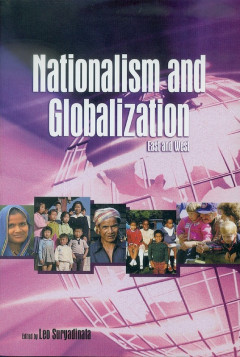
Nationalism and Globalization: East and west
Nationalism and globalization are two major contradicting forces in the world today. The roles that these two forces play and the impact of globalization on countries differ. Both Western and Asian "nation- states" have faced the challenge of globalization in recent decades, and the challenge has become more intense since the 1990s. The decline of communism and socialism as ideologies, and the …
- Edisi
- -
- ISBN/ISSN
- 981-230-073-2
- Deskripsi Fisik
- xiv, 366 pages : index ; 21 cm
- Judul Seri
- -
- No. Panggil
- 320.54 Sur n
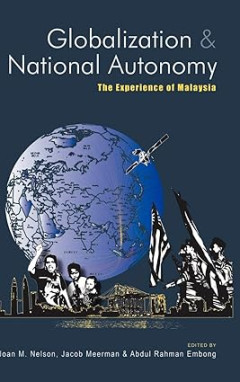
Globalization and national autonomy : The experience of Malaysia
Malaysia has long had an ambivalent relationship to globalization. A shining example of export-led growth and the positive role for foreign investment, the country's political leadership has also expressed skepticism about the prevailing international political and economic order. In this compelling collection, Nelson, Meerman and Rahman Embong bring together a group of Malaysian and foreign sc…
- Edisi
- -
- ISBN/ISSN
- 978-981-230-816-0
- Deskripsi Fisik
- xx, 353 pages : illustrations (black and white) : index ; 23 cm
- Judul Seri
- -
- No. Panggil
- 320.54 Nel g
 Karya Umum
  Filsafat
  Agama
Agama  Ilmu-ilmu Sosial
  Bahasa
  Ilmu-ilmu Murni
  Ilmu-ilmu Terapan
  Kesenian, Hiburan, dan Olahraga
  Kesusastraan
  Geografi dan Sejarah