Ditapis dengan

Inclusive diplomacy: Advancing Papuan participation in Indonesia’s approach…
This paper examines Indonesia’s inclusive diplomacy in the Pacific by emphasizing Papuan participation in engagement with Melanesia. The Papua issue and questions of cultural legitimacy continue to constrain Indonesia’s diplomacy in the Melanesian Spearhead Group (MSG) and the Pacific Islands Forum (PIF). Through a literature review, the paper assesses the alignment of the Ministry of Forei…
- Edisi
- -
- ISBN/ISSN
- -
- Deskripsi Fisik
- -
- Judul Seri
- -
- No. Panggil
- Sesdilu 79-2025

The pebble in the shoe: The diplomatic struggle for East Timor
This is a book that written too soon after the tragic developments in East Timor in 1999, it could have become part of a burning debate, one that had been generating more heat than light.
- Edisi
- -
- ISBN/ISSN
- 9793851090
- Deskripsi Fisik
- xx, 330 halaman ; 21 cm
- Judul Seri
- -
- No. Panggil
- 959.86 Ala p
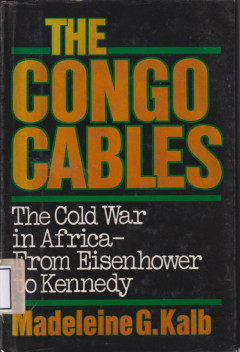
The Congo cables
“The Congo Cables” is a detailed diplomatic history examining the United States’ role in the Congo Crisis (1960–1965) during the Cold War. Drawing on newly declassified U.S. government cables and archival materials, Madeleine G. Kalb reveals the political maneuvering, intelligence activities, and international tensions surrounding the rise and assassination of Patrice Lumumba, as well a…
- Edisi
- -
- ISBN/ISSN
- 0-02-560620-4
- Deskripsi Fisik
- xxviii, 466 pages : illustration ; 24 cm
- Judul Seri
- -
- No. Panggil
- 967.5103 KAL c

Chinese Foreign Policy after the Cultural Revolution, 1966–1977
Chinese Foreign Policy after the Cultural Revolution, 1966–1977 analyzes the evolution of China’s foreign policy during and immediately after the Cultural Revolution. Written by Robert G. Sutter, the book examines how domestic political turmoil affected China’s external relations and diplomatic behavior. It explores policy changes, strategic priorities, and China’s interactions with maj…
- Edisi
- -
- ISBN/ISSN
- 0-89158-342-4
- Deskripsi Fisik
- 176 pages; 30 cm
- Judul Seri
- -
- No. Panggil
- 327.51 SUT c

Chile; Política exterior para la democracia
This book is a collection of essays edited by Heraldo Muñoz and examines the new direction of Chilean foreign policy during the transition to democracy in the late 1980s. The authors, prominent academics, diplomats, and political analysts, evaluate Chile's global position, the diplomatic challenges of the post-Pinochet era, and the need to construct a foreign policy that supports democracy, ec…
- Edisi
- -
- ISBN/ISSN
- 956-16-0183-8
- Deskripsi Fisik
- 262 pages ; 21 cm
- Judul Seri
- -
- No. Panggil
- 327.83 MUN c

Brazilian foreign policy in changing times; The Quest for autonomy from sarne…
This book examines the dynamics of Brazilian foreign policy from the administrations of José Sarney to Luiz Inácio Lula da Silva. Vigevani and Cepaluni emphasize how Brazil sought to increase its autonomy within the international system, particularly in its relations with the United States and other countries. Through political and international relations analysis, the book highlights the shi…
- Edisi
- -
- ISBN/ISSN
- 978-0-7391-2881-7
- Deskripsi Fisik
- xx, 169 pages ; 23,5 cm
- Judul Seri
- -
- No. Panggil
- 327.81 VIG b

New Zealand foreign policy: Statement and documents, 1943-1957
This book is a compilation of official statements and key diplomatic documents outlining the development of New Zealand’s foreign policy from 1943 to 1957. Issued by the Ministry of Foreign Affairs, it covers New Zealand’s international stance during and after World War II, including its role in global diplomacy, regional security, and participation in international organizations. The volum…
- Edisi
- -
- ISBN/ISSN
- -
- Deskripsi Fisik
- 495 pages ; 25 cm
- Judul Seri
- -
- No. Panggil
- 327.931 MIN n

The United States and China in the twentieth century
This book provides a comprehensive examination of the political, diplomatic, and economic relations between the United States and China throughout the twentieth century. Michael Schaller analyzes major historical events, ideological confrontations, and policy shifts that shaped the complex bilateral relationship, from early interactions to the Cold War era. The work highlights how both nationsâ…
- Edisi
- -
- ISBN/ISSN
- 0-19-502599-7
- Deskripsi Fisik
- vii, 199 pages : illustrations ; 21,5 cm
- Judul Seri
- -
- No. Panggil
- 327.73 SCH u
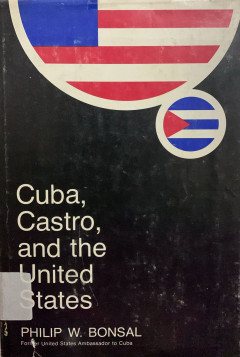
Cuba, Castro, and the United States
Cuba, Castro, and the United States is a firsthand analysis of diplomatic relations between Cuba and the United States during the early years of the Cuban Revolution. Written by Philip W. Bonsal, former U.S. Ambassador to Cuba, the book examines Fidel Castro’s rise to power, U.S. foreign policy toward Cuba, and the political tensions that shaped Cold War relations in the Caribbean.
- Edisi
- First edition
- ISBN/ISSN
- -
- Deskripsi Fisik
- xii, 318 pages : illustration ; 23,5 cm
- Judul Seri
- -
- No. Panggil
- 972.91064 BON c

The American style of foreign policy : Cultural politics and foreign affairs
The American Style of Foreign Policy examines the cultural and political foundations of United States foreign policy. Written by historian Robert Dallek, the book analyzes how domestic values, political traditions, and cultural assumptions shape American behavior in international affairs. By linking internal political dynamics with external diplomatic actions, the study offers a critical interp…
- Edisi
- -
- ISBN/ISSN
- -
- Deskripsi Fisik
- 279 pages ; 18 cm
- Judul Seri
- -
- No. Panggil
- 327.73 DAL a
 Karya Umum
 Filsafat
 Agama
 Ilmu-ilmu Sosial
 Bahasa
 Ilmu-ilmu Murni
 Ilmu-ilmu Terapan
 Kesenian, Hiburan, dan Olahraga
 Kesusastraan
 Geografi dan Sejarah