Ditapis dengan

The European Community and the challenge of the future
The 1980s have been a decade of upheaval for the European Community and its member states. Internal and external factors have made rapid change imperative. The member states have seen themselves to be under threat from outside competition which has impelled them to seek closer cooperation over an ever-increasing range of issues. A deep-seated uneasiness persists, however, over both the EC's cap…
- Edisi
- -
- ISBN/ISSN
- 0-86187-729-2
- Deskripsi Fisik
- xii, 334 pages : index ; 23 cm
- Judul Seri
- -
- No. Panggil
- 327.304 Lod e

Delors: Inside the house that jacques built
For much of the twentieth century, the main fault line of Western Europe's political landscape has run between left and right, between those wanting more planning, state control and redistribution of wealth, and those want- ing less. By the 1990s, however, the left had accepted much of the right's free-market philosophy. Only fine gradations separated their economic policies.
- Edisi
- -
- ISBN/ISSN
- 1-85788-039-0
- Deskripsi Fisik
- 305 pages : index ; 24 cm
- Judul Seri
- -
- No. Panggil
- 820 Gra d

The "democracy deficit" in the global economy: Enhancing the legitimacy and a…
We need to think harder about the norms and procedures for the governance of globalization. writes Joseph Nye in setting out the goals of this report. Focusing on the roles of the World Trade Organization, International Monetary Fund, and World Bank, Professor Nye poses six questions to contributors Jessica Einhorn, Béla Kádár, Hisashi Owada, Luis Rubio, and Soogil Young. 1.Protesters assert…
- Edisi
- -
- ISBN/ISSN
- 0-930503-84-8
- Deskripsi Fisik
- 88 pages ; 23 cm
- Judul Seri
- -
- No. Panggil
- 337.3 Nye d
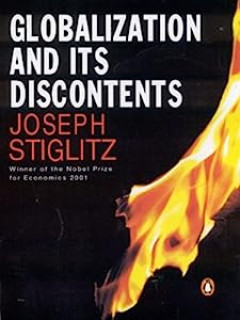
Globalization and its discontents
Globalization today is not working. It is not working for many of the world's poor. It is not working for much of the environment. It is not working for the stability of the global economy. It is Stiglitz's extraordinary authority and experience that make this book so compelling. Stiglitz admits, 'It is the trade unionists, students, environmentalists and ordinary citizens marching in the stree…
- Edisi
- -
- ISBN/ISSN
- 0713996641
- Deskripsi Fisik
- xxii, 282 pages : illustrations ; 25 cm
- Judul Seri
- -
- No. Panggil
- 337. 1 Sti g
 Karya Umum
  Filsafat
  Agama
Agama  Ilmu-ilmu Sosial
  Bahasa
  Ilmu-ilmu Murni
  Ilmu-ilmu Terapan
  Kesenian, Hiburan, dan Olahraga
  Kesusastraan
  Geografi dan Sejarah