Ditapis dengan
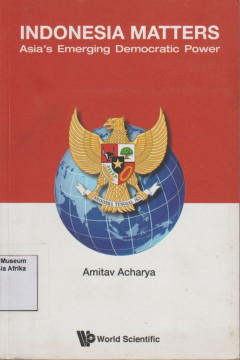
Indonesia matters: Asia's emerging democratic power
Examines Indonesia’s growing role as an influential democratic power in Asia and the world. It analyzes post-1998 political developments, democratic transformation, and the country’s contributions to international relations, particularly in Southeast Asia. The author discusses how national identity, foreign policy, and domestic dynamics shape Indonesia’s strategic position as the world’…
- Edisi
- -
- ISBN/ISSN
- 978-981-46-1985-1
- Deskripsi Fisik
- xii, 136 pages : illustrations ; 21 cm
- Judul Seri
- -
- No. Panggil
- 327.598 ACH i

A Celebration of democracy: A Journalistic portrayal of Indonesia’s 2004 di…
This book presents journalistic accounts of Indonesia's first direct elections in 2004. Edited by Asrori S. Karni, it highlights the political dynamics among moderate and hardline Muslims, the role of the media, and the changing landscape of democracy post-Reformasi. With in-depth analysis and field narratives, the book provides a comprehensive overview of the challenges and developments of Ind…
- Edisi
- -
- ISBN/ISSN
- 979-15146-1-5
- Deskripsi Fisik
- xxxiv, 327 pages : illustration ; 20,5 cm
- Judul Seri
- -
- No. Panggil
- 324.9598 KAR a
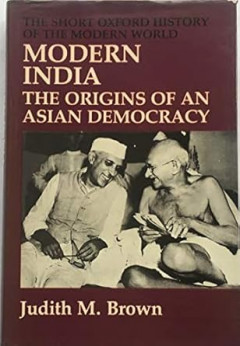
Modern India: The Origins of an Asian democracy
Modern India: The Origins of an Asian Democracy by Judith M. Brown offers a thematic and analytical exploration of India’s political development over the last two centuries. The book traces how colonial rule, social change, and political institutions shaped a democratic India. Brown examines the interaction between indigenous social structures and Western political ideas, highlighting how cul…
- Edisi
- -
- ISBN/ISSN
- 0-19-913124-4
- Deskripsi Fisik
- xvi, 429 pages : illustrations ; 24 cm
- Judul Seri
- -
- No. Panggil
- 954 BRO m
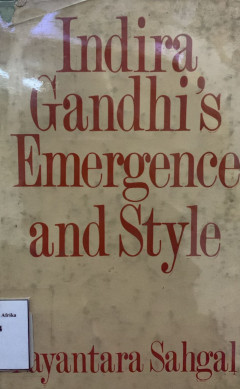
Indira Gandhi's emergence and style
Indira Gandhi’s Emergence and Style by Nayantara Sahgal offers a psychological and political portrait of Indira Gandhi, focusing on her personality, leadership style, and how she rose to power. Sahgal dissects the interplay between Indira’s familial inheritance (as Nehru’s daughter) and her own temperament, arguing that her political behavior and decision-making were deeply shaped by her …
- Edisi
- -
- ISBN/ISSN
- 0-7069-0624-1
- Deskripsi Fisik
- ix, 215 pages ; 21 cm
- Judul Seri
- -
- No. Panggil
- 923.254 SAH i
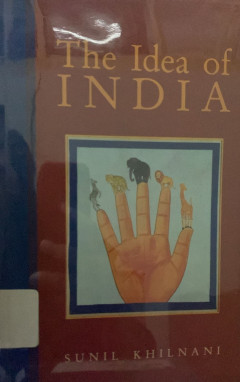
The idea of India
Sunil Khilnani's The Idea of India is a profound historical-political study of the post-independence Indian state project. Khilnani explores the paradoxes and ironies of modern India's identity: a major multi-ethnic, secular, and pluralistic democracy, yet also facing poverty, religious tensions, and doubts about its national identity. He explores the role of figures like Gandhi and Nehru…
- Edisi
- -
- ISBN/ISSN
- 0-241-13573-7
- Deskripsi Fisik
- xi, 263 pages : illustrations ; 22 cm
- Judul Seri
- -
- No. Panggil
- 954.04 KHI i
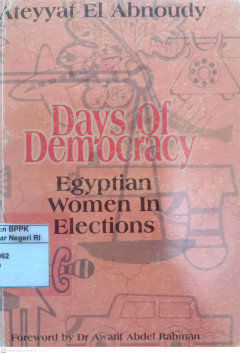
Days of Democracy: Egyptian women in elections
In Pharaonic days, Egyptian women played a prominent role in the political life of their country. The annals of Egyptian kings register the names of six queens who reigned over the Valley of the Nile. The first, Queen Meritnet, reigned 5000 years ago. Egyptian women bore a num ber of titles and carried many responsibilities in both the sacred and secular spheres.
- Edisi
- -
- ISBN/ISSN
- -
- Deskripsi Fisik
- 197 pages : index ; 21 cm
- Judul Seri
- -
- No. Panggil
- 320.08 Abn d

Evolving the spirit from democracy to peace: Ten steps to change the world
This practical guide starts with contemplation of our place in the world and considers the importance of breathing, listening and good health to becoming truly centred. On these foundations we are able to build the 'spirit' of respect and forgiveness to ultimately foster the culture of peace.
- Edisi
- Cetakan Kedua
- ISBN/ISSN
- 9781904166399
- Deskripsi Fisik
- 214 pages ; 21 cm
- Judul Seri
- -
- No. Panggil
- 327. 6 Rus e
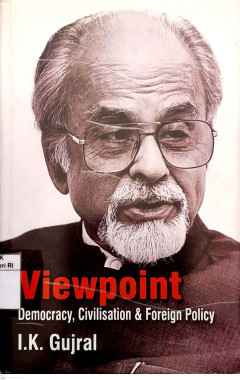
Viewpoint: Democracy, Civilisation and foreign policy
The French Revolution broke down the barriers of class and estate. It propelled the world forward into the modern age, one that placed the individual at the centre of the political system, and gave birth to the modern Republic and to the nation state. We in India have been keen students of the Revolution and the subsequent development of democratic institutions in France.
- Edisi
- -
- ISBN/ISSN
- 81-7764-626-5
- Deskripsi Fisik
- viii, 292 pages : ilustrations : index ; 25 cm
- Judul Seri
- -
- No. Panggil
- 327.54 Guj v

Who will tell the people: The betrayal of American democracy
Who Will Tell the People is a passionate, eye-opening challenge to American democracy. Here is a tough-minded exploration of why we're in trouble, starting with the basic issues of who gets heard, who gets ignored, and why. Greider shows us the realities of power in Washington today, uncovering the hidden relationships that link politicians with corporations and the rich, and that subvert the n…
- Edisi
- -
- ISBN/ISSN
- 0-671-68891-X
- Deskripsi Fisik
- 464 pages : index ; 24 cm
- Judul Seri
- -
- No. Panggil
- 323.024 097 3 Gre w

Religion and democracy in the United States: Danger or opportunity?
This collection, a work of the Task Force on Religion and American Democracy of the American Political Science Association, thoughtfully explores the effects of religion on democracy and contemporary partisan politics. Topics include how religious diversity affects American democracy, how religion is implicated in America's partisan battles, and how religion affects ideas about race, ethnicity,…
- Edisi
- -
- ISBN/ISSN
- 978-0-691-14729-1
- Deskripsi Fisik
- viii, 444 pages : illustrations (black and white) : index ; 23 cm
- Judul Seri
- -
- No. Panggil
- 322.10973 Wol r
 Karya Umum
  Filsafat
  Agama
Agama  Ilmu-ilmu Sosial
  Bahasa
  Ilmu-ilmu Murni
  Ilmu-ilmu Terapan
  Kesenian, Hiburan, dan Olahraga
  Kesusastraan
  Geografi dan Sejarah