Ditapis dengan

Meeting of the standing ministerial committee for economic cooperation of the…
This publication contains the final documents of the Meeting of the Standing Ministerial Committee for Economic Cooperation of the Non-Aligned Movement held in Bali from 10 to 13 May 1993. The volume includes resolutions, policy statements, and proposals addressing economic cooperation among developing countries within the framework of the Non-Aligned Movement. It highlights issues such as trad…
- Edisi
- -
- ISBN/ISSN
- -
- Deskripsi Fisik
- 91 pages ; 24 cm
- Judul Seri
- -
- No. Panggil
- 337.15 STA m
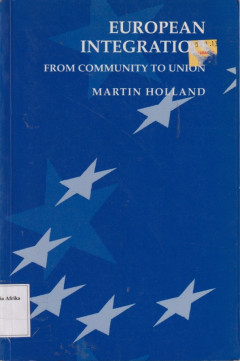
European integration: From community to union
European Integration: From Community to Union by Martin Holland provides a comprehensive analysis of the evolution of European integration from the early European Community toward the formation of the European Union. The book examines institutional development, policy-making processes, major treaties, and political dynamics that shaped modern Europe. Holland discusses the shifting roles of memb…
- Edisi
- -
- ISBN/ISSN
- 1-85567-241-3
- Deskripsi Fisik
- 258 pages ; 23 cm
- Judul Seri
- -
- No. Panggil
- 341.2422 HOL e
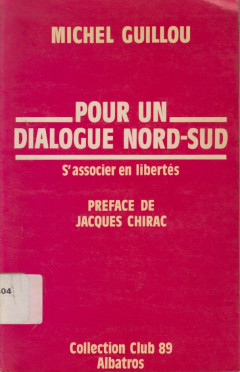
Pour un dialogue Nord–Sud : S’associer en libertés
This book presents Michel Guillou's analysis of the importance of dialogue between the North (developed) and South (developing) in building equal cooperation based on freedom. Through an international political and socio-economic perspective, the author highlights the structural barriers that cause global inequality and offers a collaborative approach to creating more equitable relations. With …
- Edisi
- -
- ISBN/ISSN
- -
- Deskripsi Fisik
- 252 pages ; 24 cm
- Judul Seri
- -
- No. Panggil
- 303.482 GOU p

Final documents: The Conference of ministers of food and agriculture of the n…
This volume contains the final documents of the Conference of Ministers of Food and Agriculture of the Non-Aligned Movement, held in Bali, Indonesia, from October 7–11, 1994. It includes resolutions, declarations, policy recommendations, and action frameworks addressing food security challenges in developing countries. The documents highlight the role of South–South cooperation, sustainable…
- Edisi
- -
- ISBN/ISSN
- -
- Deskripsi Fisik
- iii, 213 pages ; 24 cm
- Judul Seri
- -
- No. Panggil
- 338.19 CON f
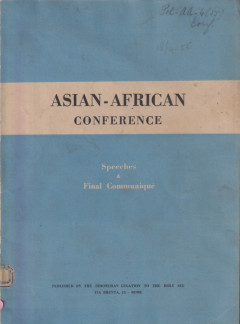
Asian-African conference: Speeches & final ommuniqué
This publication contains the official speeches and the Final Communiqué of the 1955 Asian-African Conference held in Bandung, Indonesia. Issued by the Indonesian Legation to the Holy See in Rome, the document presents the political statements, deliberations, and collective resolutions of 29 participating nations from Asia and Africa. It reflects the spirit of solidarity among newly independen…
- Edisi
- -
- ISBN/ISSN
- -
- Deskripsi Fisik
- 63 pages : illustrations ; 23 cm
- Judul Seri
- -
- No. Panggil
- 327.17 ASI a
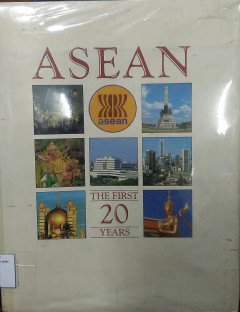
ASEAN: The First 20 years
This book presents a comprehensive overview of the establishment, growth, and achievements of the Association of Southeast Asian Nations (ASEAN) during its first two decades since its founding in 1967. It documents key political, economic, and socio-cultural developments, major agreements, ministerial meetings, and collaborative programs among member states. The publication highlights ASEAN’s…
- Edisi
- -
- ISBN/ISSN
- 9971-4-1053-2
- Deskripsi Fisik
- vii, 219 pages : illustrations ; 33 cm
- Judul Seri
- -
- No. Panggil
- 341.2473 ASE a
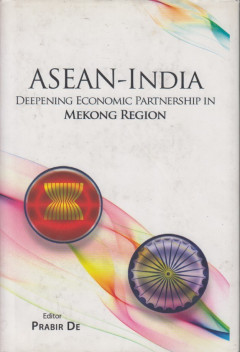
ASEAN–India: Deepening economic partnership in Mekong region
This book examines the evolving economic partnership between ASEAN and India, with a special focus on the Mekong region. It analyzes trade relations, regional connectivity, investment flows, and policy frameworks that shape cooperation between India and Southeast Asian countries. Through research-based chapters, the volume explores opportunities and challenges in deepening regional integration,…
- Edisi
- -
- ISBN/ISSN
- 81-7122-102-5
- Deskripsi Fisik
- xxxv, 314 pages : illustrations ; 23,5 cm
- Judul Seri
- -
- No. Panggil
- 337.159 RDE a

India, Pakistan, Nepal and Bangladesh: India as a factor in the intra-regiona…
This book examines the political dynamics and intra-regional interactions among India, Pakistan, Nepal, and Bangladesh in South Asia. P. K. Mishra analyzes India’s central role in shaping regional relations, focusing on historical, political, and strategic factors that influence cooperation and conflict. The study highlights bilateral issues, regional power asymmetry, and the evolution of Sou…
- Edisi
- -
- ISBN/ISSN
- -
- Deskripsi Fisik
- viii, 286 pages : illustration ; 22 cm
- Judul Seri
- -
- No. Panggil
- 327.54 MIS i
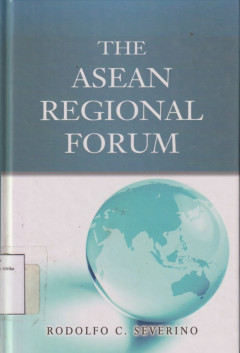
The ASEAN regional forum
The ASEAN Regional Forum by Rodolfo C. Severino provides an in-depth analysis of the origins, development, and role of the ASEAN Regional Forum (ARF) as a key platform for dialogue and cooperation on security issues in the Asia-Pacific region. The book examines the ARF’s objectives, mechanisms, and evolution in addressing regional peace and stability, including discussions on confidence-build…
- Edisi
- -
- ISBN/ISSN
- 978-981-230-990-7
- Deskripsi Fisik
- xiii, 186 pages : illustration ; 23,5 cm
- Judul Seri
- -
- No. Panggil
- 327.17 SEV a

Beyond the crash: Overcoming the first crisis of globalization
In this book, Gordon Brown offers an inside perspective on the global financial crisis of 2008–2009 and outlines strategies for overcoming what he calls the first crisis of globalization. Drawing on his experience as the United Kingdom’s prime minister and former chancellor of the exchequer, Brown analyzes the structural weaknesses of the international financial system, the failures of glob…
- Edisi
- -
- ISBN/ISSN
- 978-1-4516-2405-2
- Deskripsi Fisik
- xx, 314 pages ; 23,5 cm
- Judul Seri
- -
- No. Panggil
- 330.90511 BRO b
 Karya Umum
  Filsafat
  Agama
Agama  Ilmu-ilmu Sosial
  Bahasa
  Ilmu-ilmu Murni
  Ilmu-ilmu Terapan
  Kesenian, Hiburan, dan Olahraga
  Kesusastraan
  Geografi dan Sejarah