Ditapis dengan
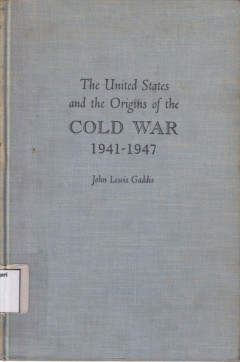
The United states and the origins of the cold war, 1941–1947
The United States and the Origins of the Cold War, 1941–1947 is a seminal historical study by John Lewis Gaddis, examining the political, diplomatic, and strategic roots of the early Cold War. Drawing on American, Soviet, and British archives, Gaddis analyzes how wartime alliances transformed into geopolitical rivalry. The book explores key decisions by Roosevelt, Truman, Stalin, and other po…
- Edisi
- -
- ISBN/ISSN
- 0-231-08302-5
- Deskripsi Fisik
- ix, 396 pages ; 23,5 cm
- Judul Seri
- -
- No. Panggil
- 327.12 GAD t
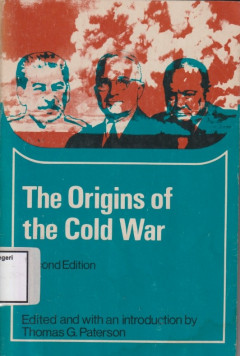
The Origins of the cold war
The Origins of the Cold War (Second Edition), edited by Thomas G. Paterson, is a comprehensive scholarly collection examining the political, ideological, and diplomatic roots of the Cold War. Drawing from key historical documents, essays, and analyses written by leading historians, the book explores how tensions between the United States and the Soviet Union escalated after World War II, ultima…
- Edisi
- -
- ISBN/ISSN
- 0-669-91447-9
- Deskripsi Fisik
- xx, 274 pages : illustrations ; 20 cm
- Judul Seri
- -
- No. Panggil
- 327.12 PAT t
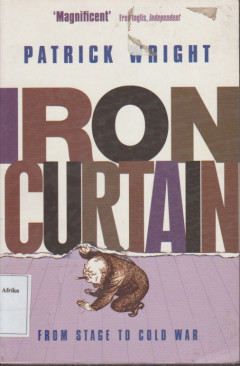
Iron curtain: From stage to cold war
Patrick Wright's Iron Curtain: From Stage to Cold War traces the development of the term "iron curtain" from 19th-century theater to its role as a key geopolitical metaphor during the Cold War. It explains how the concept of the "Iron Curtain" was shaped through performance art, propaganda, and European political dynamics, and then popularized by Winston Churchill in a 1946 speech. Wright outli…
- Edisi
- -
- ISBN/ISSN
- 978-0-19-923150-8
- Deskripsi Fisik
- xvi, 488 pages : illustration ; 20 cm
- Judul Seri
- -
- No. Panggil
- 327.12 WRI i

The Lost peace: Leadership in a time of horror and hope, 1945–1953
This book examines the crucial transition period in world history following the end of World War II, when global leaders faced the enormous challenge of building peace and a new international order. Robert Dallek explores the political decisions, conflicts of interest, and the origins of tensions that fueled the Cold War. Through in-depth analysis of major figures such as Truman, Churchill, Sta…
- Edisi
- -
- ISBN/ISSN
- 978-0-06-162866-5
- Deskripsi Fisik
- xii, 420 pages : illustration ; 24 cm
- Judul Seri
- -
- No. Panggil
- 909.82 DAL l
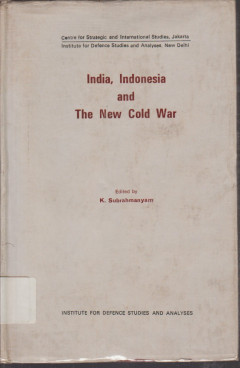
India, Indonesia and the new cold war
India, Indonesia, and the New Cold War, edited by K. Subrahmanyam, examines the dynamics of Asian politics and security during the early days of the “New Cold War” in the 1980s. It examines the strategic positions of India and Indonesia in the global arena, particularly in relation to foreign policy, regional security, and the relationship between the two countries in the face of tensions b…
- Edisi
- -
- ISBN/ISSN
- -
- Deskripsi Fisik
- 192 pages ; 25 cm
- Judul Seri
- -
- No. Panggil
- 327.17 SUB i

Shattered peace: The origins of the cold war and the national security state
In 1945, as the horrors of the Second World War finally came to a close, few would have guessed that less than five years later the United States would be locked into something called a Cold War with its former ally, the Soviet Union. But by 1947, that's exactly what happened. Somehow the American viewpoint had changed: now Russia was the enemy.
- Edisi
- -
- ISBN/ISSN
- 0-14-012177-3
- Deskripsi Fisik
- xiii, 544 pages : bibl: hlm 509-530 : index ; 24 cm
- Judul Seri
- -
- No. Panggil
- 327.09044 Yer s

Building a peace economy: Opportunities and problems of post-Cold War defense…
This book shows how to make the smoothest possible transition to civilian use of newly released military resources, especially the physical and human resources that have been devoted to defense production and thereby help people make the required economic adjustment.
- Edisi
- -
- ISBN/ISSN
- 0-8133-8433-8
- Deskripsi Fisik
- x, 294 pages : illustration (black and white) ; 23,5 cm.
- Judul Seri
- -
- No. Panggil
- 338.9973 Lal b

The cold war: Second edition, 1945-1991
This book provides a concise analysis of relations between the United States and the Soviet Union during the whole period of the Cold War from 1945 to 1991. It explains the rise of the two superpowers immediately after World War II. The author describes the growing confrontation between East and West in Europe dating from the announcement of the Truman Doctrine in 1949 to the construction of th…
- Edisi
- ed.2
- ISBN/ISSN
- 0-631-19138-0
- Deskripsi Fisik
- xvi, 172 pages ; 21 cm
- Judul Seri
- -
- No. Panggil
- 909.82 Smi c
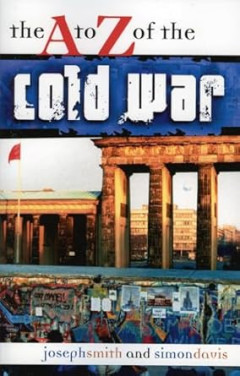
The A to Z of the cold war
This highly praised book captures the essence and the madness of the "balance of terror" that was the Cold War. Describing an extensive period and much of the globe, The A to Z of the Cold War presents a year-by-year chronology, an introductory essay, and hundreds of entries on civilian and military leaders, central issues and peripheral conflicts, crucial countries and their allies or foes, th…
- Edisi
- -
- ISBN/ISSN
- 0-8108-5384-1
- Deskripsi Fisik
- xi, 313 pages ; 22 cm
- Judul Seri
- -
- No. Panggil
- 909.82 Smi a
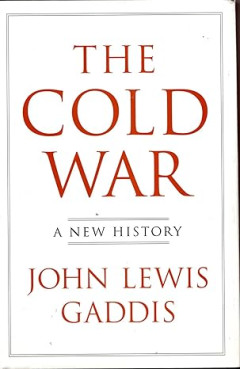
The cold war: A new history
Contents: 1. The return of fear 2. Deathboats and lifeboats 3. Command versus spontaneity 4. The emergence of autonomy etc.
- Edisi
- Cet. 1
- ISBN/ISSN
- 1-59420-062-9
- Deskripsi Fisik
- xv, 333 pages : illustrations (black and white) ; 24 cm
- Judul Seri
- -
- No. Panggil
- 909.82 Gad c
 Karya Umum
  Filsafat
  Agama
Agama  Ilmu-ilmu Sosial
  Bahasa
  Ilmu-ilmu Murni
  Ilmu-ilmu Terapan
  Kesenian, Hiburan, dan Olahraga
  Kesusastraan
  Geografi dan Sejarah