Ditapis dengan
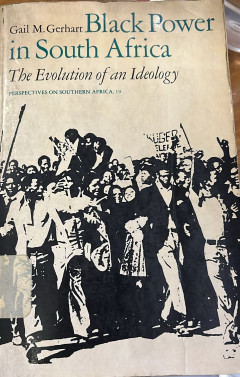
Black power in South Africa: The evolution of an ideology
This book examines the rise and development of the Black Power movement in South Africa as an ideological response to apartheid and racial domination. Written by Gail M. Gerhart, the work traces the historical roots, philosophical foundations, and political impact of Black Consciousness and related movements from the 1960s onward. Through detailed analysis, the author explores how Black Power s…
- Edisi
- -
- ISBN/ISSN
- 0-520-03933-5
- Deskripsi Fisik
- xi, 364 pages ; 22 cm
- Judul Seri
- -
- No. Panggil
- 968.06 GER b
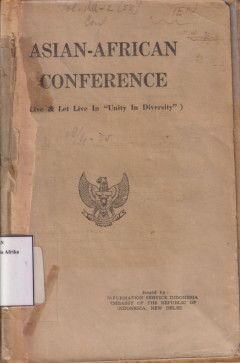
Asian-African conference: Live and let live in “Unity in diversity”
This publication presents an overview of the Asian-African Conference and its guiding principle, “Live and Let Live in Unity in Diversity.” It highlights the historical background, political significance, and outcomes of the 1955 Bandung Conference, which brought together leaders from Asia and Africa to promote peace, solidarity, and cooperation among newly independent nations. The book emp…
- Edisi
- -
- ISBN/ISSN
- -
- Deskripsi Fisik
- 302 pages : illustrations ; 20,5 cm
- Judul Seri
- -
- No. Panggil
- 327.172 COM a
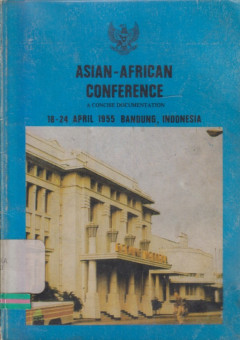
Asian-African Conference: A Concise Documentation
This concise documentation provides an overview of the historic Asian-African Conference held in Bandung, Indonesia, on 18–24 April 1955. Published by the Department of Information of the Republic of Indonesia, the book summarizes key events, participating countries, resolutions, speeches, and the political context that shaped the conference. It highlights the emergence of Asian-African solid…
- Edisi
- -
- ISBN/ISSN
- -
- Deskripsi Fisik
- 86 pages : illustrations ; 21 cm
- Judul Seri
- -
- No. Panggil
- 327.095 TIM a

Gott segne Afrika : Texte und Predigten des Friedensnobelpreisträgers
This book is a collection of texts, sermons, and reflections by Desmond Tutu, Nobel Peace Prize laureate and leading moral voice in the struggle against apartheid in South Africa. Written during a period of intense political repression, the work combines theological insight with sharp social critique, emphasizing justice, reconciliation, and human dignity. Tutu addresses the moral responsibilit…
- Edisi
- -
- ISBN/ISSN
- 3-499-15626-1
- Deskripsi Fisik
- 155 pages : Illustrations ; 19 cm
- Judul Seri
- -
- No. Panggil
- 968.065 TUT g

Apartheid : A Graphic guide
This book presents a concise and accessible introduction to apartheid in South Africa through a graphic narrative format. Written by Donald Woods and illustrated by Mike Bostock, it explains the origins, ideology, and implementation of apartheid policies, as well as their social, political, and human consequences. Using visual storytelling, the book highlights racial segregation, state violence…
- Edisi
- -
- ISBN/ISSN
- 0-8050-0609-5
- Deskripsi Fisik
- 148 pages : illustrations ; 21 cm
- Judul Seri
- -
- No. Panggil
- 968.065 WOO a

Fight against apartheid : India’s pioneering role in the world campaign aga…
This book examines India’s pioneering role in the global struggle against apartheid and racial discrimination in South Africa. Written by T. G. Ramamurthi, the work highlights India’s diplomatic, political, and moral leadership in mobilizing international opposition to apartheid through the United Nations and other global forums. The book documents historical developments, policy initiative…
- Edisi
- -
- ISBN/ISSN
- -
- Deskripsi Fisik
- 191 pages ; 22 cm
- Judul Seri
- -
- No. Panggil
- 325.26 RAM f

The Opening of the apartheid mind: Options for the New South Africa
Revealing the complex political forces involved in disman- thing apartheid, Adam and Moodley argue that although the African National Congress will join the government it may be forced to govern without real constitutional, eco- nomie, or military power. They view a political settlement as a necessary but insufficient condition for reversing the social disintegration and economie decline that i…
- Edisi
- -
- ISBN/ISSN
- 0-520-08199-4
- Deskripsi Fisik
- 256 pages : illustration ; 24 cm
- Judul Seri
- -
- No. Panggil
- 968.064 ADA o

South African Politics
This book provides a comprehensive analysis of the political system and historical development of South Africa. It examines the evolution of political institutions, ideologies, and power relations from the colonial period through the era of apartheid and its aftermath. The authors explore the roles of race, ethnicity, nationalism, and economic structures in shaping South African politics, as we…
- Edisi
- -
- ISBN/ISSN
- 0-300-02767-2
- Deskripsi Fisik
- 255 pages ; 21 cm
- Judul Seri
- -
- No. Panggil
- 320.968 THO s

The Broederbond
The most controversial nation in the world, the nation of gold and diamonds, of apartheid and Soweto, does not exist in complete isolation. South Africa, whether we like it or not, is inextricably linked to the economies of the Western world and its fate will affect us all. It is a nation divided not only between black and white but between white and white. To understand South Africa the world …
- Edisi
- 1
- ISBN/ISSN
- 0 70920734 4
- Deskripsi Fisik
- 458 pages ; 24 cm
- Judul Seri
- -
- No. Panggil
- 320.968 WIL b
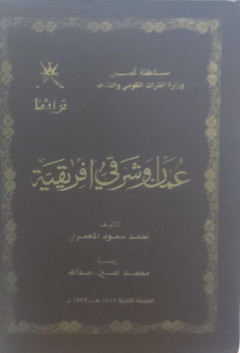
Oman wa syarqi al-fariqiyah
This book examines the development and influence of Arab intellectual thought in Africa. It explores historical interactions between Arab societies and African regions, focusing on cultural exchange, education, religion, and scholarship. The author highlights how Arab-Islamic traditions contributed to the formation of intellectual, social, and cultural life across various parts of Africa from e…
- Edisi
- -
- ISBN/ISSN
- -
- Deskripsi Fisik
- 159 pages ; 24,5 cm
- Judul Seri
- -
- No. Panggil
- 909.096 ALM o
 Karya Umum
 Filsafat
 Agama
 Ilmu-ilmu Sosial
 Bahasa
 Ilmu-ilmu Murni
 Ilmu-ilmu Terapan
 Kesenian, Hiburan, dan Olahraga
 Kesusastraan
 Geografi dan Sejarah