Ditapis dengan
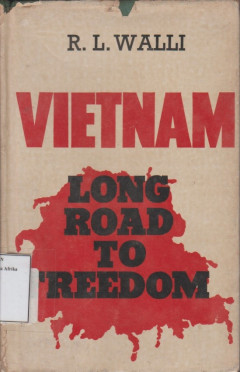
Vietnam: Long road to freedom
Vietnam: Long Road to Freedom by R. L. Walli presents a comprehensive overview of Vietnam’s long and complex struggle for independence. The book traces the historical roots of Vietnamese nationalism, the resistance against French colonial rule, the rise of revolutionary movements, and the geopolitical forces that shaped modern Vietnam. Walli discusses the evolution of political leadership, th…
- Edisi
- -
- ISBN/ISSN
- -
- Deskripsi Fisik
- vii, 187 pages ; 22 cm
- Judul Seri
- -
- No. Panggil
- 959.7 WAL v
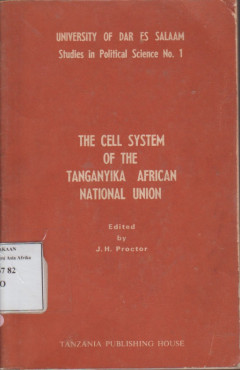
The Cell system of the tanganyika African national union
This book examines the cell system within the Tanganyika African National Union (TANU), the political party that led Tanzania's independence struggle under Julius Nyerere. This organizational model emphasized the formation of small political units at the village and community levels as a method of mass mobilization, political education, and the consolidation of the Ujamaa ideology. Edited by J.…
- Edisi
- -
- ISBN/ISSN
- -
- Deskripsi Fisik
- vi, 66 pages : illustration ; 21,5 cm
- Judul Seri
- -
- No. Panggil
- 320.678 PRO c
Defeat into victory
Defeat Into Victory is a monumental military memoir by Field Marshal Sir William Slim, the British Army's commander-in-chief in the Burma Campaign during World War II. It details the Allied forces' struggle against the Japanese invasion of Burma in 1942, their bitter initial defeats, their restructuring, and their resounding victory in 1945. Slim details the strategy, tactics, logistics, extrem…
- Edisi
- -
- ISBN/ISSN
- -
- Deskripsi Fisik
- xi, 468 pages : illustration ; 21 cm
- Judul Seri
- -
- No. Panggil
- 940.5425 SLI d
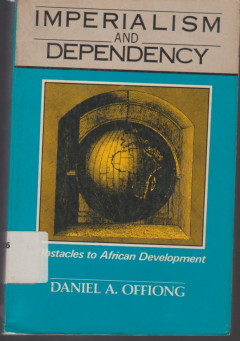
Imperialism and dependency: Obstacles to African development
Daniel A. Offiong's book, Imperialism and Dependency, examines how imperialism and structures of international dependency have become major obstacles to Africa's economic development. Offiong examines the unequal global economic relations between developed and developing countries, explaining how colonialism and modern economic practices have created patterns of dependency that hinder Africa's …
- Edisi
- -
- ISBN/ISSN
- 0-88258-127-9
- Deskripsi Fisik
- xxvi, 483 pages ; 21,5 cm
- Judul Seri
- -
- No. Panggil
- 338.96 OFF i
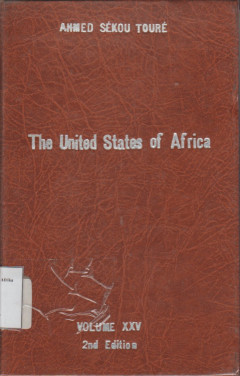
The United States of Africa
The book "The United States of Africa" is a collection of political thoughts by Guinean President Ahmed Sékou Touré on the unity of the African continent. In this work, he outlines a vision for the formation of a unified African nation-state as a path to true independence, solidarity, and development. The book discusses the concept of African political, economic, and social integration,…
- Edisi
- -
- ISBN/ISSN
- -
- Deskripsi Fisik
- 352 pages ; 24 cm
- Judul Seri
- -
- No. Panggil
- 320.96 TOU u
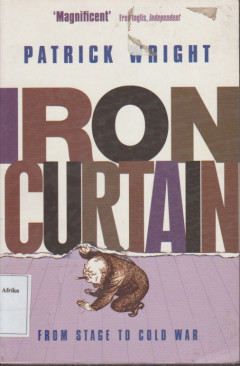
Iron curtain: From stage to cold war
Patrick Wright's Iron Curtain: From Stage to Cold War traces the development of the term "iron curtain" from 19th-century theater to its role as a key geopolitical metaphor during the Cold War. It explains how the concept of the "Iron Curtain" was shaped through performance art, propaganda, and European political dynamics, and then popularized by Winston Churchill in a 1946 speech. Wright outli…
- Edisi
- -
- ISBN/ISSN
- 978-0-19-923150-8
- Deskripsi Fisik
- xvi, 488 pages : illustration ; 20 cm
- Judul Seri
- -
- No. Panggil
- 327.12 WRI i

Clash of titans: Africa and U.S. foreign policy
This book examines the dynamics of relations between the United States and African countries during the Cold War. Edward W. Chester analyzes America's strategic, political, and economic interests in Africa, and how US foreign policy shaped African political developments. This work evaluates global conflicts of interest, the influence of great powers, and the responses of African countries to in…
- Edisi
- -
- ISBN/ISSN
- 0-88344-065-2
- Deskripsi Fisik
- ix, 361 pages ; 24 cm
- Judul Seri
- -
- No. Panggil
- 327.7306 CHE c
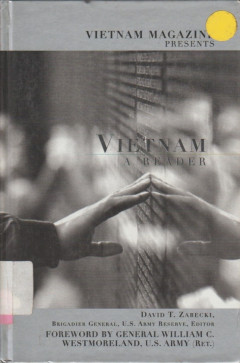
Vietnam: A Reader
Vietnam: A Reader is a curated collection of historical writings, personal accounts, analysis, and journalism originally published in Vietnam Magazine, offering an in-depth look into the Vietnam War from multiple perspectives. Edited by Brigadier General David Zabecki, this volume brings together contributions from military historians, war correspondents, veterans, and scholars. The book provid…
- Edisi
- -
- ISBN/ISSN
- 0-7394-2611-7
- Deskripsi Fisik
- xx, 411 pages : illustration ; 21,5 cm
- Judul Seri
- -
- No. Panggil
- 959.704 ZAB v
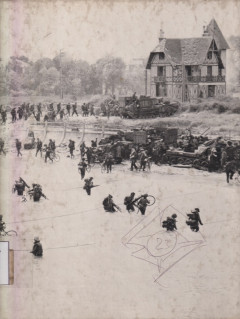
The Second front
The Second Front is an in-depth account of the Allied efforts to open a new front in Western Europe during World War II. Written by Douglas Botting with the editors of Time-Life Books, the volume traces the strategic planning that led to Operation Overlord and the dramatic events of D-Day. It examines earlier attempts such as the ill-fated Dieppe Raid, the buildup of men and materiel in Britain…
- Edisi
- -
- ISBN/ISSN
- 0-8094-2500-9
- Deskripsi Fisik
- 208 pages : illustration ; 29 cm
- Judul Seri
- -
- No. Panggil
- 940.542 BOT s
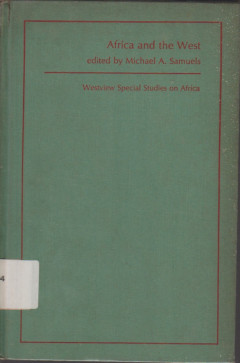
Africa and the west
"Africa and the West" is a collection of academic writings edited by Michael A. Samuels, examining the dynamics of political, economic, and strategic relations between African countries and the Western world. Published as part of the Westview Special Studies on Africa, this book explores the role of Western powers in the development of African countries, the impact of colonialism and postcoloni…
- Edisi
- -
- ISBN/ISSN
- 0-89158-764-0
- Deskripsi Fisik
- xiii, 114 pages ; 23,5 cm
- Judul Seri
- -
- No. Panggil
- 327.096 SAM a
 Karya Umum
  Filsafat
  Agama
Agama  Ilmu-ilmu Sosial
  Bahasa
  Ilmu-ilmu Murni
  Ilmu-ilmu Terapan
  Kesenian, Hiburan, dan Olahraga
  Kesusastraan
  Geografi dan Sejarah