Ditapis dengan
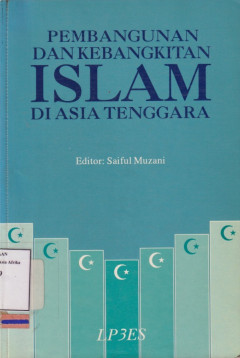
Pembangunan dan kebangkitan islam di Asia Tenggara
Buku Pembangunan dan Kebangkitan Islam di Asia Tenggara merupakan kumpulan makalah ilmiah yang dipresentasikan dalam berbagai seminar ilmuwan sosial Muslim di kawasan Asia Tenggara. Diedit oleh Saiful Muzani, buku ini membahas dinamika masyarakat Muslim dalam konteks pembangunan ekonomi, perubahan sosial, serta kebangkitan Islam pada akhir abad ke-20. Melalui pendekatan akademik dari berbagai n…
- Edisi
- -
- ISBN/ISSN
- 979-8891-14-4
- Deskripsi Fisik
- 367 halaman ; 23 cm
- Judul Seri
- -
- No. Panggil
- 297.0959 MUZ p
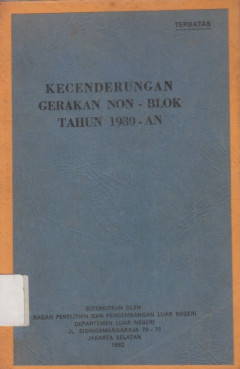
Kecenderungan gerakan non-blok tahun 1980-an
Buku Kecenderungan Gerakan Non-Blok Tahun 1980-an merupakan hasil studi lembaga non-DEPLU yang ditujukan sebagai bahan analisis kebijakan bagi Departemen Luar Negeri Republik Indonesia. Laporan ini membahas dinamika Gerakan Non-Blok pada era 1980-an, mencakup kecenderungan politik internasional, posisi negara-negara anggota, serta pengaruh perubahan global terhadap arah dan kebijakan gerakan te…
- Edisi
- -
- ISBN/ISSN
- -
- Deskripsi Fisik
- 230 halaman ; 23,5 cm
- Judul Seri
- -
- No. Panggil
- 327.17 BAD k

Perjalanan 60 Tahun Lambang Negara: Sejarah Elang Rajawali Garuda Pancasila â…
Buku Perjalanan 60 Tahun Lambang Negara merupakan bunga rampai tulisan, reportase, dan dokumentasi yang disusun dalam rangka pameran serta seminar mengenai Lambang Negara Republik Indonesia, Garuda Pancasila. Diterbitkan oleh Sahabat Museum Konperensi Asia–Afrika bekerja sama dengan Museum Konperensi Asia–Afrika pada tahun 2014, buku ini menelusuri proses perancangan lambang negara, tokoh-t…
- Edisi
- -
- ISBN/ISSN
- 978-602-99066-0-8
- Deskripsi Fisik
- 156 halaman : ilustrasi ; 20 cm
- Judul Seri
- -
- No. Panggil
- 929.920598 SAH p

Society, culture, and change in the Middle East
This book explores the social structures, cultural patterns, and dynamic processes of change occurring in the Middle East during the mid-twentieth century. Raphael Patai analyzes traditional and modern influences shaping Middle Eastern societies, addressing issues such as family life, social organization, modernization, and cultural transformation. As an expanded edition of his earlier work, th…
- Edisi
- -
- ISBN/ISSN
- 0-8122-7289-7
- Deskripsi Fisik
- 560 pages ; 20,5 cm
- Judul Seri
- -
- No. Panggil
- 306.0956 PAT s
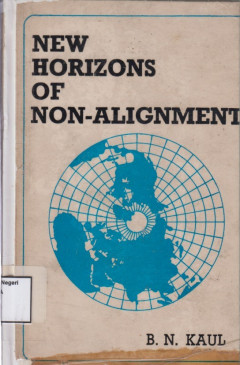
New horizons of non-alignment
New Horizons of Non-Alignment examines the evolution and future direction of the Non-Aligned Movement (NAM) in the context of global political changes during the late 20th century. B. N. Kaul discusses the ideological foundations, diplomatic challenges, and strategic goals of non-aligned countries seeking independence from superpower influence during the Cold War. The book explores issues such …
- Edisi
- -
- ISBN/ISSN
- -
- Deskripsi Fisik
- xix, 184 pages ; 21,5 cm
- Judul Seri
- -
- No. Panggil
- 327 KAU n
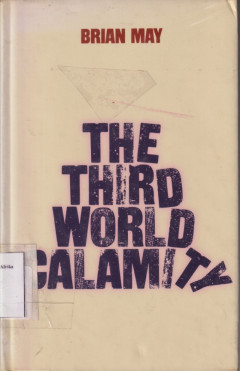
The Third world calamity
This book analyzes the severe social, economic, and political crises affecting Third World countries. Brian May explores the structural causes of underdevelopment, including poverty, inequality, colonial legacies, and global economic imbalances. Through critical examination, the author highlights how these interconnected issues shape the difficult realities faced by developing nations and argue…
- Edisi
- -
- ISBN/ISSN
- 0-7100-0764-7
- Deskripsi Fisik
- xii, 274 pages : illustration ; 22 cm
- Judul Seri
- -
- No. Panggil
- 309.1172 MAY t
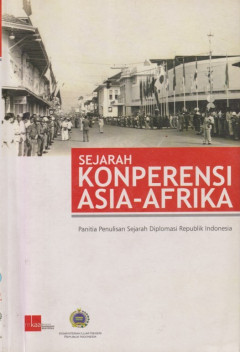
Sejarah Konperensi Asia–Afrika
Buku Sejarah Konperensi Asia–Afrika disusun oleh Panitia Penulisan Sejarah Diplomasi Republik Indonesia sebagai bagian dari upaya pendokumentasian peran Indonesia dalam diplomasi internasional. Buku ini menelusuri latar belakang, proses, dan dampak Konferensi Asia–Afrika tahun 1955, serta menempatkan KAA dalam konteks perkembangan politik global dan hubungan negara-negara Asia dan Afrika pa…
- Edisi
- -
- ISBN/ISSN
- 978-602-99061-0-3
- Deskripsi Fisik
- viii, 152 halaman : ilustrasi ; 20 cm
- Judul Seri
- -
- No. Panggil
- 327.17 PAN s

The Third world without superpowers: The Collected documents of the non-align…
This fourth volume of The Third World Without Superpowers completes the collection of official documents produced by the Non-Aligned Countries during the formative period of the movement. It features resolutions, declarations, meeting records, and policy statements reflecting the political, economic, and diplomatic concerns of developing nations during the Cold War. Edited by Odette Jankowitsch…
- Edisi
- -
- ISBN/ISSN
- 0-379-00968-4
- Deskripsi Fisik
- xiv, 2522 pages ; 26 cm
- Judul Seri
- -
- No. Panggil
- 327.09172 JAN t

The Middle East: A Political and economic survey
This volume provides a comprehensive political and economic survey of the Middle East, examining the region’s historical background, political developments, economic structures, and social dynamics. Edited by Peter Mansfield, the book offers analytical perspectives on the shifting geopolitical landscape, regional conflicts, modernization issues, and the economic challenges faced by Middle Eas…
- Edisi
- -
- ISBN/ISSN
- 0-19-215851-1
- Deskripsi Fisik
- ix, 579 pages : illustration ; 22 cm
- Judul Seri
- -
- No. Panggil
- 956.05 MAN t

The Third world without superpowers: The Collected documents of the non-align…
This third volume of The Third World Without Superpowers continues the compilation of official documents issued by the Non-Aligned Countries. It contains resolutions, declarations, communiqués, and policy statements reflecting the collective views and diplomatic strategies of developing nations during the Cold War. Edited by Odette Jankowitsch and Karl P. Sauvant, this volume provides valuable…
- Edisi
- -
- ISBN/ISSN
- 0-379-00967-6
- Deskripsi Fisik
- xii, 1824 pages ; 26 cm
- Judul Seri
- -
- No. Panggil
- 327.09172 JAN t
 Karya Umum
  Filsafat
  Agama
Agama  Ilmu-ilmu Sosial
  Bahasa
  Ilmu-ilmu Murni
  Ilmu-ilmu Terapan
  Kesenian, Hiburan, dan Olahraga
  Kesusastraan
  Geografi dan Sejarah